REVIEW · LONDON
Southwark – an exclusive private walking tour full of surprises!
Book on Viator →Operated by Hobnob Tours · Bookable on Viator
London’s Southwark can feel like two different cities. This private, up-to-five walking tour strings together major sights like Borough Market and Shakespeare’s Globe with the darker backstory that made the neighborhood famous. It’s history you can see from street level—then hear explained in a way that actually sticks.
I like that it stays small and personal. You’re with Sandy (an accredited local guide), and the pace leaves room for questions instead of racing everyone down a checklist.
My other favorite part is the mix of contrasts. You’ll look at spectacular stops like Southwark Cathedral’s interior—and then step right into the less-polished stories tied to bishops, prisons, and the term Winchester geese. The main drawback to plan for is simple: you’re walking about 2–3 miles in roughly 3 hours, and food isn’t included, so bring snacks if you need them.
In This Review
- Key things to know before you go
- Southwark’s best trick: famous sights with a shady edge
- Meeting Sandy at London Bridge and why small-group matters
- Price, timing, and what $219.31 per group buys you
- Walking route at a glance: from Hay’s Galleria to Crossbones
- Hay’s Galleria: Thames views plus a dose of modern London
- Queen’s Walk: spotting 900 years of skyline from one path
- Borough Market: how trade shaped Southwark’s reputation
- Southwark Cathedral interior: the Shakespeare window and more
- Golden Hinde: a globe-circling ship you can actually stand beside
- Winchester Palace ruins and the uncomfortable logic of power
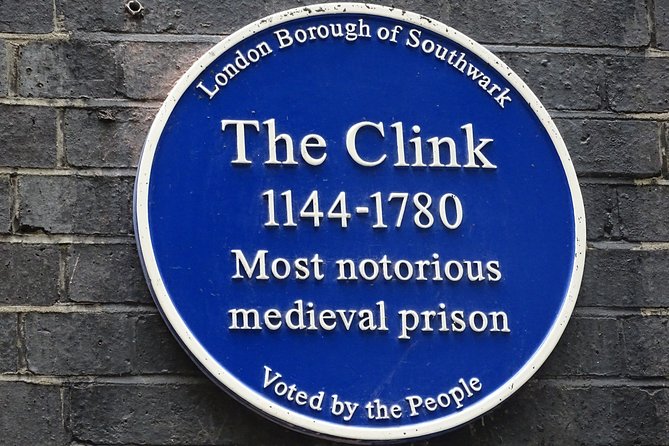
- Clink Prison Museum: from bishops’ territory to “heretics” instead of thieves
- Shakespeare’s Globe: old site stories plus modern theater that survived
- Tate Modern from the outside and Menier Chocolate Factory’s second life
- Crossbones Graveyard: what the Jubilee line excavation uncovered
- What I’d pair with this tour (so you get more value)
- Should you book Southwark with Sandy?
- FAQ
- How long is the Southwark walking tour?
- What group size is this tour?
- Where does the tour start and end?
- Do we go inside anywhere?
- Is food and drink included?
- Are admissions included?
- Is the tour weather-dependent?
- Is free cancellation available?
- Are service animals allowed?
Key things to know before you go
- Private group size up to five means you’ll hear the guide without fighting the street noise.
- Sandy’s focus on Southwark keeps the stories specific, not generic.
- One indoor stop at Southwark Cathedral adds welcome shelter without turning the day into a museum slog.
- Stop-to-stop “then and now” contrasts (cathedral vs. Clink, Globe old vs. Globe modern) make the neighborhood easier to understand.
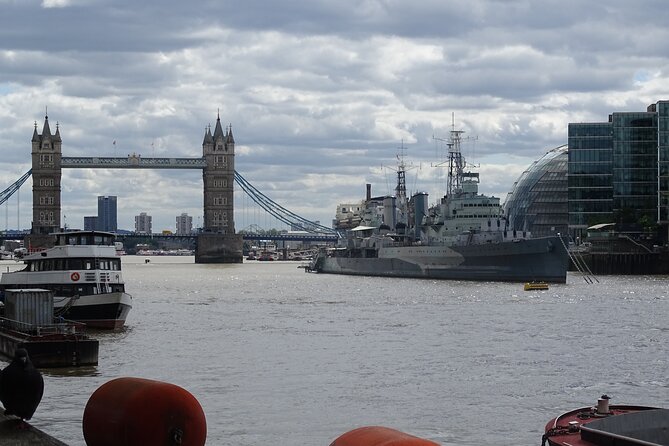
- River views at Hay’s Galleria and the Queen’s Walk skyline section are worth the stroll.
- History with names and places: Shakespeare-related windows, John Harvard’s connection, and the Winchester bishops’ territory.
Southwark’s best trick: famous sights with a shady edge
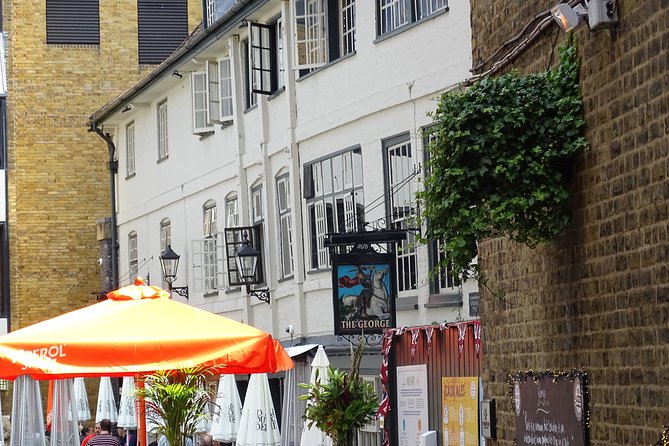
Southwark is one of those London areas where the postcard and the past don’t match. On one block you’ve got world-famous theater and a cathedral that survived Henry VIII’s purge; on the next, you’re walking through the shadowy logic of bishops’ power and the way punishments were handled. That contrast is the whole point of this tour.
The day feels like it moves through eras—Roman-era roots to Tudor London to today’s skyline—without you needing to memorize dates. And because it’s on foot, you’re not just seeing “points of interest.” You’re watching how the neighborhood connects.
You can also read our reviews of more walking tours in London



Meeting Sandy at London Bridge and why small-group matters
You meet at London Bridge (Station Approach Road, SE1 9SP) at 10:00am, and you finish near the Hop Exchange at 24 Southwark St. That means you start with easy access to transit, and you end in a part of Southwark that still feels like a real neighborhood—not a theme-park finish line.
The private-group setup is the part that changes everything. With up to five people, I found the guide’s pace easier to follow, and I didn’t feel rushed. Sandy is also accredited by the Institute of Tourist Guiding, and her style is warm and story-driven. In practice, it’s the difference between hearing facts and understanding how and why things happened.
Also, if you’re the type who likes to ask questions (or you just can’t help yourself), this tour is set up for it. Sandy makes comfort breaks part of the plan if you need them, and the tour goes rain or shine. Bring waterproofs if the forecast looks sketchy.
Price, timing, and what $219.31 per group buys you
This costs $219.31 per group for up to five people, and it runs about 3 hours. For London, that price can feel high until you do the math: you’re paying for a private guide’s time, not a per-person ticket that stacks up when you want a smaller group.
If you’re traveling solo, the per-person cost is obviously higher than a big-group tour. But if you have even two or three people in your travel party, it becomes much easier to justify—especially because your guide can tailor the conversation.
The tour covers about 2–3 miles, so it’s not a long endurance walk. Still, wear comfortable shoes. You’re moving through real streets, and the schedule assumes you can keep a steady walking pace for roughly the whole three hours.
Walking route at a glance: from Hay’s Galleria to Crossbones
You’ll hit a tight sequence of Southwark landmarks, with short stops that add up to a full “story arc.” The best way I can describe it is this: you see the glossy Southwark that visitors recognize, then you get the reasons Southwark earned its rougher reputation.
The stops are structured so each one answers a question. Why is this area so important? Who held power here? What happened to people who didn’t fit? And how did Shakespeare, theater, and art become part of the same geography?
Hay’s Galleria: Thames views plus a dose of modern London
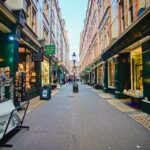
The first stop is Hay’s Galleria, a renovated riverside complex that used to be a warehouse. I like this opening because it gives you a quick orientation: you step into a space that proves London keeps reshaping itself, even when the roots are industrial and old.
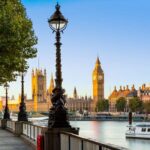
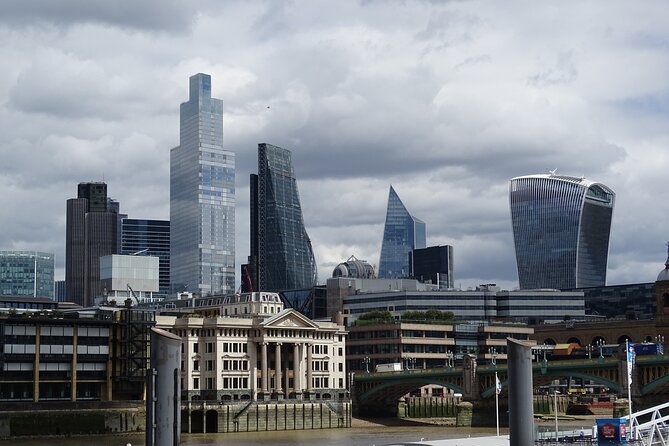
When you emerge toward Queens Walk at the back of the galleria, you get views of the River Thames and the City of London across the water. It’s a great “set the stage” moment. You’re looking north at a skyline that spans centuries, and your guide can connect that visual contrast to the history you’ll hear next.
The stop is short (around ten minutes), but it’s a good kickoff—less “standing around,” more “look, understand, move.”
You can also read our reviews of more private tours in London






Queen’s Walk: spotting 900 years of skyline from one path
From Hay’s Galleria, the walk continues along Queen’s Walk, specifically the section between Tower and London bridges. This is where the tour helps you read the skyline like a timeline.
Your guide points out a contrast: the White Tower of the Tower of London as a reminder of Norman power from the 12th century, versus newer-looking buildings in the City that feel like they’ve only just arrived on the scene. It’s one of those simple comparisons that makes the whole area’s long history feel real.
It’s also a practical win. The path gives you an easy walking rhythm while you’re still getting “big picture” context. The stop lasts about fifteen minutes, so you’re not stuck waiting—just taking in the view.
Borough Market: how trade shaped Southwark’s reputation
Next up is Borough Market, one of those places where you can practically smell history. You’ll hear how markets once worked as wholesale hubs for cattle, fish, and grain—the kind of scale that would bring workers, money, and noise, day after day.
In modern Borough Market, you get the familiar visitor experience: food stalls, chatter, and a steady flow of people. But what Sandy does well is the mental flip. You’re not just looking at today’s market; you’re being guided to imagine the raucous trade engine that made Southwark a magnet long before it became “glitzy.”
This stop is brief (about ten minutes), so it works best if you’re curious and want to keep moving. If you’re the type who loves food stops and wants extra time to taste, plan to add that on your own before or after the tour.
Southwark Cathedral interior: the Shakespeare window and more
The tour’s only planned indoor stop is Southwark Cathedral, and it’s absolutely the one that feels like a reset button. Southwark Cathedral is among London’s oldest churches, and it survived the era of destruction tied to Henry VIII. It became a cathedral in 1905, but the building’s interior carries far older weight than that date suggests.
When you step inside, you’re met with soaring arches and a dramatic ceiling—space that makes it hard to stay in “street mode.” I like this part because it shifts the tone. The stories get heavier, and the room supports that mood.
Inside, the guide highlights details that connect culture to power:
- A stained glass window dedicated to Shakespeare
- A Diamond Jubilee window for Elizabeth II
- Harvard Chapel, connected to John Harvard, who was baptized in the church as it was then
If your interest leans toward literature or transatlantic connections, this stop will land well. It’s not just about admiring architecture—it’s about seeing how names and events got etched into the place.
Golden Hinde: a globe-circling ship you can actually stand beside
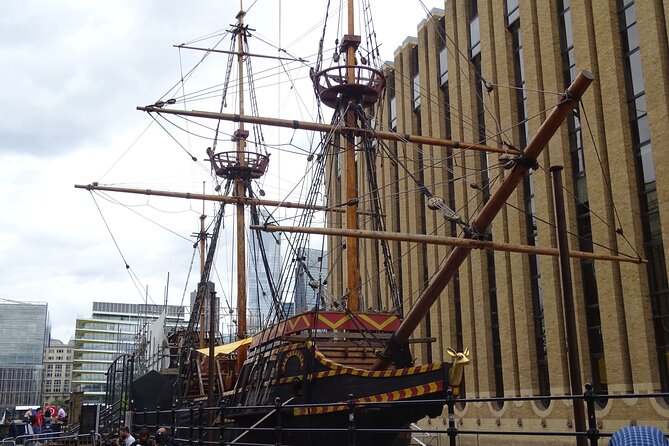
Then you move to Golden Hinde, a replica ship associated with the 1570s circumnavigation. This stop works because it’s physical. You can look at the scale of the vessel beside the Thames and immediately question how that kind of voyage could be possible.
Sandy uses this area to turn “fun facts” into real narrative. She’ll answer questions tied to the voyage—what the ship was originally called, who was on board, and how many of the original fleet made it back to England. I appreciated that the story isn’t just trivia; it’s a quick way to understand why maritime routes mattered to England’s rise.
The stop is only about ten minutes, so you won’t get a long museum-style experience. But you’ll leave with clear points to remember, and that’s often the best use of time on a walking tour.
Winchester Palace ruins and the uncomfortable logic of power
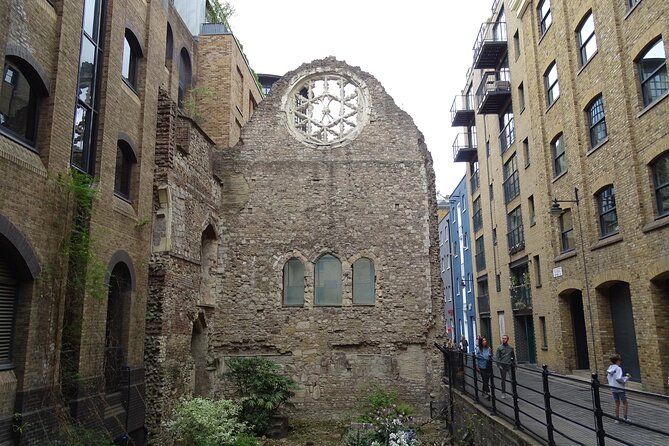
After the ship, the tour turns to Winchester Palace, now mostly ruins. This is a strong contrast stop because you’re looking at the evidence of a bishop’s wealth in the same neighborhood that later earned a harsher reputation.
Bishops of Winchester had a privileged home here, and the area around it included sleaze-adjacent alleys and yards. Walking past the ruins helps you picture how close privilege and poverty sat to each other—sometimes only a short distance away.
Sandy also brings up the meaning of Winchester geese. The tour doesn’t treat the phrase like a joke; it uses it as a doorway into what happened within the bishops’ boundaries and why people talked the way they did. If you like history that doesn’t sanitize the messy parts, you’ll probably find this segment one of the most memorable.
Clink Prison Museum: from bishops’ territory to “heretics” instead of thieves
Next is Clink Prison Museum, placed on the site of the original Clink prison. The big idea here is the dramatic change in who was imprisoned and why.
You’ll hear how the Clink first held wrongdoers, and then later housed heretics—people whose views went against the bishops’ line. This is one of those moments where the history stops being abstract. It turns into questions about power, punishment, and control.
Sandy also covers practical, uncomfortable realities like prison conditions and the idea that you could buy your way into more comfortable stays. That’s not a detail meant to shock for its own sake; it explains how systems worked and why outcomes varied so much.
The stop is short (about five minutes), but it’s one of the stops that gives the whole tour its edge.
Shakespeare’s Globe: old site stories plus modern theater that survived
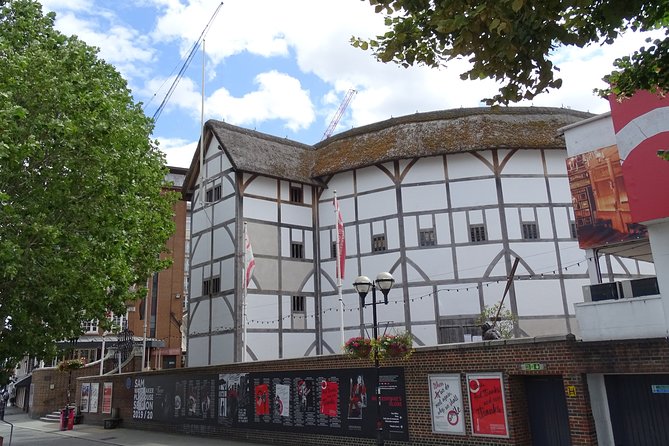
Then you get Shakespeare’s Globe Theatre, and the tour plays a clever two-level trick. First, you pass the site of the original Globe built toward the end of the 1500s. Within half a mile, you reach the modern Globe, which exists because of the perseverance of an American actor named Sam Wanamaker.
I like this setup because it lets you understand that “Globe” isn’t one single moment in time. It’s a building, a legacy, and a project revived by commitment.
The stop is about fifteen minutes, and it’s focused on what you can take in from the outside. But you’ll also hear the suggestion to book a performance if you want the full experience inside. Even if you don’t catch a show, this segment ties Shakespeare’s name back to what you saw earlier at Southwark Cathedral.
Tate Modern from the outside and Menier Chocolate Factory’s second life
After Shakespeare, the tour briefly touches two cultural anchors: Tate Modern and Menier Chocolate Factory.
At Tate Modern, you’ll get the idea of scale—this former power station towers above the area—and you’ll hear that it’s one of four Tate museums in England focusing on international artists since the 1900s. Admission isn’t included for this stop, and the tour time doesn’t try to turn it into a museum visit. Think of it as a quick orientation point: you learn what it is, then you move on.
Then comes Menier Chocolate Factory, a historic building that used to be a chocolate factory run by the Menier family. In the latter half of the 1800s, they were the largest chocolate manufacturer in France. The wars changed supply and innovation, and neutral countries like Switzerland gained an edge with new recipes and delicious fillings—something the Meniers couldn’t match.
When the factory became derelict, it didn’t disappear. It was designated Grade II listed in the 1990s, meaning it couldn’t be demolished. Later, it became a successful off-West End theater, and Sandy explains how that shift turned an industrial past into a stage-ready future.
This stop is about five minutes, but the story is satisfying. It shows how Southwark keeps reinventing what’s already there.
Crossbones Graveyard: what the Jubilee line excavation uncovered
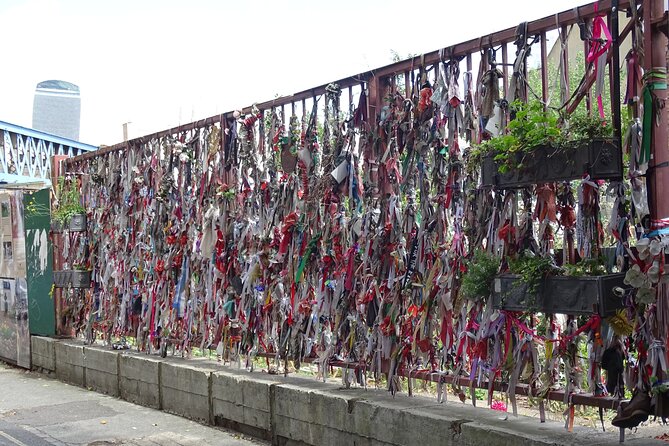
The final stop is Crossbones Graveyard & Garden of Remembrance. This is the part that feels most “how did we miss this?” because the graveyard wasn’t found until work began on the Jubilee line extension.
Archaeologists from the Museum of London joined the excavations and estimated there were 15,000 bodies buried at the site. That number lands differently after you’ve already heard about Winchester geese and the way bishops’ territory shaped punishments and beliefs.
Sandy uses this stop to bring the narrative full circle. The tour doesn’t treat the cemetery like a standalone tragedy. It connects it back to the broader power structure you’ve been learning about, and suddenly the neighborhood’s darker history feels less like random facts and more like a system.
The stop lasts around ten minutes, and it gives you a quiet end to a day that started with river views and market energy.
What I’d pair with this tour (so you get more value)
Because the tour doesn’t include food, you’ll get the most out of it if you handle meals strategically. If you’re a coffee person, plan for a quick break near Borough Market or Southwark Cathedral—Sandy is open to comfort breaks if you ask.
Also, since Tate Modern and Shakespeare’s Globe are included mostly as outside stops, you can add depth afterward:
- If Shakespeare matters most to you, book a performance at the Globe during your visit.
- If modern art calls you more than theater, consider spending extra time at Tate Modern on a separate block of your day.
This tour is built to give you understanding, not to replace everything else. That’s a good thing. You’ll walk away with context that makes independent sightseeing much easier.
Should you book Southwark with Sandy?
Book it if you want Southwark explained through the people and the power that shaped it. I think this tour is a great fit for anyone who likes London landmarks but also wants the “why” behind the neighborhood’s reputation—cathedral survival, bishops’ estates, prison realities, and Shakespeare’s connections.
Don’t book it if you want a food-and-museum-heavy schedule. You’ll walk a solid chunk of ground, the stops are short, and food isn’t included. And if you only want quick photos without story time, you may find the moments inside are too focused on history rather than comfort.
If you’re coming with friends or family (up to five), this private format is where the value really shows. With Sandy’s small-group pace and story-first approach, you’ll end the tour feeling like you didn’t just “see” Southwark—you understood it.
FAQ
How long is the Southwark walking tour?
It lasts up to about 3 hours.
What group size is this tour?
It’s a private tour/activity for only your group, with a maximum group size of up to 5.
Where does the tour start and end?
The tour starts at London Bridge (Station Approach Road, SE1 9SP) and ends near the Hop Exchange at 24 Southwark St, London SE1 1TY.
Do we go inside anywhere?
Yes. The tour includes one internal stop to see the inside of Southwark Cathedral.
Is food and drink included?
No. Food and drink are not included, though you can enjoy a break together if you want, and your purchases are at your expense.
Are admissions included?
Some stops include admission tickets while others are free. Tate Modern admission is not included, but stops like Borough Market, Southwark Cathedral, Golden Hinde, Winchester Palace area stops, Clink Prison Museum, Shakespeare’s Globe outside, Menier Chocolate Factory, and Crossbones Graveyard are listed as free where applicable.
Is the tour weather-dependent?
It goes ahead rain or shine. The tour is outside walking, so wear comfortable shoes and appropriate clothing.
Is free cancellation available?
Yes. You can cancel up to 24 hours in advance for a full refund.
Are service animals allowed?
Yes, service animals are allowed.