REVIEW · LONDON
Private Ghosts and Gore Walking Tour of London
Book on Viator →Operated by Tours Of The UK · Bookable on Viator
London at night turns into a living horror story. What makes this tour work is the private guide plus a route packed with City churchyards, pubs, and spooky details that help you understand why these places got haunted in the first place. I especially love how our guide, Michael, went beyond scares with real historical context, and how the small stops are quick enough that you still feel oriented when you finish at Farringdon. One thing to consider: this is a walking tour with lots of stops and darker themes, so go in expecting a steady pace and some gore-flavored storytelling.
I also like that you can do it your way: it’s offered in English, uses a mobile ticket, and it’s designed to be accessible (wheelchair and stroller). You’re not stuck with a big, impersonal crowd, either—this is only for your group (up to 15), which makes it easier to ask questions when something in a churchyard or pub legend catches your attention.
In This Review
- Key things to know before you go
- London at Night: How a Private Ghost Walk Gets You Oriented Fast
- Price and Value: Is $247.70 Per Group Worth It?
- Route Basics: Starting at Monument and Finishing Near Elizabeth Line
- Stop-by-Stop: City Churches, Haunted Pubs, and Criminal Courtyards
- 1) St. Magnus the Martyr: The Ghost That Points to One Grave
- 2) 54–55 Cornhill: Devils in the Architectural Details
- 3) St Peter-upon-Cornhill: Scrooge’s Shock Meets London Haunting
- 4) St. Michael’s Cornhill: When the Devil Came to London in a Storm
- 5) St. Margaret Lothbury: A Haunted Ghost With a Bank Revenge Motive
- 6) St. Mary Woolnoth: The Black or Bank Ghost and the “Brother” Question
- 7) St. Michael Paternoster Royal: The Lord Mayor and a Still-Roaming Cat
- 8) St James Garlickhythe: Jimmy the Mummy’s Long Memory
- 9) Williamson’s Tavern: Haunted Pub Panic With a Single Way Out
- 10) St. Mary Le Bow: The Most Cursed Church Instead of Haunted
- 11) Noble Street: Roman Walls, Medieval Walls, and Death From Day One
- 12) St Anne & St Agnes Garden: Plague Pits and Photo Orbs
- 13) Christchurch Greyfriars Church Garden: Multiple Ghosts in One Ruin
- 14) Temple Bar: Severed Heads and a Gateway Haunted by Condemned Souls
- 15) Amen Court: Newgate Prison Walls and Kids Singing Over Bones
- 16) The Viaduct Tavern: Fred the Mischievous Ghost
- 17) Old Bailey: The Black Dog of Newgate and Street-Level Justice
- 18) Holy Sepulchre Church: The Execution Bell Tradition
- 19) Cock Lane: The Church Clerk Story Reaches Its End
- 20) Golden Boy of Pye Corner: Resurrection Men and Dissected Bodies
- 21) West Smithfield: Hung, Drawn, Quartered, and Cooked in the Market Smell
- 22) St Bartholomew the Great: Rahere’s Limp After 700 Years
- 23) Rising Sun: A Resurrectionist Pub and a Disturbing Ghost Story
- 24) The Charterhouse: Plague Pits, Executed Monks, and Modern Science Explanations
- What I’d Do Differently: Tips for Better Fright and Better Photos
- Accessibility and Comfort: Built for Real Bodies, Not Just Pretty Stories
- Should You Book This Private Ghost and Gore Tour?
Key things to know before you go
- Private group format for up to 15 means questions and pacing are in your hands
- Michael’s historian style turns spooky tales into understandable City history
- A focused City loop links churches, pubs, and criminal sites without wasting time
- Quick stops keep the pace lively, with short, pointed stories at each site
- Accessible in practice with wheelchair and stroller access (plus service animals allowed)
- Ends near Elizabeth Line at Farringdon, so you’re not fighting your way back through central London
London at Night: How a Private Ghost Walk Gets You Oriented Fast
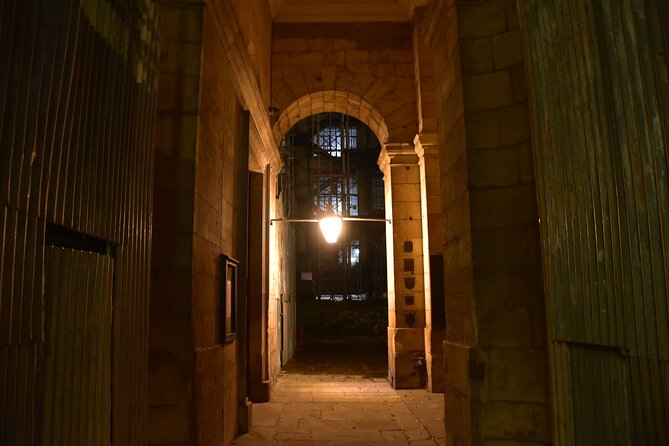
If London is your “big, beautiful, confusing” problem on a first night, this is a smart fix. The City of London can feel like a maze—narrow streets, tucked-in courtyards, church spires appearing out of dark corners. This tour gives you a guided mental map of that maze, by linking stories to physical places you can see.
What I like most is how the guide’s approach helps you connect the dots. The spooky elements don’t just float in from nowhere. Instead, you get a thread: why a certain grave matters, why a churchyard became a stage for fiction, why a pub door keeps banging, why criminal justice sites still leave a mark in local memory. It’s scare-seeking, yes—but also place-learning.
And doing it privately matters. In a larger group, you lose context while you wait your turn. Here, you’re more likely to ask the natural questions that pop up when you hear something specific—like why a devil shows up in architectural detail, or why one ghost story seems tied to a particular station entrance. Michael’s style (more historian than just guide) makes those questions feel welcome, not like interruptions.
You can also read our reviews of more walking tours in London



Price and Value: Is $247.70 Per Group Worth It?
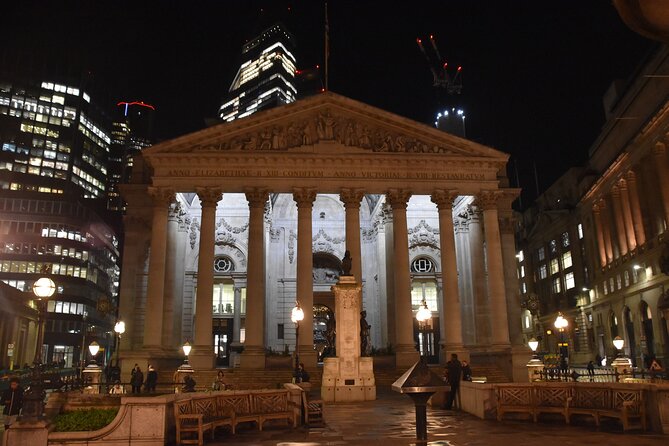
The price is listed as $247.70 per group (up to 15). That’s the key detail: you’re not paying per person in a way that balloons fast. With a private tour, your group can spread the cost better than you’d expect from many individual-ticket ghost walks.
Is it good value? For me, it depends on how you like to travel:
- If you enjoy stories that have real grounding—dates, locations, and how London’s past shaped fiction and local folklore—this is a strong fit.
- If you want a general “walk and scream” experience, you might find it too history-forward.
- If you’re traveling with friends or family, the private format is where the price starts to feel fair.
A small practical note: this kind of tour is booked about 45 days in advance on average, so if you’re set on a specific date, don’t wait for a last-minute vibe check.
Route Basics: Starting at Monument and Finishing Near Elizabeth Line
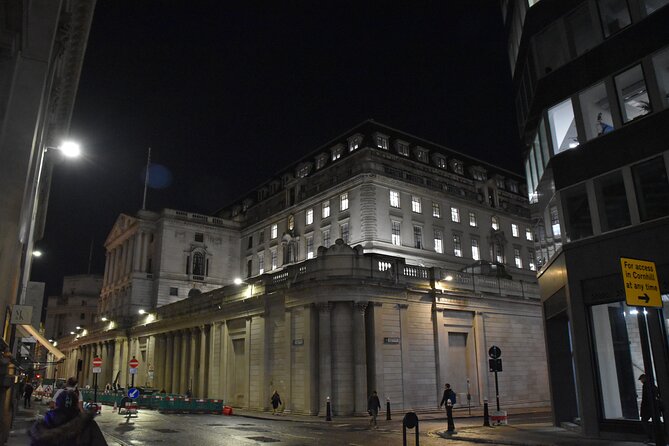
You meet at the Monument to the Great Fire of London at Fish St Hill (EC3R 8AH). From there, you move through the City’s church clusters and historic streets, then wrap near Farringdon Station on Cowcross St (close to the Elizabeth Line entrance).
That ending location is a real convenience. Farringdon is one of those stations that can make your next plan smoother, whether you’re heading to another sightseeing stop or getting back to your hotel. The tour runs about 2 hours (approx.), with many of the stops designed as short story moments—so you get a lot of different atmospheres without dragging on forever.
Comfort-wise, the tour asks for moderate physical fitness, and it’s built to be wheelchair and stroller accessible. If your group includes someone who needs extra time at stops, I’d factor that into your expectations: the pace is fast enough to stay lively, so you’ll want to be ready to move together.
Stop-by-Stop: City Churches, Haunted Pubs, and Criminal Courtyards
This is a route that constantly changes your emotional temperature—from churchyard unease to pub-door chaos to execution-era atmosphere. Here’s what you should expect as you go.
1) St. Magnus the Martyr: The Ghost That Points to One Grave
You begin at St. Magnus the Martyr, where the story centers on a shadowy figure people claim to have seen. The haunting is tied to a specific spot inside the church, and the narrative includes a key event: in 1951, a spiritual medium visited and revealed who the figure was and why it’s obsessed with that location.
The effect here is smart. You’re shown how a haunting legend can attach itself to place details—an act of pointing that feels almost like evidence. Even if you don’t go in believing the supernatural, you’ll appreciate the way the story is anchored to how people interpret a church interior.
You can also read our reviews of more private tours in London






2) 54–55 Cornhill: Devils in the Architectural Details
At 54–55 Cornhill, you’re asked to look upward. Instead of angels, the detail points you toward devils. The guide’s job here is to help you read the building like a storybook: not just seeing the ornament, but understanding why the devil imagery is placed where it is.
This stop is great if you love “wait, that was there the whole time” moments. The drawback is simple: street-level distractions can pull your eyes away, so do what the guide nudges you to do and actually look up.
3) St Peter-upon-Cornhill: Scrooge’s Shock Meets London Haunting
At St Peter-upon-Cornhill Church, the mood turns literary. You visit the churchyard tied to Ebenezer Scrooge’s horror at seeing his own grave in A Christmas Carol. From there, the tour connects London’s ghosts and gore to fiction written in London across centuries.
This stop is why I’d call the tour good for history buffs and scare-seekers. It’s not only about what happened—it’s about how London’s dark reputation fed the stories people later loved.
4) St. Michael’s Cornhill: When the Devil Came to London in a Storm
At St. Michael’s Cornhill, you get a weather-linked devil tale: the day the devil visited London during a storm. That’s a strong storytelling device because storms feel real. Even without believing, you can picture the fear.
5) St. Margaret Lothbury: A Haunted Ghost With a Bank Revenge Motive
At St. Margaret Lothbury Church, the story moves into revenge and institutional fear. You hear about a tall ghost said to haunt the Bank of England area, with claims it rattles guns, stomps stairs, and terrifies tellers. It’s presented as a haunting that now feels built into the setting.
This stop can land two ways. If you like workplace-late-at-night vibes, it’s fun. If you prefer quieter churchyard ghost stories, it might feel a bit louder in theme—still, it’s very on-brand for the City.
6) St. Mary Woolnoth: The Black or Bank Ghost and the “Brother” Question
At St. Mary Woolnoth Church, you tackle one of London’s most famous ghost ideas in the Bank area: the Black or Bank Ghost, tied to Bank Station and the Bank of England vicinity. The legend includes a specific chilling question: if someone asks you Have you seen my brother? from a woman in black, you’ve been pulled into the story.
While you’re here, the guide also shares a secret tied to the Bank Station Booking Hall—so this isn’t just a “look at the church” moment. It’s a story that reaches into modern London’s daily routes.
7) St. Michael Paternoster Royal: The Lord Mayor and a Still-Roaming Cat
At St. Michael Paternoster Royal Church, the haunting theme shifts into companionship and mischief. You’ll hear about the most famous Lord Mayor of London and his feline friend, a ratter said to still roam between this location and the next.
I like this stop because it’s less execution-era and more folk-charm. It also gives you a practical tip for your attention: follow what the guide points out, because the legend here is about movement and continuation.
8) St James Garlickhythe: Jimmy the Mummy’s Long Memory
At St James Garlickhythe, you encounter a darker kind of childhood curiosity. Workers discovered a mummified body near the altar in 1835, and it was displayed publicly for about twenty years. Children reportedly played with the remains, affectionately called Jimmy the Mummy. The story claims Jimmy still haunts the church and can be seen pointing to the burial spot.
This stop is emotionally heavy. It’s also one of those “London has always had weird fame” moments, where the past turns into a modern legend because the details are too strange to forget.
9) Williamson’s Tavern: Haunted Pub Panic With a Single Way Out
At Williamson’s Tavern, the mood becomes chaotic. It’s described as one of the most haunted pubs in London, with a history tied to Lord Mayors of London, poltergeists, and phantom stories that claim police dogs are petrified at the entrance. You also hear about doors that bang and steps heard inside, plus the idea that there’s only one way out.
If your group is nervous around confined spaces or loud sounds, plan for that. The story is “fun scary,” but the setup (pub interior cues) is meant to unsettle.
10) St. Mary Le Bow: The Most Cursed Church Instead of Haunted
At St. Mary Le Bow Church, you get a cultural detail that’s also useful for understanding the City. Being born within the sound of its bells links to being a Cockney or a proper Londoner. But the tour reframes it as cursed rather than haunted, with claims about burnings, collapses, accidents, and murders.
This is a strong stop if you like the way folklore becomes identity. You’ll likely leave with an easier time placing the City in the bigger London myth-machine.
11) Noble Street: Roman Walls, Medieval Walls, and Death From Day One
At Noble Street, you shift back to urban archaeology vibes. You learn it’s one of the oldest parts of London, tied to the Roman garrison and the founding of the City of London, and connected to parts of Roman and medieval walls. It’s also linked with death from the moment it was founded.
The story adds supernatural fun: orb photos, strange occurrences, and the idea that this is a place to catch something paranormal. This stop is more observational than other stops—so your payoff depends on your willingness to look carefully and stay present.
12) St Anne & St Agnes Garden: Plague Pits and Photo Orbs
At St Anne & St Agnes Garden, you’re taken to underground plague pit territory. The guide explains how plague affected London and how orbs still show up in modern photographs. You’ll be encouraged to take a picture to see if you spot one of the mysterious objects.
I’d treat this as a playful “photo prompt” rather than a guaranteed sighting. The real value is the reminder that the ground you’re standing on has held human tragedy for centuries.
13) Christchurch Greyfriars Church Garden: Multiple Ghosts in One Ruin
At Christchurch Greyfriars Church Garden, you explore ruins tied to a larger church that used to exist there. The hauntings here include several figures: Queen Isabella and her lover, a married couple arguing constantly, a religious prophetess, a monk, and a greyhound.
This stop works because it feels like a collection. You’re not waiting for one big reveal—you’re seeing how one location can host many legends at once.
14) Temple Bar: Severed Heads and a Gateway Haunted by Condemned Souls
At Temple Bar London, you’re in the presence of an architectural landmark designed by Sir Christopher Wren. Here, the story turns brutal: criminals whose justice ended them had severed heads displayed publicly. The gateway is said to be haunted by the souls of the condemned.
This is where the tour’s “gore” tone is the most direct. You should go in emotionally ready for execution-era details.
15) Amen Court: Newgate Prison Walls and Kids Singing Over Bones
At Amen Court, you can see remaining walls of Newgate Prison. The story claims the prison was notorious, and that today children play and run over the bones of men condemned to death. The guide also explains the puzzling part: why children play there and how residents seem unaware their homes sit on bones.
This stop is effective because it forces contrast. You watch normal life happen in a place built on historical punishment.
16) The Viaduct Tavern: Fred the Mischievous Ghost
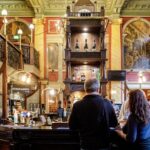
At The Viaduct Tavern, you get a lighter, mischievous haunting. The tour says it’s the most haunted pub in London, with a ghost named Fred known for harmless but confusing tricks—like flushing ladies’ loos while the pub is in use. A medium questioned Fred’s identity, adding a strange layer to the legend.
After heavier sites, this reads like a relief valve. It’s still eerie, but in a prank-like way.
17) Old Bailey: The Black Dog of Newgate and Street-Level Justice
At Old Bailey (Central Criminal Court), the story ties back to Newgate Prison. The building sits on the old Newgate site, where people were hung in the street until 1868. You also hear about the Black Dog of Newgate and get the warning: if you see a large black dog, update your will.
This is one of the stops where the guide’s narrative pacing matters. It can feel like a horror movie trailer if you keep up, but you’ll want to stay focused to catch the cause-and-effect of the legend.
18) Holy Sepulchre Church: The Execution Bell Tradition
At Holy Sepulchre Church, you hear about an execution bell that tolls just before an execution at nearby Newgate Prison and Old Bailey. The tour also covers the ringing custom and a ghost story that started in the churchyard and continues into the next location.
This is a good stop if you enjoy ritual details. Bells are sensory—sound creates memory—and the story uses that idea well.
19) Cock Lane: The Church Clerk Story Reaches Its End
At Cock Lane, the tour brings the Holy Sepulchre Church clerk story to its dramatic conclusion. It involves major minds working to save a man’s life, with a young girl acting as a channel for a dead woman who insists she was murdered.
This stop shifts from atmosphere to investigation. It’s less about a single ghost sighting and more about how people believed in spirits when facing real-life danger.
20) Golden Boy of Pye Corner: Resurrection Men and Dissected Bodies
At Golden Boy of Pye Corner, you learn it marks the furthest west point west of the Great Fire of London. The statue once stood on the wall of a notorious pub that held stolen bodies for doctors at St Barts Hospital to buy and dissect. You’ll hear about grave robbing, resurrection men, and why fresh corpses were prized—leading to a series of murders.
This is one of the tour’s most “explain-the-system” stops. It shows you how demand can create crime, which makes the horror feel more grounded than random ghost nonsense.
21) West Smithfield: Hung, Drawn, Quartered, and Cooked in the Market Smell
At West Smithfield, the history is direct and brutal: execution site tied to William Wallace and Wat Tyler, with hung, drawn, and quartered stories. The tour adds other horrific deaths like being burnt at the stake and being boiled alive. It also ties the horror to the adjacent butcher’s market smell—blood, meat, and bone.
If you’re sensitive to violence, be honest with yourself before booking this one. This is where “gore” stops being a marketing vibe and starts being a theme.
The tour then links forward to St Bartholomew’s Hospital, claiming it’s haunted too, with poltergeists, a haunted lift, and students hearing strange goings on late at night.
22) St Bartholomew the Great: Rahere’s Limp After 700 Years
At St Bartholomew the Great, you hear about Rahere, the founder, who is said to hobble around the building after 700 years of walking normally. You’ll also hear who is to blame for his limping.
This stop is creepy in a slightly different way: it’s tied to a single enduring physical detail. It’s easy to picture and hard to forget.
23) Rising Sun: A Resurrectionist Pub and a Disturbing Ghost Story
At The Rising Sun, the tour says it was also a resurrectionist pub and is home to one of the most disturbed ghosts in London. You also get a cautionary note about finding female staff willing to live on-site, and the tour references a reputation involving a “sex pest ghost.”
This stop is not subtle. It’s also where you should decide if you’re comfortable with the tour’s more adult framing alongside the historic setting.
24) The Charterhouse: Plague Pits, Executed Monks, and Modern Science Explanations
The final stop is The Charterhouse, a short walk from the Elizabeth Line entrance to Farringdon Station. Here, the big theme is plague pit scale: it’s estimated 50,000 people were buried underneath these buildings. The guide also explains that monks were executed during the Reformation and that the most common ghost sighting is a phantom monk praying, along with a duke who lost his head.
Then you get an interesting pivot: the guide mentions how modern medical science might explain strange goings-on, noting that a prestigious school of psychiatry is located at Charterhouse Square.
That last contrast helps the tour feel more complete. You get the ghost story ending, then a reasoned reality check for why human brains (and communities) make sense of fear.
What I’d Do Differently: Tips for Better Fright and Better Photos
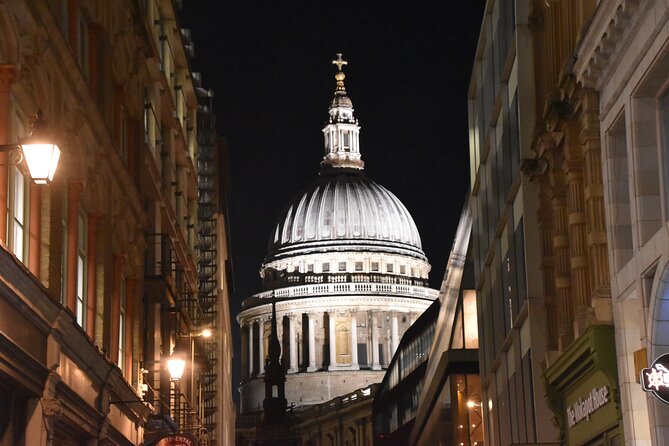
This tour is a lot of stops in two hours, so your success depends on attention and shoes.
- Wear comfortable walking shoes with good grip. The City streets aren’t always forgiving at night.
- Bring a phone camera ready, especially for the orb-style stops like St Anne & St Agnes Garden (and maybe Noble Street if you’re into that kind of photo challenge).
- If you care about the “why” behind the legend, ask Michael questions. The guide’s historian approach is a big part of the value.
- If gore-heavy storytelling makes you squirm, mentally flag the execution-and-dissection chapters (Temple Bar, Amen Court, Old Bailey, West Smithfield, Pye Corner). You can still enjoy the rest with your expectations set.
Accessibility and Comfort: Built for Real Bodies, Not Just Pretty Stories
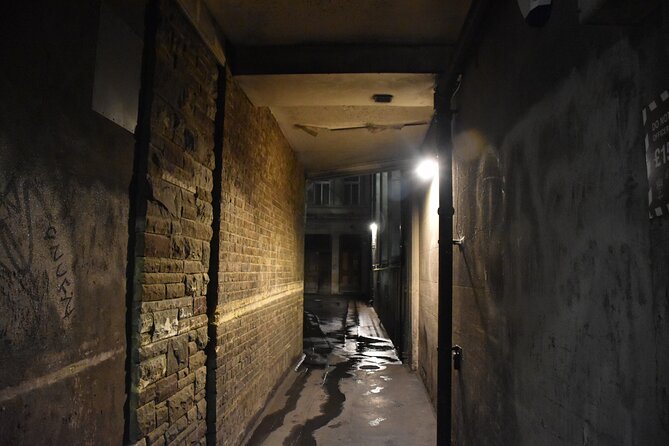
The tour is listed as wheelchair and stroller accessible, and service animals are allowed. That’s a good sign because ghost tours can sometimes ignore practical needs.
You do still want moderate physical fitness for the walking portion and multiple short stops. The good news is that each site is given a tight window—so you’re not stuck waiting forever at one location. If your group has different mobility levels, go with a “move when the group moves” plan and don’t treat each stop like a long museum visit.
Should You Book This Private Ghost and Gore Tour?
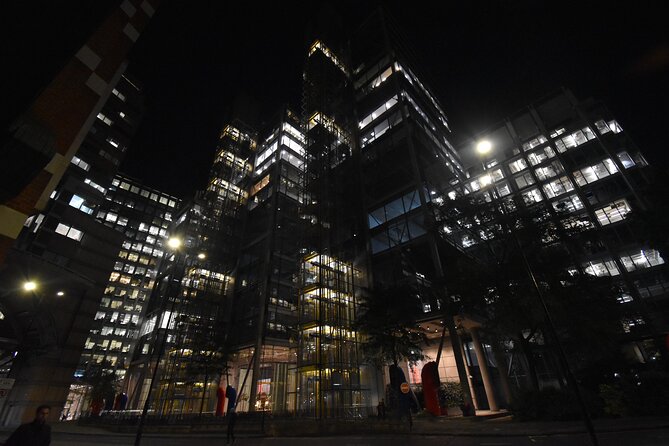
Book it if you want a London night walk that mixes scares, place-based storytelling, and historical context—and you like the idea of a guide who can connect legend to real City locations. I’d especially recommend it for:
- history buffs who hate vague storytelling
- groups who want a private format instead of a large crowd
- people who are comfortable with darker, gore-tinged tales and execution-era themes
Skip it (or consider a different style of tour) if you want a gentler, purely spooky evening or if heavy violence details are a no-go for you.
From the reviews, the big win is clear: a guide like Michael who treats the macabre as history with a sense of timing, plus a private setup that makes the experience feel personal rather than rushed.
If that sounds like your kind of London, this one is a strong choice.