REVIEW · LONDON
West End and South Bank Theatre Walking Tour in London
Book on Viator →Operated by Charlie Tantam · Bookable on Viator
A day of theatre facts, on foot. This West End and South Bank tour strings together famous stages, lesser-known theatre lore, and practical tips for experiencing London theatre like an insider. It’s led by Charlie Tantam, capped at 12 people, and ends at Shakespeare’s Globe for a strong finish.
I love two things most: the pace of the route (it covers a lot without feeling rushed) and the way Charlie connects each building to what happened on that stage. One stop even points you to a discount ticket booth area, which is gold if you’re hoping to see a show without paying full sticker prices.
One consideration: this is a long walking circuit through dense theatre districts, so bring comfortable shoes and be ready for a lot of standing outside while the guide talks.
In This Review
- Key things that make this theatre walk worth it
- The big idea: a guided theatre map you can actually use
- Meeting point and the walking rhythm (Oscar Wilde to Shakespeare’s Globe)
- Stop 1-4: London Coliseum to Noel Coward Theatre
- Stops 5-7: Leicester Square, Haymarket Theatre, and His Majesty’s Theatre
- Stops 8-10: Harold Pinter Theatre, Prince of Wales, and the theatre power road
- Stops 11-14: Lyric Theatre, Apollo Theatre, Gielgud, and Sondheim Theatre
- Stop 15-16: Palace Theatre and Ambassadors Theatre
- Stops 17-19: St. Martin’s Theatre, The Arts Theatre, and Covent Garden
- Stops 20-22: Royal Opera House, Fortune Theatre, and Drury Lane
- Stops 23-24: Lyceum Theatre and the National Theatre finish line
- Stop 25: Shakespeare’s Globe and the Bankside story
- Price and value: $38.39 for a lot of guided storytelling
- Who this tour is best for (and who should choose something else)
- Should you book this West End and South Bank theatre walk?
- FAQ
- How long is the tour?
- Where does the tour start and end?
- What time does the tour begin?
- Is the tour in English?
- How many people are on the tour?
- Are theatre tickets included?
- Is the tour affected by weather?
Key things that make this theatre walk worth it
- Small group of 12: more chance to ask questions and keep the energy human.
- From West End to the South Bank: you don’t just see posters; you finish with Shakespeare’s Globe and the National Theatre area.
- Charlie Tantam’s theatre stories: specific names, opening dates, and stage legends show up at nearly every stop.
- Built-in value tips: you get guidance on where to look for cheaper seats around Leicester Square.
- 25 theatre landmarks: it’s a true “theatre map” of central London, not a quick highlights tour.
The big idea: a guided theatre map you can actually use
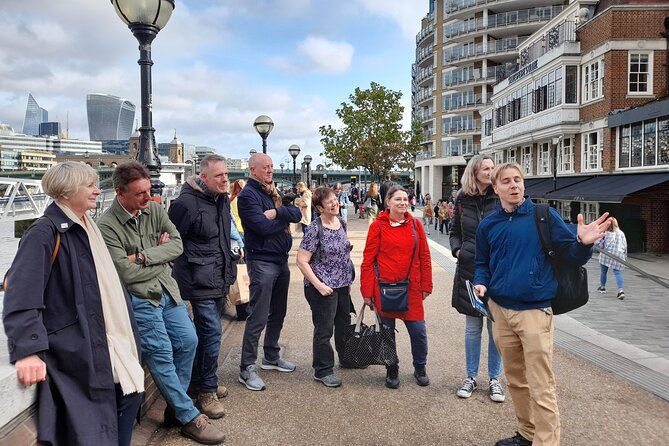
London has theatre everywhere, but most tours either skim the surface or focus on one area. This one connects the dots across the West End and into the South Bank, so you start seeing the city like an old pro—roads, blocks, and stages all make sense together.
What you gain isn’t just photos. You get context: when a theatre opened, what it’s known for, and which famous performers got their start there. That makes the next night out in London feel smarter, not random.
And yes, it’s an eye-opener how many theatres are packed into a tight radius. By the end, the West End doesn’t feel like a single district—it feels like a network.
You can also read our reviews of more walking tours in London



Meeting point and the walking rhythm (Oscar Wilde to Shakespeare’s Globe)
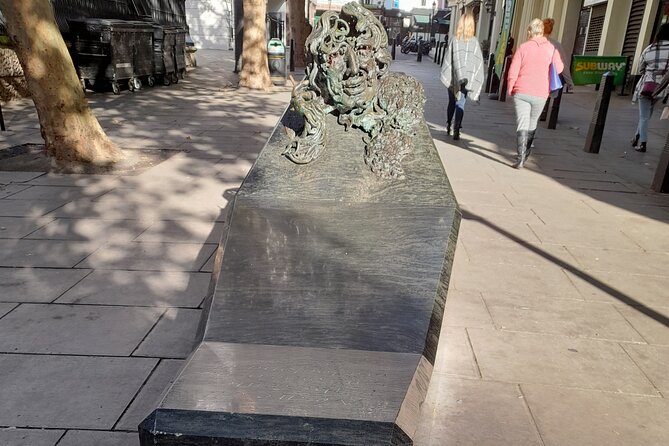
The tour meets at the Oscar Wilde Statue on Adelaide Street (3 Adelaide St, London WC2N 4HZ) and starts at 10:30 am. It ends at Shakespeare’s Globe (21 New Globe Walk, London SE1 9DT), so you’ll finish on the South Bank side with plenty of food and transport nearby.
Duration is listed at about 3 hours 30 minutes, but plan for the real world: with lots of stops and questions, it may run closer to four hours. The route is designed for moderate fitness, so you don’t need to be an athlete, but you do need comfortable footwear.
Also, this experience is weather-dependent. If it’s poor weather, you’ll be offered a different date or a full refund.
Stop 1-4: London Coliseum to Noel Coward Theatre
The walk begins with some serious West End heavyweight energy. At the London Coliseum, you’ll learn the theatre’s background and why it’s considered the largest in the West End. It’s a strong first stop because it sets a clear tone: this area wasn’t built by accident.
Next is the Duke of York Theatre, where you’ll hear about stars who made early appearances there, including the connection to Peter Pan. Even if you’re not a hardcore theatre nerd, it’s the kind of detail that makes a familiar show feel anchored to a real place.
Noel Coward Theatre is a quick stop with a standout angle: it’s described as the only West End theatre where two big theatre giants shared the stage. Then Wyndham’s Theatre adds a fun visual hook with the bust of Shakespeare on the front—claimed as the only one in the West End.
Practical tip: early in the day, look up. Many of the key stories are tied to exterior features and names, and you’ll get more out of the tour if you glance around rather than only tracking the route.
Stops 5-7: Leicester Square, Haymarket Theatre, and His Majesty’s Theatre
Leicester Square is where modern theatre meets old music hall energy. You’ll also get guidance on the discount ticket booth area—how to hunt for great seats at lower prices. If you’re trying to balance budget and buzz, that tip alone can make the tour feel like it paid for itself.
From there, you’ll move to Haymarket Theatre Royal. It’s linked to famous actors like Ian McKellen and Judi Dench, plus there’s even a rumour of a haunting. That’s not just spooky for fun—the point is how theatre buildings collect stories over time.
At His Majesty’s Theatre, you’ll hear it’s the second-oldest active theatre site in London. You’ll also connect it to The Phantom of the Opera, noted as the second-longest running musical. That combination—age plus long-running popularity—helps explain why West End theatres still matter even after decades.
Stops 8-10: Harold Pinter Theatre, Prince of Wales, and the theatre power road
Harold Pinter Theatre (opening in 1881) is a major pivot for the tour. You’ll hear about stars linked to the stage, including a mention of Marilyn Monroe. The guide’s job here is to translate dates into meaning—why certain theatres became magnets for big-name work.
Prince of Wales Theatre is where comedy and spectacle take over. It’s now associated with The Book of Mormon, but you’ll also hear that the theatre has hosted major comedic and musical runs. Notable names mentioned include the Beatles, Peter Sellers, and Barbara Streisand—so it’s not just one genre, and it’s not one era.
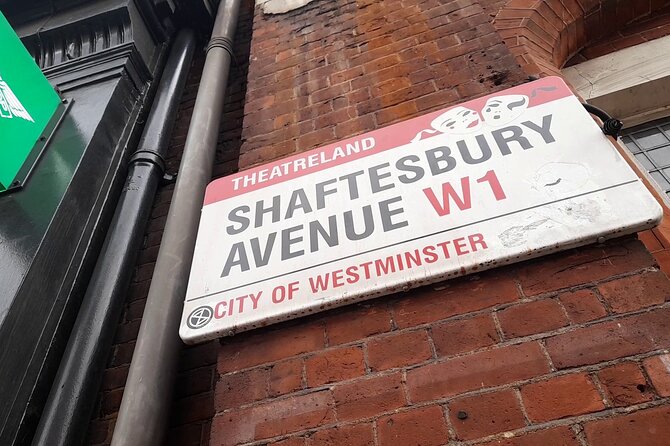
Then comes Shaftesbury Avenue, described as a road with more theatres than any other. This is one of the most useful sections of the whole walk because it turns geography into a shortcut: you start to understand how theatre districts work and why this corridor is such a magnet.



Stops 11-14: Lyric Theatre, Apollo Theatre, Gielgud, and Sondheim Theatre
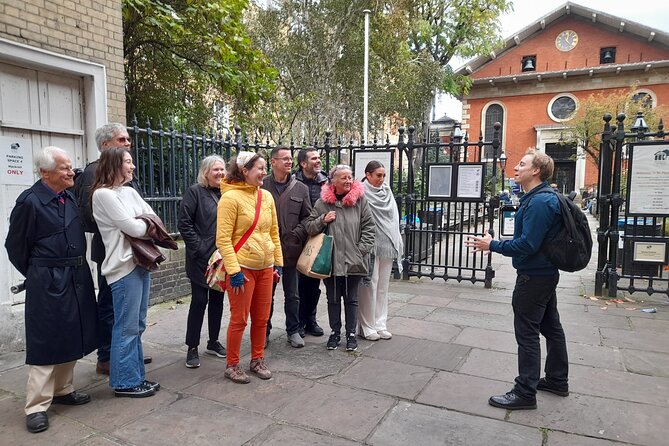
The Lyric Theatre is flagged as the oldest surviving theatre on Shaftesbury Avenue. There’s also a tragic note tied to a British comedy icon—another reminder that theatres are not only about glamour. They’re part of real people’s lives, good and bad.
Apollo Theatre gets an Edwardian spotlight, with an opening in 1901. You’ll also hear it once hosted a legendary production of its time—again, the guide ties buildings to what the public actually remembers.
Gielgud Theatre now carries the name of Sir John, and you’ll learn it’s seen West End debuts by famous faces, including “Harry Potter himself.” That framing is great for modern visitors: it makes old stages feel relevant, not museum-like.
Sondheim Theatre rounds it out by connecting to Les Misérables, highlighted as the world’s longest-running musical. You’ll also hear about other famous debuts in the 1980s tied to this venue.
Why this stretch works: you’re not just watching a list of names. You’re seeing how the West End shifted from earlier theatre eras into modern mega-musicals, without losing the character of older playhouses.
Stop 15-16: Palace Theatre and Ambassadors Theatre
Palace Theatre is a key moment because it’s the one place where admission ticket is not included. That matters. It usually signals that if you want to go inside, you’ll need to sort that separately—so it’s smart to treat this as a place for deciding on the spot, not a guaranteed entry.
Then you’ll move to Ambassadors Theatre. From the outside it may seem plain, but the point of the stop is how misleading that can be. The guide shares connections to star debuts like Vivien Leigh and Paul Robeson, proving the building’s story is bigger than the facade.
This is a good reminder for you as a visitor: West End “wow” isn’t only in the grandest-looking entrances.
Stops 17-19: St. Martin’s Theatre, The Arts Theatre, and Covent Garden
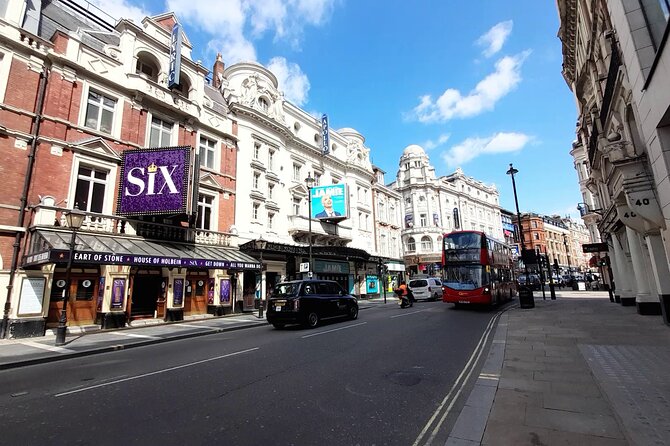
St. Martin’s Theatre is home to The Mousetrap, described as the world’s longest-running play. Even if you’ve never seen it, hearing that title attached to a specific address makes it feel less like a trivia fact and more like an ongoing London tradition.
The Arts Theatre is labeled as the West End’s smallest theatre, and you’ll learn it has a past tied to the most controversial play of all time. This is a great stop if you like theatre as a social force, not only entertainment.
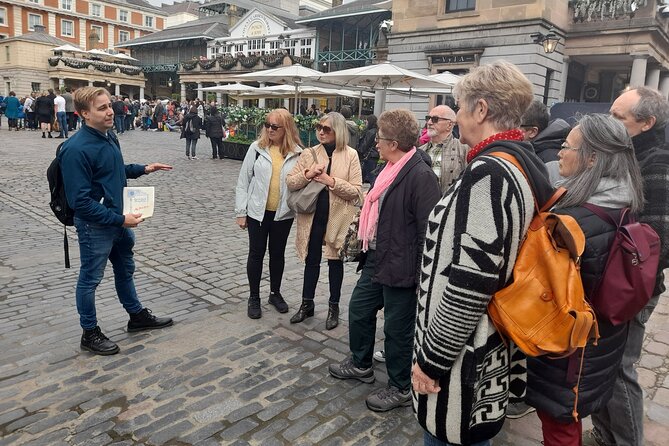
Then the tour turns to Covent Garden. You’ll see the legendary Covent Garden Market area, hear about London’s Actors Church, and get pointed at street theatre spots. Covent Garden also ties back to older theatre sites, which makes the “theatre spirit” feel bigger than just West End seating.
Stops 20-22: Royal Opera House, Fortune Theatre, and Drury Lane
Royal Opera House is timed and framed differently than the other stops, with a founding date of 1732. It’s currently home to the Royal Opera and Royal Ballet, so this part helps you broaden your theatre lens beyond plays and musicals.
Fortune Theatre is linked to The Woman in Black, described as the longest-running horror play. The guide also shares spooky stories tied to its 30+ year history, which fits the vibe of this stretch perfectly.
Then you’ll reach Theatre Royal Drury Lane, described as the oldest active theatre spot in the West End. You’ll hear legends of past performers and why this stage helped shape the West End’s reputation long before today’s crowds.
Stops 23-24: Lyceum Theatre and the National Theatre finish line
Lyceum Theatre connects to The Lion King, with the note that it’s been running since 1999 and remains a hot ticket. You’ll also hear about Victorian-era leading actors like Sir Henry Irving and Dame Ellen Terry, plus the mention of the genesis of a famous gothic horror creation. (The tour keeps it dramatic without needing you to know every literary reference ahead of time.)
National Theatre is where the tour shifts from theatre as spectacle to theatre as institution. You’ll hear the National’s history, including a quote attributed to Laurence Olivier saying the opposite of something about the theatre. Even if you don’t catch every nuance, it adds personality—like learning theatre is also about strong opinions.
Stop 25: Shakespeare’s Globe and the Bankside story
The finish is Shakespeare’s Globe at Bankside, with a chance to see the famous reconstruction of the Globe Theatre. You’ll also get the context of where Shakespeare made his name, which is the perfect emotional closer after spending the day moving through later London theatre fame.
The tour also notes a final “top-secret theatre location.” That last detail is small, but it’s a smart way to end: it gives you one last surprise to look for rather than turning the day into a straight march.
Price and value: $38.39 for a lot of guided storytelling
At $38.39 per person, you’re paying for time, a guide, and a walking route that layers meaning onto landmarks. You’re not paying for entries at most stops—many are listed as free admission—so your money goes toward interpretation, not paperwork.
What makes the value feel real is the density. You cover theatre landmarks across multiple districts in roughly 3.5 hours, with a cap of 12 people. That group size is what keeps the guide’s commentary from turning into a generic script.
Also, the tour points you to the practical side of theatre life: the discount ticket booth area around Leicester Square is the clearest example. Even if you don’t buy anything that day, you’ll know where to look when you’re planning your own show night.
Who this tour is best for (and who should choose something else)
This works best if you fall into one of these groups:
- You love theatre and want history tied to real buildings.
- You want a route plan for where to stand, look up, and make sense of the West End.
- You like learning names, opening eras, and the “who started where” angle.
You might choose differently if you only care about interiors and ticketed shows. Most stops here are about landmarks and guide talk, and only one major stop (Palace Theatre) flags admission ticket not included.
It’s also ideal if you’re solo or as a couple, since the small-group format helps you feel like you’re in the conversation rather than getting lost in a crowd.
Should you book this West End and South Bank theatre walk?
I’d book it if you want one strong afternoon that teaches you how London theatre works—then leaves you ready to enjoy your own evening out. The fact that the guide is Charlie Tantam, the group is 12, and the tour hits both West End and South Bank landmarks makes it feel like more than a “see the sights” checklist.
If you’re short on time but still want a theatre education, this is a smart way to spend it. Just plan for walking, bring comfortable shoes, and treat it like a guided theatre course you get to enjoy at street level.
FAQ
How long is the tour?
The tour lasts about 3 hours 30 minutes.
Where does the tour start and end?
It starts at the Oscar Wilde Statue, 3 Adelaide St, London WC2N 4HZ, and ends at Shakespeare’s Globe, 21 New Globe Walk, London SE1 9DT.
What time does the tour begin?
The start time is 10:30 am.
Is the tour in English?
Yes, the tour is offered in English.
How many people are on the tour?
The tour is capped at a maximum of 12 travelers.
Are theatre tickets included?
Most stops list admission ticket as free, but Palace Theatre specifically notes that admission is not included.
Is the tour affected by weather?
Yes. The experience requires good weather, and if it’s canceled due to poor weather you’ll be offered a different date or a full refund.