REVIEW · LONDON
WW2 London Blitz Private Tour
Book on Viator →Operated by Ye Olde England Tours · Bookable on Viator
London’s wartime streets tell a hard truth. This private WW2 London Blitz tour strings together wartime landmarks and memorials you’d miss in a standard sight-seeing loop, with a guide who explains what you’re actually looking at. I like the private pacing that lets your group linger and reset as needed, and I like the built-in convenience of hotel pickup before you reach the start.
One thing to consider: several major stops are pass-by or exterior views, and not every site includes entry. It’s also a fair amount of walking over uneven ground, so plan for a moderate fitness level.
In This Review
- Key things to know before you go
- Entering The Blitz story: why this 3-hour route feels focused
- Meeting point at Portcullis House and hotel pickup that saves your time
- Westminster wartime landmarks: Battle of Britain to Parliament Square
- Parliament and Westminster Abbey grounds: seeing symbols without extra entry tickets
- The “marks of war” shift: Christchurch Greyfriars to St Paul’s
- Firefighters and civilian disaster memorials: the emotional backbone
- Ending at St Paul’s Station: getting back to your day without stress
- Price and value: is $259.12 per person worth it?
- The guide experience: what to expect from Stephen or Kevin-style storytelling
- Should you book this WW2 London Blitz Private Tour?
- FAQ
- How long is the WW2 London Blitz Private Tour?
- What are the tour start and end points?
- Do you offer hotel pickup?
- Is the tour offered in English?
- Are attraction tickets included?
- What fitness level do I need?
- When does the tour operate?
- Is it a private tour?
Key things to know before you go
- Private tour, only your group: no crowd shuffle, and your guide can match the pace to your questions.
- Convenient hotel pickup then Tube to start: you spend less time routing yourself across Westminster.
- A tight route that mixes politics and the human cost: Churchill-era sites sit side-by-side with memorials for civilians.
- Guided context at almost every stop: you’re not just looking; you’re learning what the location meant during bombing.
- Some sites are outside-only: you’ll see key symbols and exteriors even when entry isn’t included.
- The finale lands you at St Paul’s Station: handy for onward travel after the walk.
Entering The Blitz story: why this 3-hour route feels focused
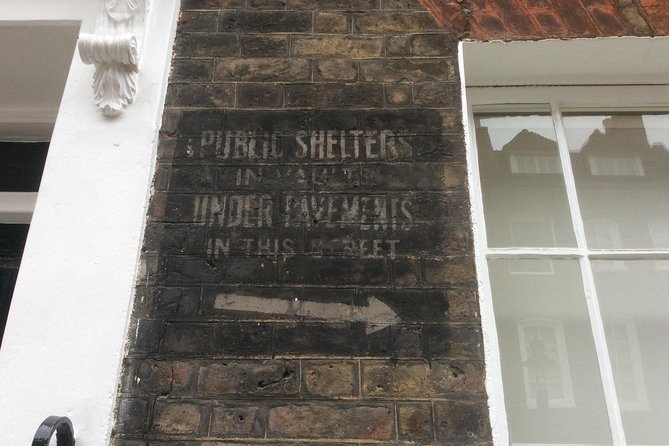
This tour is built around the places where wartime London still shows its scars. You’re not getting a general UK history walk. Instead, you get a guided sequence of memorials, statues, and landmark streets that connect to the Blitz, the people affected, and the command decisions made above ground while London was under attack.
What makes the route work is the mix of scales. You move from big national symbols to small, specific tragedies. The Battle of Britain and the Cenotaph are about collective resolve. Then the tour shifts toward the consequences on everyday streets—firefighters, air-raid shelter disasters, and even children’s evacuee memories. That balance is what turns a list of stops into a story you can actually feel.
You can also read our reviews of more private tours in London


Meeting point at Portcullis House and hotel pickup that saves your time
You start at a Caffè Nero inside Unit B, Portcullis House near Bridge Street (SW1A 2JH). It’s a practical spot because it sits in the Westminster orbit, close to where you’ll be walking next.
If you book pickup, you can meet your guide at any Central London hotel (not just a fixed shortlist). After that, you transfer by Tube to the tour starting point. That’s a smart setup. London can be slow on the ground, and Tube time usually beats fighting traffic with a group that’s already on a schedule.
For your planning: the tour runs daily from 9:30 AM to 12:30 PM, and it’s in English. It also operates in all weather, so treat it like a walk you dress for, not a museum you wait out.
Westminster wartime landmarks: Battle of Britain to Parliament Square
The early part of the tour puts you right in the heart of political London. But the key is that you see it through a wartime lens, not as postcard Westminster.
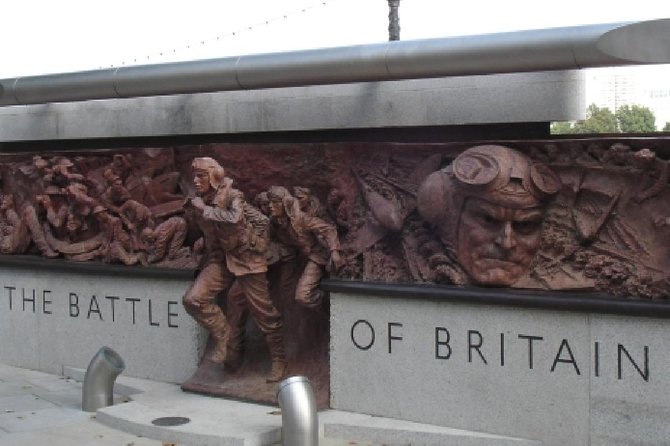
Battle of Britain Monument
You begin at the memorial tied to the Battle of Britain, positioned just minutes from Big Ben and behind the old War Office. The guide commentary here sets the tone: this is about national survival and the early air war that shaped what came next.
The Cenotaph
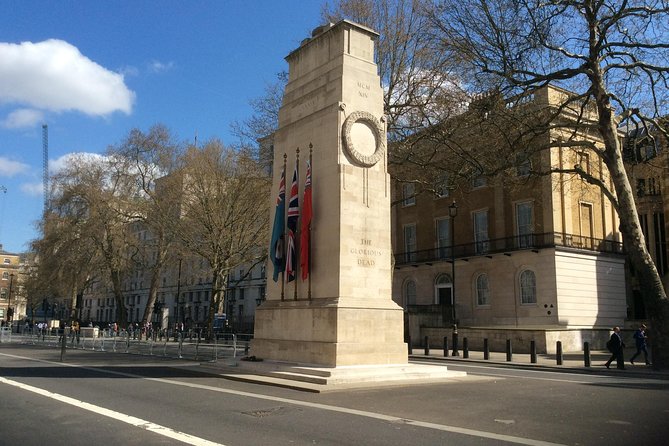
Next is the Cenotaph, the national War Memorial. It’s the kind of place where standing still is part of the experience. You get to link the physical monument to what the Blitz era demanded from the public and from leaders.
10 Downing Street (outside viewing)
You stand outside the gates of 10 Downing Street. During the Blitz, this was the office associated with Prime Minister Winston Churchill, and the tour uses that connection to show how leadership and public life intersected during bombing.
Horse Guards Parade at Whitehall (with The Citadel reference)
At Whitehall, you’ll see the area tied to what the last stand in London might have looked like if invasion succeeded. This stop broadens your perspective beyond bombs to the overall threat landscape.
Churchill War Rooms (outside only)
You’ll visit the Churchill War Rooms from the outside. Tickets aren’t included here, and you’re mainly seeing the famous bunker exterior. Still, the location matters. It represents the command space below ground while London above was being hit.
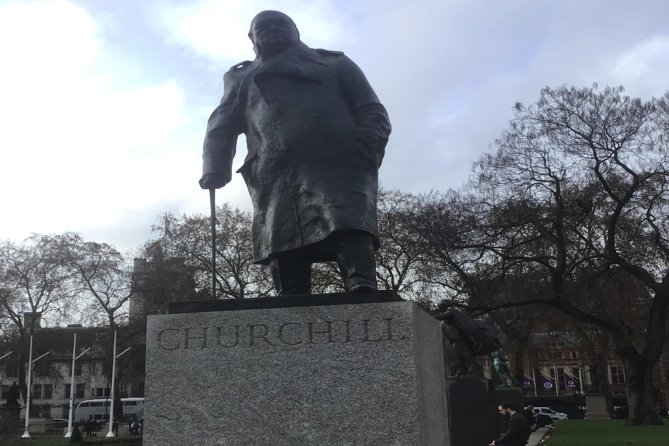
Winston Churchill Statue
Then there’s Churchill as a visual marker of the era: the guide ties the statue to the idea of him inspecting bomb damage around Parliament during the Blitz.
Parliament Square and nearby air-raid shelter signs
This is where the tour gets more “human-sized.” You’re in the central public space where generations have fought for democracy and equality, and nearby you’ll also look for surviving signs related to public air-raid shelters from the Blitz era. Even short stops here can feel heavy if you pay attention to what the built environment is whispering.
Parliament and Westminster Abbey grounds: seeing symbols without extra entry tickets
After Parliament Square, you pass key landmarks that are famous today. The value on this tour is not paying to enter; it’s using the sightlines and symbolism to understand the wartime setting.
Houses of Parliament (outside viewing)
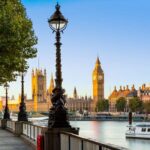
You get to see the Houses of Parliament, known as the Mother of Parliaments. Admission isn’t included, so it’s an exterior stop. But the guide commentary helps you connect the architecture to what the Blitz aimed to disrupt: the government, the morale, and the normal rhythm of national life.
Westminster Abbey grounds (pass through the area)
You also pass through the grounds of Westminster Abbey, where English and British monarchs have been crowned since 1066. This stop can be quick, but it adds context. Even when you’re focused on the Blitz, the long timeline makes the 1940s feel less like an isolated moment and more like a brutal interruption of centuries.
Practical note: if your legs are already feeling it, use these passage moments to rest your brain. This is a tour with a lot of brief stops, not one long stop that lets you fully recharge.
The “marks of war” shift: Christchurch Greyfriars to St Paul’s
As you move forward, the tour shifts from political center to the reminders of bomb impact and the emergency services mindset.
Christchurch Greyfriars Church Garden (entry included)
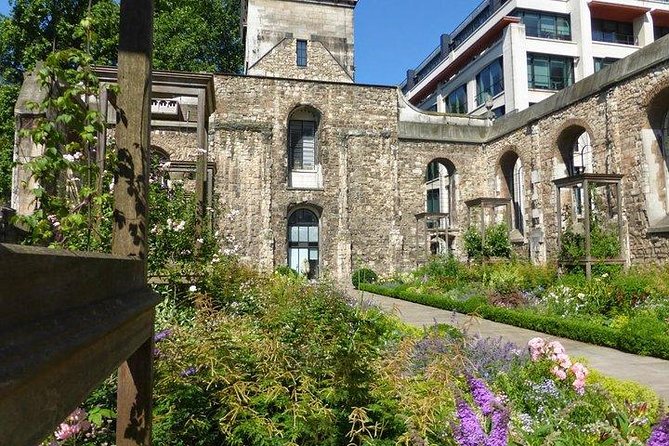
You end up at Christchurch Greyfriars Church Garden, maintained as a memorial garden inside the outer walls. The tour includes admission here. This matters because it’s one of the few times you can step into a more reflective space rather than only viewing from the street.
The garden is tied to the same great raid that targeted St Paul’s. It’s a good spot to slow down and let the guide’s story settle.
St Paul’s Cathedral (outside viewing)
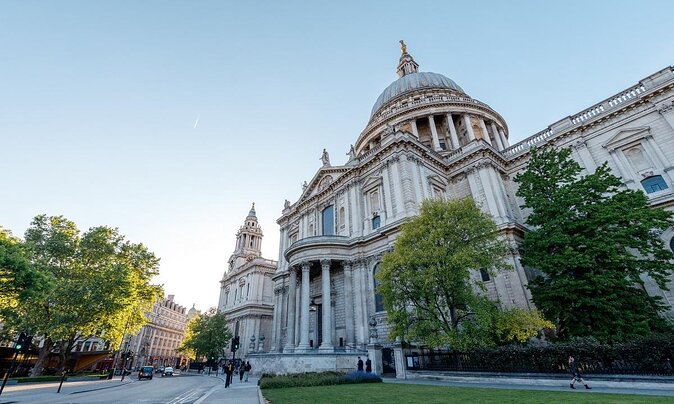
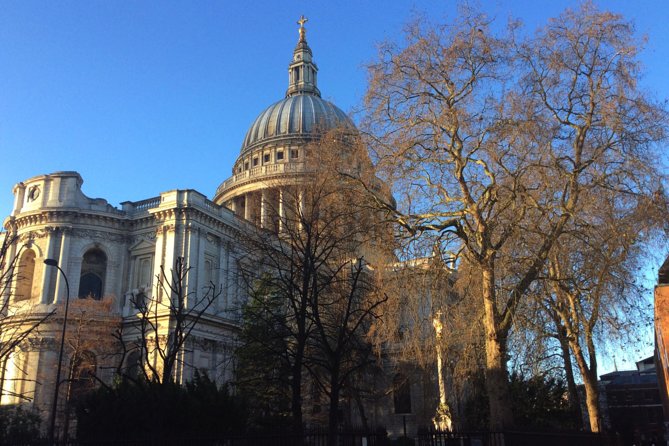
You then see St Paul’s Cathedral and its significance as a major target during the Blitz—described as Hitler’s number 1 target in London. Admission isn’t included, so you’re taking in the exterior and letting the narration connect it to the real-world purpose of bombing: destruction, fear, and disruption.



Firefighters and civilian disaster memorials: the emotional backbone
This is where the tour earns its name beyond monuments. The stops are small and specific, and that’s what makes them hard to forget.
National Firefighters Memorial
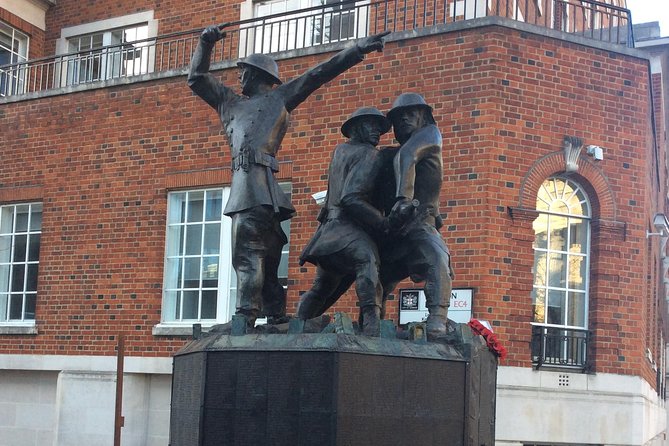
You see the memorial to firefighters who gave their lives defending London’s people and buildings. This is a different kind of wartime heroism than politicians or soldiers. It also lines up well with the rest of the tour’s focus on the human cost of bombing.
Stairway to Heaven Memorial (Bethnal Green)
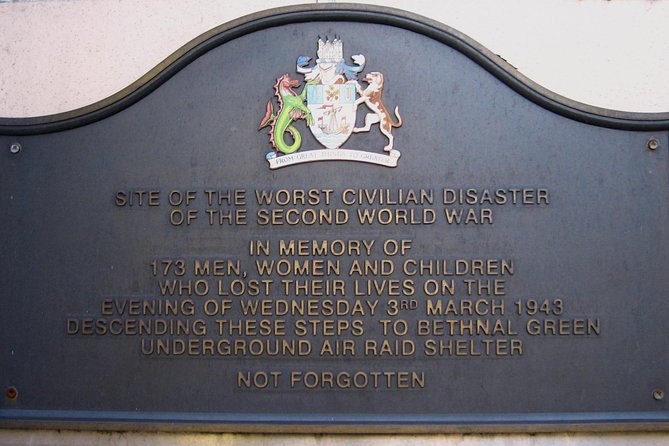
Next is a sobering stop: the memorial to 173 people who died at Bethnal Green during what’s described as the biggest civilian disaster in The Blitz. This is not a story about strategy. It’s about what fear, confusion, and overcrowding can do in a moment when civilians are trying to survive.
Fur Das Kind Memorial (Liverpool Street Station)
At Liverpool Street Station, you visit the Kindergarten memorial and hear tales tied to childhood evacuees traveling by train. It’s a reminder that war reshapes families, not just buildings.
West Smithfield: V2 rocket impact and WWI bomb damage
Finally, you reach West Smithfield, tied to a penultimate V2 rocket hit in London, and you also see bomb damage from when London was bombed in WWI. This stop is useful because it connects the Blitz to the broader pattern of air attack and aftermath across time. It also helps you realize that bombing wasn’t only about 1940–41. The violence kept evolving.
Ending at St Paul’s Station: getting back to your day without stress
The tour finishes at St. Paul’s Station (Stop SP), for easy onward travel. That ending point is genuinely practical. You’re near major transport lines, and it’s a clean way to cap a walking tour that starts near Westminster.
If you’re planning dinner or a museum visit after, this ending makes your day easier. You won’t need to backtrack across central London just to find a station.
Price and value: is $259.12 per person worth it?
At $259.12 per person, this is not a budget stroll. The value only makes sense if you treat it like what it is: a private guided route with hotel pickup and a focused WW2 Blitz theme.
Here’s how I’d judge the cost:
- If you’re traveling as a couple or small family, private usually means you pay more per person but get a better fit—questions answered, slower pace when needed, and less time being herded.
- The guide’s commentary matters here because most stops are short and often exterior. Without the narrative, you’d just be reading plaques. With the narrative, you’re seeing why the location matters.
- Group discounts exist, so if you have a small group you can share costs with, the economics get friendlier.
Also, remember the tradeoff: several major sites are exterior-only and ticketed admissions aren’t included for everything. That’s not a deal-breaker if your priority is guided context around key WWII locations rather than check-in-to-check-out attraction tickets.
The guide experience: what to expect from Stephen or Kevin-style storytelling
The tour is led by Ye Olde England Tours guides. In the feedback you’ll see names like Stephen and Kevin attached to strong results: professional delivery, the ability to explain the London wartime story in a way that lands, and commentary that gives more than the bare facts.
A couple of practical takeaways from that kind of guide style:
- You’ll get a thread linking stops so it doesn’t feel like a series of random memorials.
- Short segments still feel purposeful, because the narration tells you what to notice during that brief window.
- The Tube movement can be part of the fun, not dead time.
If you want this tour to really click, go in with curiosity. Ask questions when something doesn’t add up at first glance. WWII London is full of layers, and your guide’s job is to help you read them.
Should you book this WW2 London Blitz Private Tour?
Book it if you want a compact, guided Blitz route that mixes big national symbols with civilian memorials. I’d especially recommend it for people who:
- want a private experience that can move at your pace,
- like understanding what landmarks meant during WW2, not just what they look like now,
- care about the broader human story—firefighters, shelter disasters, evacuee childhoods—not only political headlines.
Skip it (or adjust expectations) if you mainly want entry into major museums or indoor bunker access. Several highlighted sites are outside viewing or have tickets not included. Also, if you’re expecting a different kind of Blitz experience, like reenactment-style action, this isn’t that. This is a walk-and-story tour focused on remembrance and surviving traces.
FAQ
How long is the WW2 London Blitz Private Tour?
It runs for about 3 hours.
What are the tour start and end points?
The tour starts at Caffè Nero, Unit B, Portcullis House, 1-2 Bridge St, London SW1A 2JH, and it ends at St. Paul’s Station for an easy onward journey.
Do you offer hotel pickup?
Yes. Pickup is available at Central London hotels. You meet the guide and then go by Tube to the tour start.
Is the tour offered in English?
Yes, it’s offered in English.
Are attraction tickets included?
Not all of them. Christchurch Greyfriars Church Garden has admission included. Churchill War Rooms is outside only and not included, and several other stops are noted as admission not included.
What fitness level do I need?
The tour calls for moderate physical fitness.
When does the tour operate?
It runs in 2026 from 9:30 AM to 12:30 PM, Monday through Sunday.
Is it a private tour?
Yes. It’s private, and only your group participates.