REVIEW · LONDON
London: Medieval History Walking Tour from The Tower
Book on GetYourGuide →Operated by The Sights of London Tour · Bookable on GetYourGuide
A good walk with a great story wins in London. This one strings together the Tower of London, the Thames, and medieval power along the south bank with an expert historian guide. You’ll end with the big sweep of St Paul’s, after seeing the river in multiple centuries.
I especially like the way the tour makes medieval politics and daily life feel connected, not like random dates on a wall. Two standouts for me are the Tower of London’s 1000-year arc and the walk across Tower Bridge, where you get the building story as well as the why-it-matters context.
One heads-up: this is a real two-hour walk. Bring comfortable shoes, and plan for rain or shine, because the route goes on no matter the weather.
In This Review
- Key highlights
- Entering London’s Medieval Power Zone at Tower Hill
- The Tower of London: 1000 Years You Can Actually Follow
- Tower Bridge Crossing: Engineering With a Medieval Mindset
- HMS Belfast and the Thames in Wartime
- London Bridge to Borough Market: From River Control to Everyday Life
- Southwark Cathedral: Faith, Power, and a Different Side of the Thames
- The Golden Hinde and Winchester Palace: Ships, Stories, and Medieval Strokes
- Shakespeare’s Globe Area: Walking With Literary London
- Along the Thames and Over the Millennium Bridge
- St Paul’s Cathedral: Ending With a Skyline Anchor
- Price and Value for a 2-Hour Thames Timeline
- Who This Tour Is Best For (and Who Might Want a Different One)
- Should You Book This Medieval History Walk?
- FAQ
- How long is the London Medieval History Walking Tour?
- Where do I meet the guide?
- How much does it cost?
- Is the tour wheelchair accessible?
- What language is the tour guide speaking?
- Will the tour run in bad weather?
- What should I wear or bring?
- What are some of the main places you’ll see?
- Is there free cancellation?
Key highlights
- Tower of London to Tower Bridge: see how the river city developed, from fort to landmark
- HMS Belfast: connect the Thames to World War II and D-Day
- Borough Market + Southwark Cathedral: street life and faith in the same walk
- Winchester Palace (12th-century): one of those stops most people miss
- Shakespeare’s Globe area: step into the theater of England’s river culture
- St Paul’s finale: end with a cathedral that still shapes the city’s skyline
Entering London’s Medieval Power Zone at Tower Hill
The meeting point is right where London likes to start big: Tower Hill. You’ll find the guide outside the western exit of Tower Hill tube station, near Trinity Square and the Citizen M Hotel, close to the Tower Hill Tram burger van. The guide will be holding a flagpole with a flag flying from it, which makes the meeting point easier than it sounds.
From the first minutes, the tone is set. You’re not just doing postcard photos. You’re learning how the Tower mattered—politically, militarily, and symbolically—over a stretch that’s measured in centuries, not eras. The tour frames the Tower of London as a living system: control of the river, control of people, and control of power.
If you want the kind of London that explains why places look the way they do, this is a strong start. It gives you a mental map you’ll carry into the rest of the day—whether you plan to return to the Tower area later or keep wandering the Thames on your own.
You can also read our reviews of more walking tours in London



The Tower of London: 1000 Years You Can Actually Follow
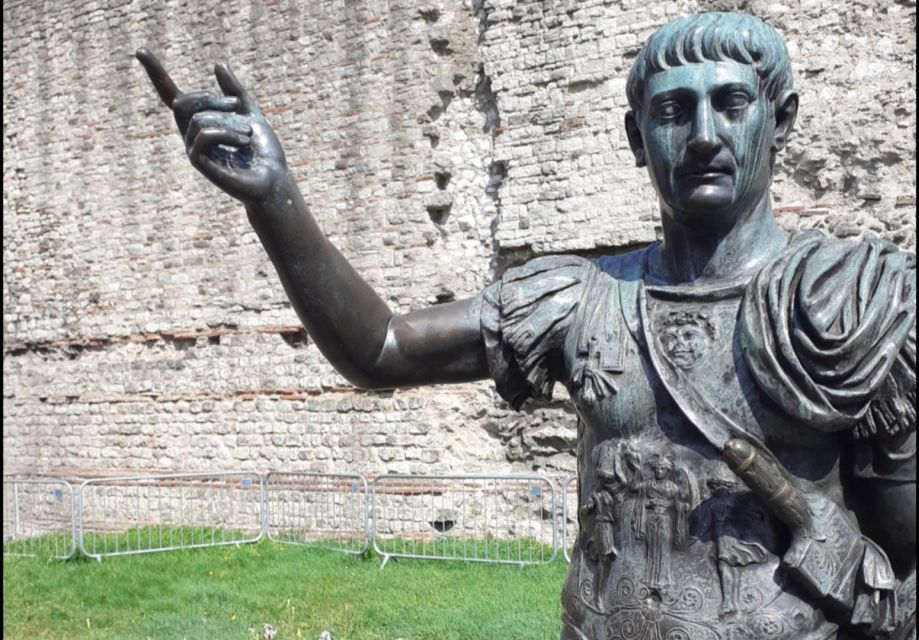
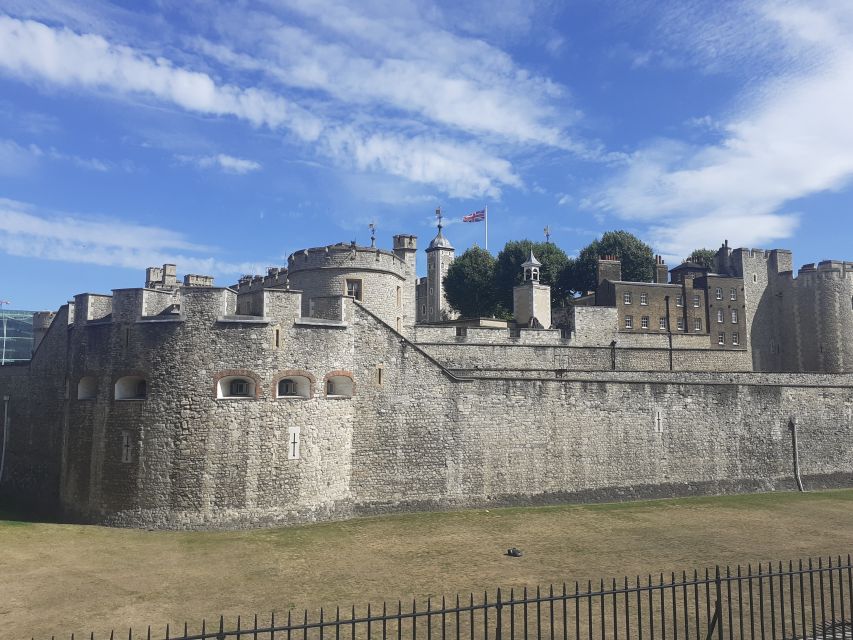
The tour’s first big stop is the Tower of London itself, with a guided visit. The highlight is clear: you’ll pass through the infamous space and learn its 1000-year history. That length can sound vague until a good guide turns it into cause-and-effect.
Here’s what makes this portion valuable for you: the guide doesn’t treat the Tower like an isolated museum. Instead, it’s presented as part of a chain—who held the power, what the river enabled, and how authority was shown in stone, routine, and ceremony. You’ll also have time to ask questions as you go, which is a big deal if you’re the type who wonders how one reign connects to the next.
One practical tip: don’t plan to “power through” the Tower. Give yourself a few moments to look up and around before you move on. The Tower works best when you’re seeing it as a whole site, not a list of stops.
Tower Bridge Crossing: Engineering With a Medieval Mindset
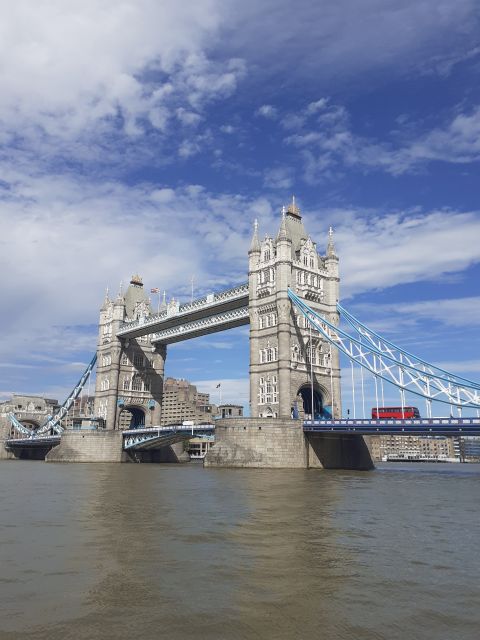
Next, you’ll head to Tower Bridge and cross it with a guided stop. This is the part where the tour does a neat trick: you’re walking a modern icon, but you’re still thinking like a medieval Londoner. The guide connects the bridge to the Thames as a working highway—movement, trade, defense, and the constant need to manage a busy river.
You’ll learn how Tower Bridge was built, but the smarter angle is why it was worth building at all. Bridges change cities. They change routes, bottlenecks, and even how people imagine the river. When you understand that, Tower Bridge stops being just a photo backdrop and becomes a decision made by people with very specific priorities.
If the weather’s good, this section also tends to be where you’ll want to pause for photos. The views are obvious, but the guide will point out angles that help you “read” the river rather than just shoot it.
HMS Belfast and the Thames in Wartime
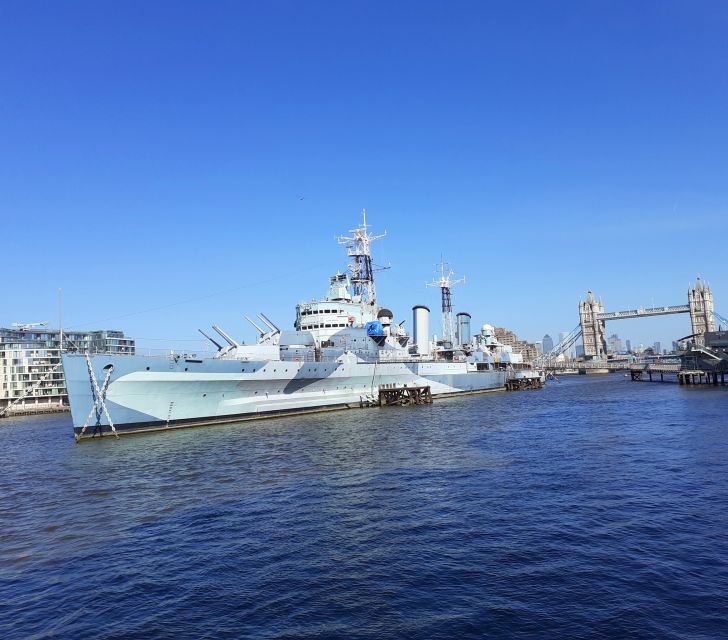
Then comes a hard pivot in tone: HMS Belfast, the museum warship connected to the D-Day landings of World War II. Standing near a ship with that history changes how you think about the Thames. It’s not only a medieval stage set. It’s also a strategic corridor in modern conflict.
In a tour like this, the best payoff is the contrast. You go from stone power at the Tower to a ship tied to one of the defining operations of the 20th century. The timeline feels real because you’re physically moving along the river corridor that served multiple eras of London.
If you like history that includes consequences—not just dates—this stop delivers. You’ll get the story of HMS Belfast’s role and hear how the river links to national events far beyond the immediate neighborhood.
London Bridge to Borough Market: From River Control to Everyday Life
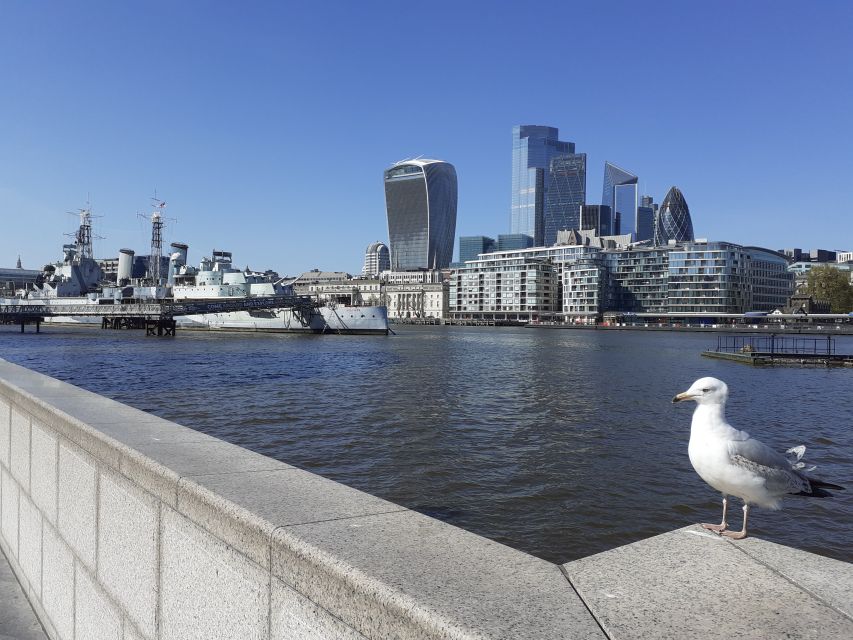
After HMS Belfast, the route continues along the south bank with stops that keep shifting the focus from grand power to lived experience. You’ll pass London Bridge, then move toward Borough Market, described as ancient.
This is one of the tour’s best patterns: it doesn’t keep you stuck in only royal and military stories. Instead, it brings in the rhythm of the city. Markets are where politics touches daily life—prices, supplies, workers, and the constant flow of people.
Borough Market is a great match for this approach. Even if you don’t buy anything, the idea is that you’re learning how London fed itself and how the Thames corridor supported movement. It makes the medieval city feel practical. People needed food. People needed access. The river helped.
If you plan to snack after, this is a smart time to do it—because you’ll have built context for what you’re seeing rather than just wandering with a shopping list.
You can also read our reviews of more historical tours in London


Southwark Cathedral: Faith, Power, and a Different Side of the Thames
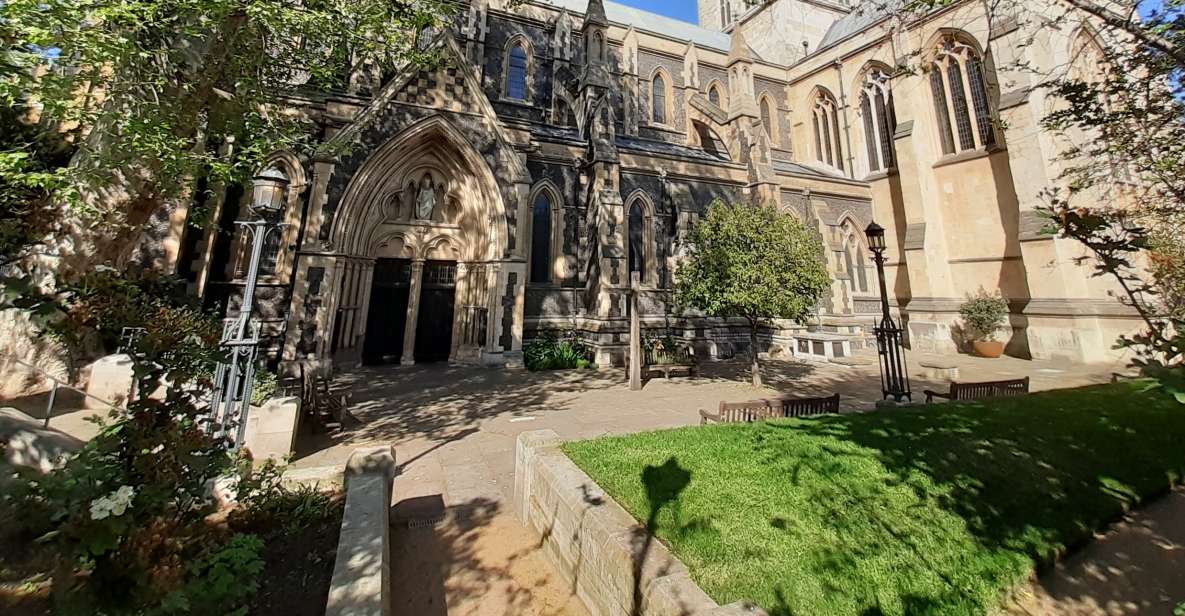
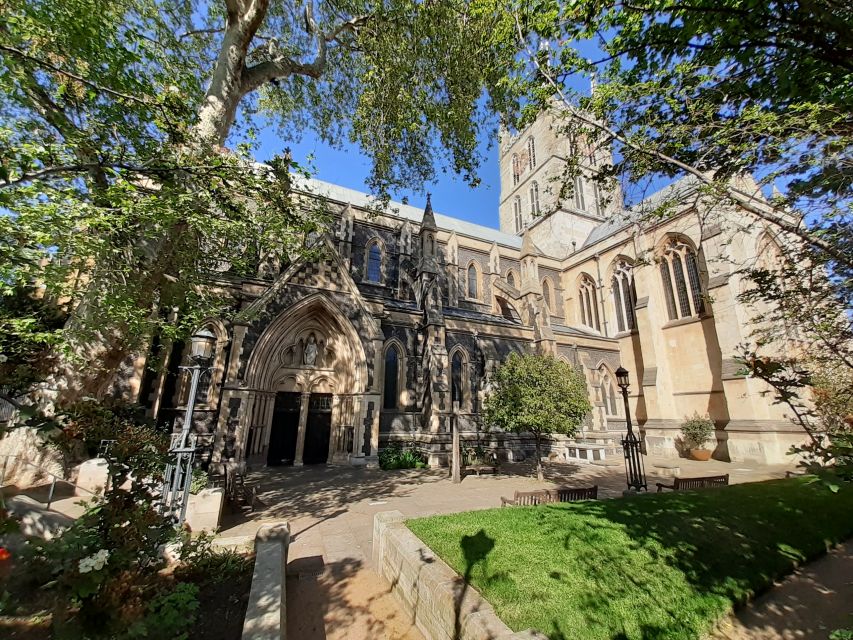
You’ll then reach Southwark Cathedral, a 15th-century stop on the route. Southwark matters because it sits across the river from the Tower’s zone of authority. That “across” position creates a different kind of perspective—less about the fortress mindset, more about the city’s spiritual and civic life.
The guide’s job here is important: turning the cathedral from architecture into story. You’ll learn how religion and governance often intertwined, and how the south bank developed its own identity while staying tied to the main engines of London.
A useful way to think about this stop: treat it like a lens. You’re not just learning about the cathedral. You’re learning about how the Thames divided and connected communities at the same time.
The Golden Hinde and Winchester Palace: Ships, Stories, and Medieval Strokes
This walk keeps surprising you with specific places that many visitors miss. You’ll see The Golden Hinde, and the route frames it as an exact replica of the vessel of Sir Francis Drake. Even if you’ve heard of Drake before, the value here is the storytelling. You get the sense of how England looked outward through exploration, and how the river and ports fed that ambition.
Right after that, you’ll move to Winchester Palace, described as a 12th-century site. This stop is one of those “wait, that’s here?” moments. It matters because it helps you picture medieval London not just as a few famous buildings, but as a network of residences and institutions that shaped power in quieter ways.
I like these two stops together because they cover two different forms of reach:
- Reach across the sea (Drake and the ship story)
- Reach inside the city (Winchester Palace and how elite spaces worked)
If you enjoy historical details that connect themes instead of just listing facts, this stretch is where the tour earns its very high ratings.
Shakespeare’s Globe Area: Walking With Literary London
Next, you’ll head to Shakespeare’s Globe Theatre area, presented as part of walking in Shakespeare’s footsteps. The guide ties this to the river world around it, which is key. Theatre didn’t float above daily life. It ran on crowds, timing, money, and location—all things shaped by London’s geography.
This is a great stop if you love England’s storytelling culture. But even if you don’t care about Shakespeare, you’ll still get something useful: a sense of how the Thames corridor supported entertainment and public life, not just commerce and war.
A practical tip: look at the area from the outside first, then listen to the guide. You’ll get more out of the stop when you form your own mental picture before the story locks in the meaning.
Along the Thames and Over the Millennium Bridge
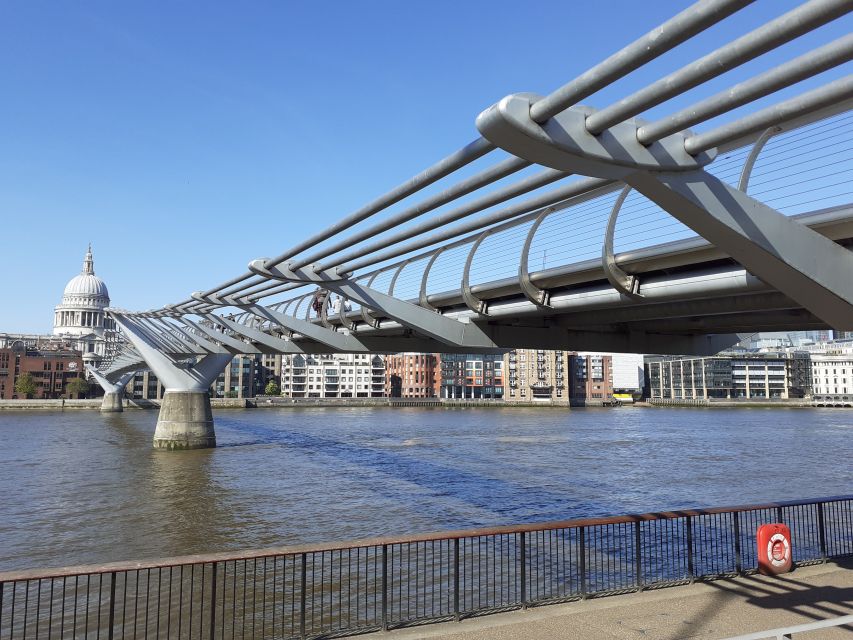
From here, the tour keeps you moving with the River Thames itself and then over the Millennium Bridge. This sounds simple on paper, but the experience is about transition. You’ve spent the day in medieval London and major landmarks from different eras. Now you’re watching the city step forward into newer layers—without losing the thread of the river.
Millennium Bridge also gives you a clean, modern viewpoint of the waterway. It’s a good moment to compare what you learned earlier with what you see now. That contrast helps the history stick.
If you’re the type who likes maps in your head, take a minute here. Think: Tower Hill and the Tower’s power. Then the river corridor. Then the south bank’s life and institutions. Finally, the cathedral skyline that still defines London’s “center” today.
St Paul’s Cathedral: Ending With a Skyline Anchor
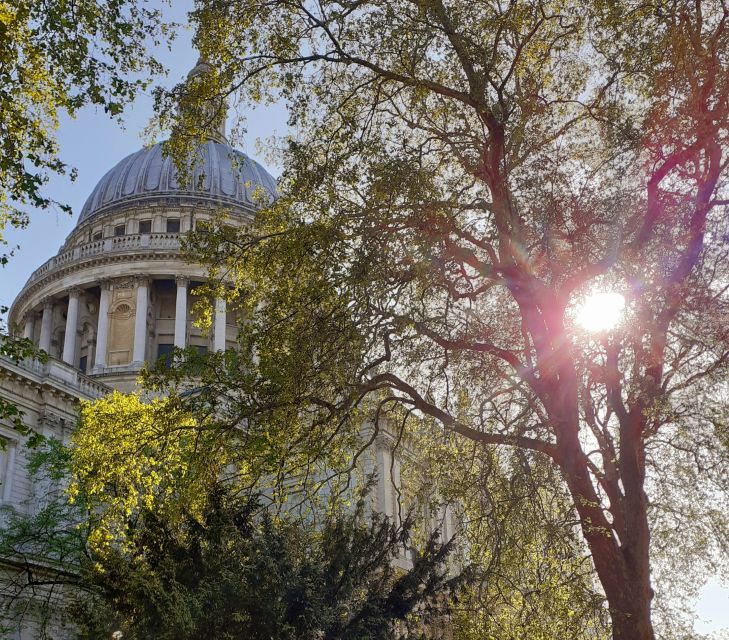
The tour finishes at St Paul’s Cathedral. This is a strong ending because St Paul’s is both an architectural landmark and a symbol of the city’s identity. After walking through medieval sites and river history, the cathedral gives you a final “big statement” to carry home.
The guide’s context here helps you connect earlier themes—power, belief, and the shaping role of major institutions. Even if you’ve seen St Paul’s before, ending here after learning how London’s power evolved makes the visit feel different.
Take a few minutes to look around before you wrap up. If you’re tempted to rush to photos, slow down first. The payoff is better scale—how the cathedral sits in relation to everything you walked through.
Price and Value for a 2-Hour Thames Timeline
At $24 per person for 2 hours, this is priced in the “serious value” range, not the premium lecture-tour range. Why does that matter? Because the route packs in major stops that would cost you time and effort to line up on your own—Tower of London area context, Tower Bridge, HMS Belfast, Borough Market, Southwark Cathedral, Winchester Palace, the Shakespeare Globe area, plus a St Paul’s finale.
You’re also paying for something that’s hard to replicate with an audio guide: the ability to ask follow-up questions in real time. Many tour experiences run like a script. This one is designed to keep you able to connect the dots as you walk.
Two-hour tours can feel rushed. This one doesn’t feel that way in spirit because the guide builds connections between sites instead of treating each stop like a separate box to tick. If you want an efficient history lesson that also leaves room to enjoy the sights, this price makes the math work.
Who This Tour Is Best For (and Who Might Want a Different One)
This tour is a great fit if you:
- Want a clear medieval storyline along the Thames rather than random highlights
- Enjoy questions and getting context you can use while sightseeing on your own
- Like mixing military history, religion, everyday life, and literature in one walk
You might want a different format if you:
- Have limited stamina for standing and walking for two hours
- Prefer to stay focused on a single site rather than multiple landmarks and themes
Also, if you’re visiting London for the first time, this tour can help you get your bearings fast. Not because it covers everything, but because it teaches how the river connects power to place.
Should You Book This Medieval History Walk?
I’d book it if you want a London day that feels guided by logic. You’ll start at Tower Hill, get the Tower of London’s 1000-year story, walk Tower Bridge, and work your way through the south bank’s mix of faith, markets, ship history, Shakespeare’s river world, and a St Paul’s finale.
The main reason to hesitate is simple: it’s still a walk. Plan for comfortable shoes and all-weather conditions. If you can handle that, the guide-led storytelling and the amount of major sights packed into two hours make this one of the better value ways to understand medieval London.
FAQ
How long is the London Medieval History Walking Tour?
The tour lasts 2 hours.
Where do I meet the guide?
Meet outside the western exit of Tower Hill tube station, near Trinity Square and the Citizen M Hotel, close to the Tower Hill Tram burger van. The guide will be holding a flagpole with a flag.
How much does it cost?
The price is $24 per person.
Is the tour wheelchair accessible?
Yes, the tour is wheelchair accessible.
What language is the tour guide speaking?
The tour is guided in English.
Will the tour run in bad weather?
Yes. The tour takes place in all weathers, rain or shine.
What should I wear or bring?
Bring comfortable shoes and weather-appropriate clothing.
What are some of the main places you’ll see?
You’ll pass the Tower of London, cross Tower Bridge, see HMS Belfast, visit Borough Market and Southwark Cathedral, see The Golden Hinde, explore Winchester Palace, visit the Shakespeare’s Globe area, walk along the Thames, cross the Millennium Bridge, and end at St Paul’s Cathedral.
Is there free cancellation?
Yes. You can cancel up to 24 hours in advance for a full refund.