REVIEW · LONDON
London: Postal Museum Entry Ticket and Underground Rail Ride
Book on GetYourGuide →Operated by The Postal Museum · Bookable on GetYourGuide
Few attractions in London run on actual mail tunnels.
With the London Postal Museum entry ticket, you get more than display cases. You’ll see the world’s first postage stamp, the Penny Black, a Victorian mini rail car, flintlock pistols used to protect the mail, and then hop on a small train for a 15-minute underground ride through Post Office tunnels.
What I like most is how the experience mixes big-object history with hands-on stuff, and how the underground Mail Rail ride turns learning into something you actually sit through and listen to. One possible drawback: the museum can feel very kid-centered, and the train ride itself is short—great for most families, but if you want lots of time underground, plan extra museum time or go in expecting a quick thrill rather than a long tour.
In This Review
- Quick hits: what you’ll remember
- Postal Museum tickets in London: what this is really about
- Before you ride: where the museum starts and how to pace it
- The Postal Museum galleries: interactive games plus real artifacts
- Mail Rail underground ride: the 15-minute tunnel story
- Victorian mail sorting: hands-on fun you’ll actually understand
- The “defend the mail” angle: flintlock pistols and security history
- Families and café time: planning a smooth afternoon
- Timing and crowds: how to avoid the “weekend chaos” feeling
- Accessibility and who this fits best
- Value check: is a $24 ticket worth it?
- Should you book this London Postal Museum and Mail Rail ticket?
- FAQ
- How long is the Postal Museum and Mail Rail experience?
- Where do I start the experience?
- What does the ticket include?
- What highlights should I plan to see?
- Is the underground ride included?
- Is it wheelchair accessible?
- Is there a separate add-on for children’s play?
- Is free cancellation available?
- What time of day should I go if I want to avoid waits?
- Is it mainly for kids?
Quick hits: what you’ll remember

- Mail Rail tunnels in miniature form: a 15-minute ride through Post Office underground corridors.
- The Penny Black: the world’s first postage stamp is part of the main storyline.
- Victorian postal tech made visible: a mini Victorian rail car and period-style postal props.
- Defending the mail: flintlock pistols used against theft show a surprising side of postal history.
- Hands-on sorting activities: including a mock train carriage where you try sorting the mail.
- Family-friendly break time: an on-site café for snacks and drinks between activities.
Postal Museum tickets in London: what this is really about

The Postal Museum isn’t trying to be a stuffy history hall. It’s built around the idea that communication is a human story—how people send messages, how systems evolved, and how the Post Office kept the whole thing moving. You’ll start above ground with galleries and artifacts, then shift into the Post Office’s underground world via the Mail Rail ride.
This is a smart use of time if you want something different from the usual London museum circuit. You get classic highlights (the Penny Black) and also practical, lived-in details—like how postal workers sorted and moved mail, and how even security mattered.
At about 1.5 hours total, it’s also a good “slot-in” attraction. You can pair it with a nearby afternoon walk, especially if you’re touring with kids or you just want a break from the big-ticket sights.
You can also read our reviews of more tours and experiences in London



Before you ride: where the museum starts and how to pace it
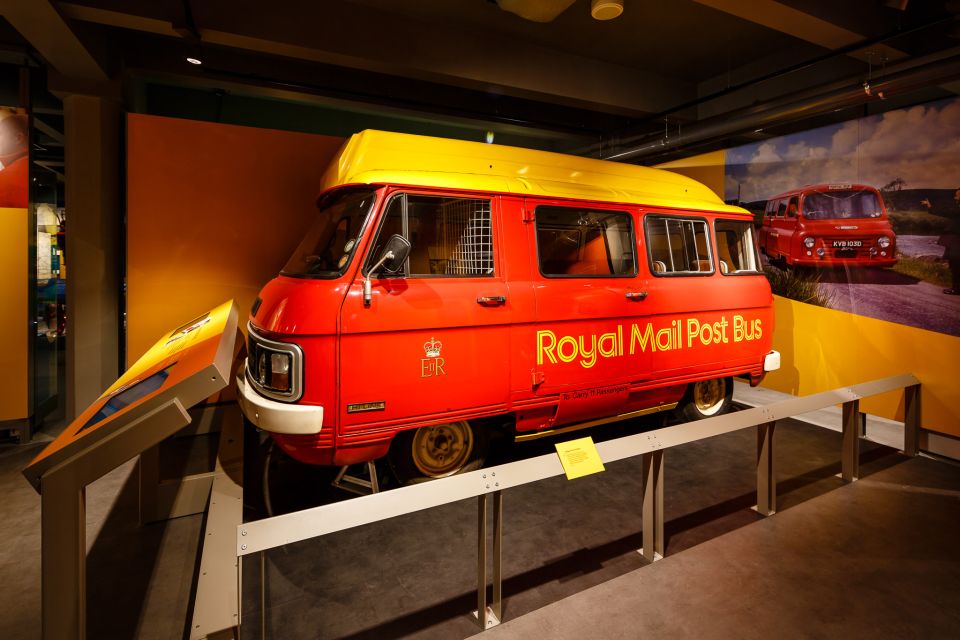
Your experience starts at the Postal Museum itself. Expect the visit flow to feel organized but not rigid—there’s a mix of exhibits, interactive elements, and then the train ride as a clear centerpiece.
Here’s how I’d pace it so you don’t feel rushed:
- Spend the first stretch orienting yourself with the main exhibits and the big name items like the Penny Black and the flintlock pistols.
- Leave a little time for interactive areas, because those take longer in real life than you think. Kids will want to try things more than once, and adults often end up trying them anyway.
- Then treat the Mail Rail ride as your “reset.” After that, go back to anything you skipped.
One practical note: plan for time to manage bags. A recent visitor pointed out that lockers were available for each train, locked by staff, and opened on your return. That’s the kind of setup you want in a museum with tunnels and a train platform—because nobody wants to haul luggage around while waiting.
The Postal Museum galleries: interactive games plus real artifacts
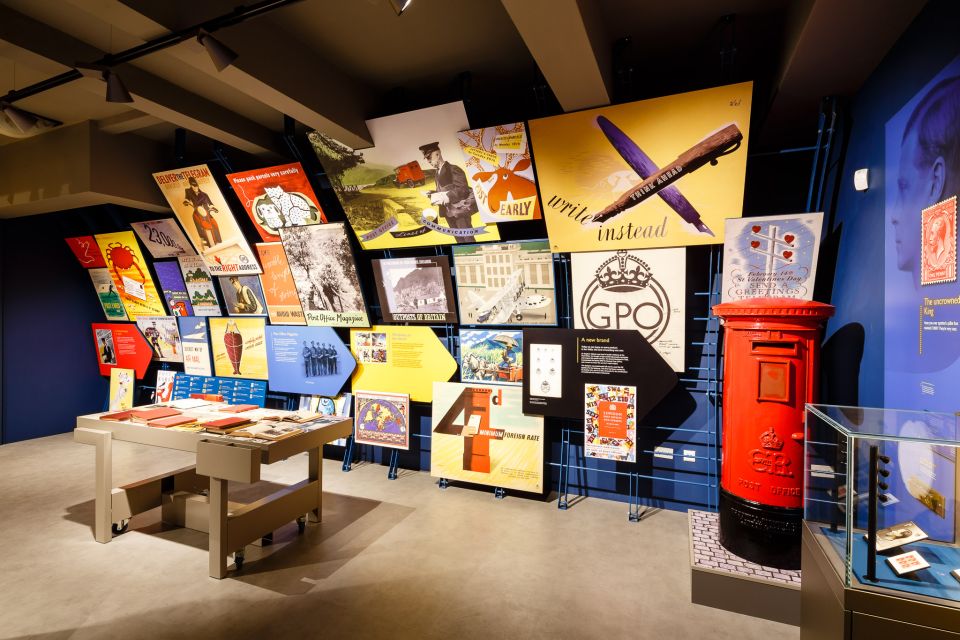
The museum’s biggest strength is that it doesn’t rely only on behind-glass displays. You’ll see interactive galleries with games and activities for multiple ages, which is why it works for mixed groups (parents who want context and kids who want to touch and try).
Among the highlights:
- The Penny Black: the world’s first postage stamp anchors the early story of how mail became standardized and accessible.
- A Victorian miniature rail car: it helps you picture how mail moved through the city at street level.
- Flintlock pistols used to defend mail: this is not the first thing most people expect in a postal museum. It adds tension and realism to the story of protecting deliveries.
If you’re the type who enjoys how systems work, you’ll probably gravitate to the exhibits that explain the steps behind sending a letter—how routing, sorting, and timing create the service people assume will just happen.
If you’re visiting with kids, plan for the fact that interactive spaces can pull attention quickly. Some activities are best after you’ve seen the main story elements, so the kids aren’t just playing but also connecting play to what the exhibits are saying.
Mail Rail underground ride: the 15-minute tunnel story
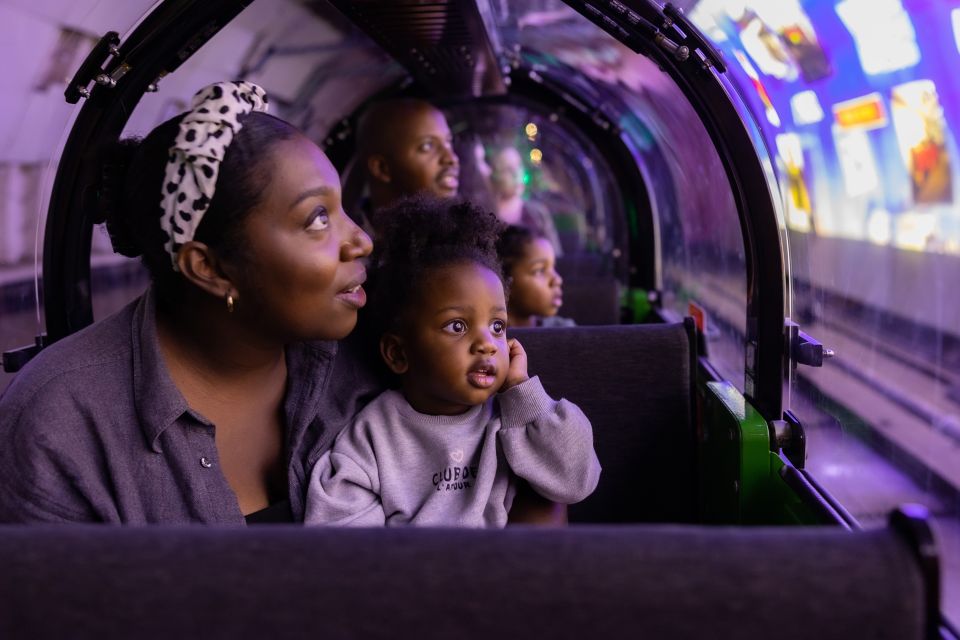
The heart of this ticket is the Mail Rail ride: a 15-minute journey on a miniature train through Post Office tunnels that date back over 100 years. This isn’t a gimmick add-on. The ride is built to guide you through the postal system’s history as you move through the underground space.
In the best moments, you’ll get help from audio and visuals—people have described commentary plus videos and projected timeline information on the walls. That kind of layering matters in a small, enclosed environment because it keeps the experience clear even when you can’t see “outside” the tunnel for context.
Two things to keep in mind:
- The ride is short by design. That’s part of the pitch—easy for kids, manageable for adults, and it keeps the full visit near that 1.5-hour mark.
- The train isn’t ideal if you’re sensitive to tight spaces. One visitor specifically cautioned that it might not be right for the claustrophobic or for very tall people.
If you want the most out of the tunnel ride, watch the timing. The ride moves fast enough that you’ll learn the most if you’re paying attention at the start rather than half-focused while you settle in.
Victorian mail sorting: hands-on fun you’ll actually understand
One of the most memorable activities is trying your hand at sorting the mail on a mock-up train carriage. The details are playful—some setups are described as having a wobbly floor—so you’re not just clicking buttons. You’re doing the kind of repetitive, physical sorting tasks that postal workers used to handle as mail flowed through the system.
This matters because it turns a vague idea—mail gets sorted—into something you can picture. You start to understand why timing, layout, and process design affect how well a service runs.
A good tip if you care about the learning side: don’t rush through the sorting station. Look closely at how the display sets up the task. Then, after the ride, you’ll likely connect what you did in the mock area to what you saw in the galleries about how postal systems work.
Kids tend to love this section because it feels like a game. Adults tend to like it because it explains the logic without drowning you in technical language.
You can also read our reviews of more museum experiences in London





The “defend the mail” angle: flintlock pistols and security history
Postal history in London includes more than stamps and routes. One of the standout details in the museum is the presence of flintlock pistols used to defend the mail from theft.
Why this is worth your attention: it reframes what the Post Office was protecting. It wasn’t just letters as paper—it was the value and consequence of keeping messages secure and delivering them intact. Adding security into the story makes the entire postal system feel more grounded.
If you like history that surprises you, this section can be a payoff. If you’re mainly there for the stamp and train, it’s still an interesting stop because it adds stakes to what might otherwise feel like a gentle, leisurely topic.
Families and café time: planning a smooth afternoon
There’s an on-site café with snacks and refreshments, and it’s described as family friendly. After you’ve done the ride and interactive galleries, this is where you can take a breather without leaving the attraction.
A couple of practical notes from a real visit:
- Tea is served, and one person wished the teabag setup was more convenient (water first, then milk).
- Table space can be a challenge near later hours, with one visitor mentioning spills on the floor and chairs that were hard to navigate around.
Translation for you: if you’re visiting at a busy time or later afternoon, keep an eye on where you sit. If you travel with kids, give yourself a few extra minutes for clearing space and settling in.
Also remember: this museum is short enough that a snack break isn’t required, but it can make the overall experience easier—especially if your group has mixed energy levels.
Timing and crowds: how to avoid the “weekend chaos” feeling
The ticket experience is built for a 1.5-hour visit, but your day can change depending on when you go. One visitor described having a wait before the train (about 20 minutes). Others noted weekend crowding with lots of young children, which can make interactive spaces feel less relaxing for adults.
Here’s my practical approach:
- If you can choose, aim for earlier slots so you’re not stuck waiting and then rushing through exhibits.
- If you’re going on a weekend, go in ready for playful crowds. You’ll likely have more patience if you treat it like a family attraction first and a quiet museum second.
And yes, the ride is ideal for kids. That doesn’t mean adults won’t enjoy it—many adults do because the Mail Rail story is clear and the visuals support you.
Accessibility and who this fits best
This activity is listed as wheelchair accessible, which is a big deal for an attraction with both exhibits and an underground ride. If you’re navigating mobility needs, you’ll feel more comfortable knowing accessibility is part of the planning from the start.
Who this fits best:
- Families with children who enjoy hands-on stuff and short rides
- Adults who like “small but real” history (not just big monuments)
- Anyone who likes communication history beyond stamps—postal routes, sorting, and how systems function
Who might find it less ideal:
- People who need quiet, wide-open museum spaces
- Claustrophobic visitors or those who are very tall (the ride setting may be uncomfortable)
- Travelers hoping for a long, in-depth underground tour rather than a guided 15-minute experience
Value check: is a $24 ticket worth it?
At around $24 per person, this is priced like a focused attraction rather than a full-day museum marathon. The value comes from the mix: you’re paying for entry to the Postal Museum plus the Mail Rail ride, not just one or the other.
What makes it good value:
- The ride is a rare London experience. A real underground postal system story is not something you can easily replicate.
- The Penny Black and other artifacts give you recognizable anchors.
- The interactive sorting activity adds “doing,” not only seeing.
The main thing to watch is your expectations around time and crowding. If you go in knowing this is a family-forward, short-format museum experience, the ticket usually feels fair. If you need hours of underground exploration, you might want to add another nearby museum stop so your day doesn’t feel too quick.
Should you book this London Postal Museum and Mail Rail ticket?
Yes, if you want an unusual London experience that blends history with real interaction. I’d book it especially if you have kids in the group, or if you like museums that teach by getting you involved—not just by showing objects.
I’d think twice if you’re hunting for a long, quiet, adult-focused deep-dive. The ride is 15 minutes, the museum is interactive and kid-leaning, and tight-space comfort matters for some people.
If you can be flexible with timing and you want something memorable that isn’t on every standard itinerary, this is the kind of ticket that turns into a good story later.
FAQ
How long is the Postal Museum and Mail Rail experience?
It lasts about 1.5 hours.
Where do I start the experience?
Start at the Postal Museum.
What does the ticket include?
The entry ticket to the Postal Museum.
What highlights should I plan to see?
The Penny Black, a Victorian miniature rail car, flintlock pistols used to defend the mail, interactive galleries, and the 15-minute Mail Rail underground ride.
Is the underground ride included?
Yes. You can board a miniature train for a 15-minute ride through Post Office underground tunnels.
Is it wheelchair accessible?
Yes, the experience is listed as wheelchair accessible.
Is there a separate add-on for children’s play?
Yes. Sorted! Postal Play Space for children aged 8 is bookable separately through The Postal Museum website.
Is free cancellation available?
Yes. You can cancel up to 24 hours in advance for a full refund.
What time of day should I go if I want to avoid waits?
The experience is scheduled by starting times, and there can be waits before the train. If you want to minimize waiting, choose a time that fits earlier in your visit plan.
Is it mainly for kids?
It’s designed with interactive activities for all ages, and the museum experience includes games and activities for children, plus more historical exhibits that adults can enjoy too.