REVIEW · LONDON
Roman Ruins to Blitz Bombings: A Walking Tour of London’s Fiery History
Book on Viator →Operated by Historic London Tours · Bookable on Viator
London has a talent for turning corners into stories.
This 2-hour walking tour strings together landmarks that explain how the city got remade, from old foundations to war damage. I especially love the small-group feel and the way the guide connects each stop to what came next, so the route feels like one continuous timeline.
The main drawback: it is still a walking tour, and one review noted it may not suit people with mobility limits because the pace and distance add up.
In This Review
- Key Highlights You’ll Actually Care About
- A Walking Tour That Links Romans, Fire, and WWII Scars
- Price, Duration, and Group Size: What You Get for $27.78
- Where You Start and End: Trinity Square to Ye Olde Cheshire Cheese
- The Stop-by-Stop Route: What Each Place Adds to the Story
- Stop 1: Tower of London
- Stop 2: St. Dunstan in the East
- Stop 3: The Monument to the Great Fire of London
- Stop 4: London Stone
- Stop 5: Bank of England Museum
- Stop 6: Guildhall
- Stop 7: St. Paul’s Cathedral
- How the Route Holds Together: From Old Walls to Modern Power
- The Guide Factor: Expect Storytelling That Answers Questions
- Timing and Walking Pace: When This Tour Fits (and When It Might Not)
- Budget Planning: Decide Early Which Stops You’ll Pay For
- Who Should Book This Tour?
- Should You Book Roman Ruins to Blitz Bombings?
- FAQ
- How long is the tour?
- How much does it cost?
- What size is the group?
- What language is the tour offered in?
- Are tickets included for the stops?
- Where do I meet the guide and where does it end?
- What is the cancellation policy?
Key Highlights You’ll Actually Care About
- Small group max 15 means more question time and less standing around
- English-only tour with a guide who answers questions clearly
- A mix of free and ticketed stops, so you can plan your budget
- Stops are tightly linked across London’s major eras of change
- Mobile ticket for an easier start on the day
A Walking Tour That Links Romans, Fire, and WWII Scars
London’s past isn’t stuck behind museum glass. It’s sitting on pavements, under church ruins, and in the shadows of famous domes. This walking tour focuses on the city’s toughest chapters, with stops chosen to show how destruction and rebuilding shaped what you see today.
The big win is the pacing and structure. Each stop is short, but the guide uses them like chapters, so you’re not just collecting photos. You’re building a mental map of how London absorbed shocks over time—first through older layers of the city, then through fire, and later through the blunt reality of the Second World War.
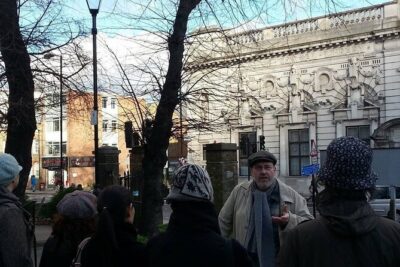
And if you like history that has a voice—one you can ask questions to—this format helps. With a maximum group size of 15, the guide can keep the conversation going instead of turning it into a one-way lecture. One review even praised a guide named Tom for making history feel alive, while staying approachable and easy to talk with.
You can also read our reviews of more walking tours in London



Price, Duration, and Group Size: What You Get for $27.78
At about $27.78 per person for roughly 2 hours, this isn’t a cheap way to pass time—you’re paying for guided storytelling and a tight route that saves you from figuring out what connects to what. The value comes from two places.
First: the tour is small-group with a cap of 15. That matters in London, where crowds can swallow meaning. Here, you’re more likely to hear the details and ask follow-ups without yelling over other people.
Second: you’re getting a plan for multiple major sites in one go. Even with some admissions not included, you’re still stacking several “worth seeing” locations into one walking block—Tower of London area down toward Fleet Street and across to St Paul’s Cathedral territory.
Just budget smartly for tickets. Some stops include free entry, while others list admission as not included, so your total day cost depends on which entries you choose to go for.
Where You Start and End: Trinity Square to Ye Olde Cheshire Cheese
The tour starts at 38 Trinity Square, London EC3N 4DJ, which is a handy base in the eastern part of central London. The official meeting point is outside, at the beginning of the walk near Trinity Square.
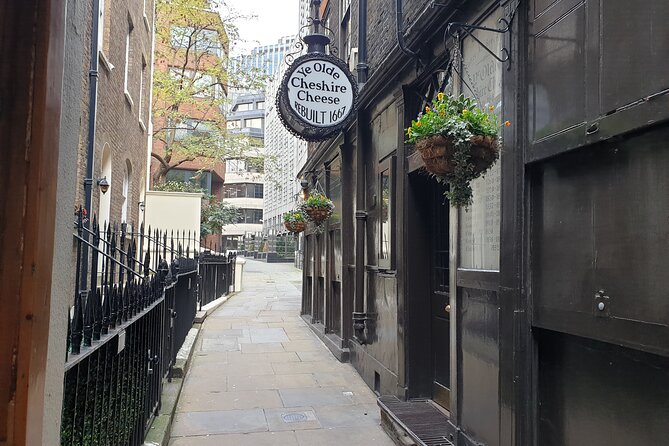
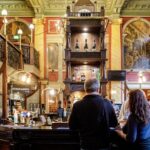
It ends at Ye Olde Cheshire Cheese, 145 Fleet St, London EC4A 2BP. That’s a fun note to finish on: you end near Blackfriars Station, with a classic pub backdrop that makes a walking tour feel like it has closure.
One practical tip: because you’re moving through central London, use the mobile ticket when you arrive, but don’t treat your phone as your only plan. The meeting point is outdoors, and weather in London loves to change fast, so wear something comfortable for walking and have a quick way to check your bearings.
The Stop-by-Stop Route: What Each Place Adds to the Story
Each stop is about 5 minutes, which is short on purpose. You’re meant to move, absorb, and then connect the dots with what the guide says.
Stop 1: Tower of London
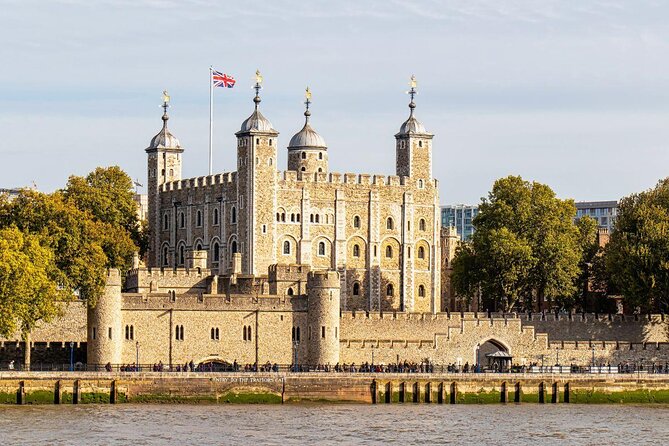
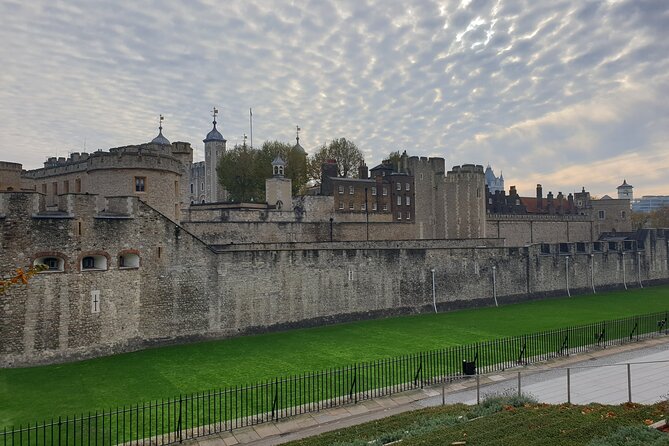
This is a big one to open with. The Tower is described as Europe’s oldest surviving royal palace, and that framing sets the tone immediately: you start with a power center, not a random street corner.
Admission is listed as not included, so think of this as your “pay to go in if you want the full experience” moment. If you enjoy seeing how a landmark’s official role shaped the city’s story, this start will click.
Possible consideration: if you prefer to avoid ticketed stops early in the day, you may want to decide ahead of time whether you’ll actually enter. The tour still moves you through the area regardless, but budget changes the choice.
You can also read our reviews of more historical tours in London


Stop 2: St. Dunstan in the East
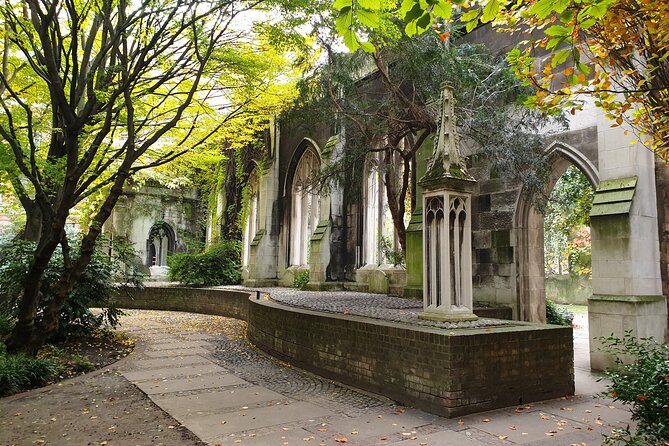
Next comes a calmer contrast: the gardens of a medieval church destroyed in the Second World War. This stop is free, and it’s the one that most directly fits the tour’s blitz theme through physical remnants and space.
Why it works: you’re not just learning about a big event. You’re standing in a place where the war’s impact is part of the landscape you’re allowed to walk through.
If you like history that feels quiet and human—damage that still affects how people remember the past—this stop tends to land well.
Stop 3: The Monument to the Great Fire of London
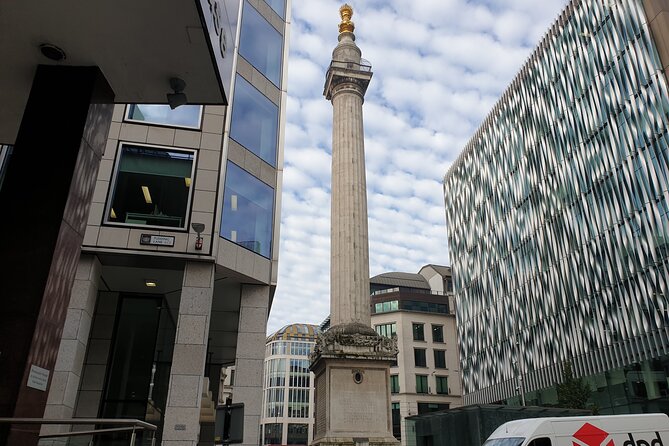
Now you hit the iconic fire chapter with the Monument to the Great Fire of 1666. Admission here is also not included, so you’re again looking at a “see it from outside vs. enter if you choose” decision.
This stop matters because it connects London’s older identity to a turning point that reshaped how the city functioned afterward. Even if you already know the headline story of the Great Fire, having it placed right after a WWII site makes the contrast sharper: destruction comes in different forms, but the rebuilding story stays the same.
Stop 4: London Stone
The route keeps things intriguing with the London Stone, described as a stone with amazing legends attached to it. Admission is listed as free.
This is a “pause and listen” stop. It’s short, but legends often teach you more about the mindset of a city than a strict dates-and-facts approach. If you like the mix of official history and the stories people told to explain what they didn’t fully understand, you’ll probably enjoy this breather.
Stop 5: Bank of England Museum
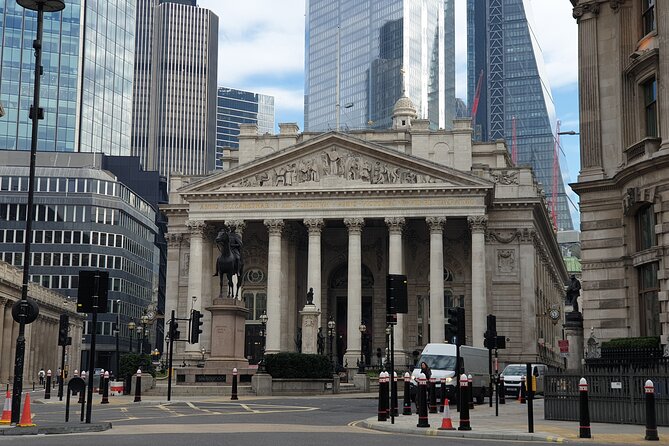
Then you move into more modern institutional power with the Bank of England Museum, described as the central bank of the UK. Admission is not included.
Why it fits the theme: earlier stops focus on monarchs, fires, and war scars. The museum adds a different angle—how the city’s systems of stability and authority evolved. Even if you don’t go inside, the point in the narrative is to show that London keeps rewriting itself, and those rewrites include finance and governance.
Stop 6: Guildhall
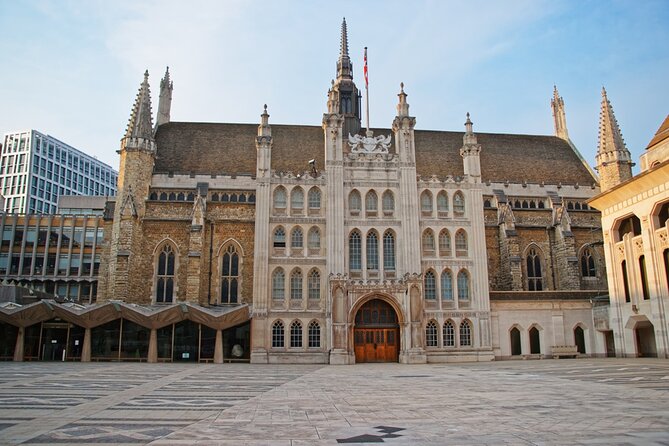
The tour continues at Guildhall, described as a 15th-century hall and home to the Corporation of London. Admission is not included.
This is your “who runs the city” stop. Compared to Tower of London’s royal framing, Guildhall emphasizes civic structure. It gives you a fuller picture of London’s power chain—less crown, more corporation.
If you like understanding how cities organize themselves, this stop adds weight. If you’re trying to keep costs down, you can decide on the spot whether to pay for entry.
Stop 7: St. Paul’s Cathedral
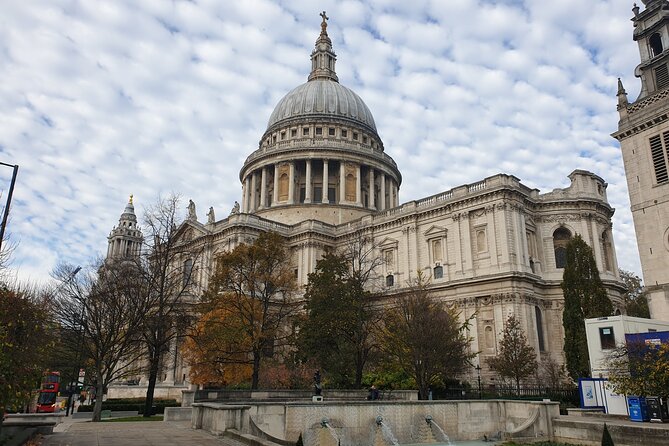
You finish with the grand finale: St. Paul’s Cathedral, identified as Christopher Wren’s seventeenth-century cathedral. Admission is also not included.
This end point works because it’s a visual payoff. You’ve been moving through destruction, legend, institutions, and rebuilding, and now the route lands at a landmark tied to a specific architect and a defined era.
It’s also a useful “wrap-up” moment. As the tour ends, your brain has already received multiple reminders that London changes in waves. St Paul’s makes that theme feel tangible.
How the Route Holds Together: From Old Walls to Modern Power
What I like about this tour is how it keeps meaning even though the stops are short. You’re not trying to cram every detail into every stop. Instead, the guide builds a sequence where each location answers the question: What did London become after the last crisis?
That’s why the order feels smart. You start with royal power at the Tower, then switch to WWII damage at St Dunstan in the East, then jump to the Great Fire and the legends around London Stone. After that, you move into institutions: the Bank of England Museum and Guildhall. The day closes with a cathedral tied to a particular rebuilding era.
Even if you’re not the type to memorize names and dates, you’ll likely walk away with a better sense of how London’s identity keeps shifting—yet stays recognizable.
The Guide Factor: Expect Storytelling That Answers Questions
The tour is credited to Historic London Tours, and the most consistent praise is about the guide’s storytelling and communication style. A review mentioned Tom in particular—deep knowledge, engaging storytelling, and clear passion. The same review also praised how he handled questions and suggested other places to visit after the walk.
That matters because history tours can fail in two common ways: either the guide talks at you, or the tour becomes a checklist. This one is built so you can interact—especially with a group size capped at 15.
Practical takeaway: bring questions. If you’re curious about what links one stop to another, ask. The format is set up for it, and the guide’s role is not just to point but to explain.
Timing and Walking Pace: When This Tour Fits (and When It Might Not)
This is listed as about 2 hours, but “2 hours” can feel short or long depending on your pace, your comfort on sidewalks, and the number of admissions you decide to enter.
A key consideration comes from a review that called it an extremely long walking tour and said it isn’t recommended for people with mobility issues. With that in mind, I’d treat this as a moderate-mobility activity.
If you:
- walk comfortably for 2 hours in central London,
- enjoy standing for short moments,
- can handle uneven sidewalks,
you’ll probably be fine.
If you need frequent breaks, use a mobility aid, or get tired quickly, you’ll want to rethink this tour or ask what the pace is like before booking. The listing itself says most travelers can participate, but your body is the final judge.
Budget Planning: Decide Early Which Stops You’ll Pay For
Because admission is not included at several stops, your day cost can change. From the information provided, ticketed moments include:
- Tower of London
- The Monument to the Great Fire of London
- Bank of England Museum
- Guildhall
- St. Paul’s Cathedral
Free entry stops include:
- St. Dunstan in the East (gardens)
- London Stone
So you can choose a lighter-expense version by focusing on the free sites and treating ticketed landmarks as “see from outside” points. Or you can build a fuller day by entering the ones that matter most to you.
My rule: pick 1–2 paid entries that you truly care about, and let the rest be sights you view on the route. That keeps the tour affordable while still giving you the wow factor.
Who Should Book This Tour?
This one is best for:
- history buffs who like a clear route and short, meaningful stops
- travelers who enjoy question-and-answer guides
- people who want London’s big themes—royalty, fire, war, rebuilding—to connect in one walk
- first-time visitors who want a story-based plan across central areas
It may not be the best fit if:
- you hate walking in busy central London for the better part of a couple hours
- you need a low-effort tour with minimal movement
- you want every stop to be included without paying extra entry fees
Should You Book Roman Ruins to Blitz Bombings?
I’d book it if you want a London walking tour with a brain, not just a route. The combination of small-group attention, a guide who stays engaged, and stops that cover fire and WWII damage makes it feel purposeful.
You might skip or adjust your plan if walking distance is a concern or if you’re trying to keep the day strictly budgeted. In that case, consider focusing on the free stops and treat ticketed stops as optional.
If your goal is to understand how London kept rebuilding itself—again and again—this tour is a strong use of your time.
FAQ
How long is the tour?
It runs for about 2 hours.
How much does it cost?
The price is $27.78 per person.
What size is the group?
The tour has a maximum of 15 travelers.
What language is the tour offered in?
It is offered in English.
Are tickets included for the stops?
Some stops are free, while others list admission as not included. For example, St. Dunstan in the East (gardens) and London Stone are listed as free, while Tower of London and St. Paul’s Cathedral list admission as not included.
Where do I meet the guide and where does it end?
You start at 38 Trinity Square, London EC3N 4DJ, UK. You end at Ye Olde Cheshire Cheese, 145 Fleet St, London EC4A 2BP, UK.
What is the cancellation policy?
You can cancel for a full refund up to 24 hours before the experience starts. If you cancel less than 24 hours in advance, the amount paid is not refunded.