REVIEW · LONDON
Royal Observatory Greenwich & Prime Meridian Entry Ticket London
Book on Viator →Operated by National Maritime Museum · Bookable on Viator
Time travel starts in Greenwich. I love the instant wow of standing on the Prime Meridian line—one foot in the east, one in the west—right in the heart of Greenwich Mean Time. I also like that the visit is built around a free audio guide, so you can move at your pace and learn how people turned sky observations into something as ordinary (and important) as timekeeping.
The main thing to consider is the climb. The Royal Observatory sits on a hill in Greenwich Royal Park, and while the views are fantastic, parts of the site are not fully accessible and there’s a lot of walking and stairs.
In This Review
- Key Highlights You Shouldn’t Miss
- Prime Meridian Moment: Standing East and West at Once
- The Audio Guide Flow: How to Get the Most From Your Two Hours
- Meridian Courtyard: One Foot East, One Foot West
- Flamsteed House: Walk the Footsteps of the Astronomers Royal
- Harrison’s Clocks and the Longitude Breakthrough
- Octagon Room and Wren Interiors: A Room You’ll Want to Look Up
- The Great Equatorial Telescope: The Onion Dome Moment
- Don’t Miss the UNESCO Maritime Greenwich Setting
- Nearby Add-Ons You Can Pair in One Walk: Maritime Museum and Queen’s House
- Price and Value: Is $33.90 Worth It?
- Getting There Smoothly: The Hill Is Real
- Timing Tips: Photos, Crowds, and How to Spend the Route
- Who This Works For (and Who Might Want a Different Plan)
- Should You Book This Prime Meridian Ticket?
- FAQ
- How long does the Royal Observatory Greenwich visit take?
- Do I need a printed ticket?
- Is the audio guide included, and in how many languages?
- What other attractions near the observatory are free?
- Is the Royal Observatory fully accessible for wheelchairs?
- Can I cancel and get a full refund?
Key Highlights You Shouldn’t Miss
- Prime Meridian photo spot: Stand with one foot east and the other west for a memorable, time-warping picture.
- Flamsteed House and the red Time Ball: See how public time signals worked, first used in 1833 and still operating today.
- Harrison’s clocks and the longitude story: Learn how accurate time changed navigation—and the world.
- Wren’s Octagon Room: Step into one of the best-preserved Sir Christopher Wren interiors in London.
- The Great Equatorial Telescope: Visit the big iconic onion dome and the telescope that shaped astronomy over a century ago.
- Easy add-ons nearby: National Maritime Museum and the Queen’s House are free and close by, so you can extend the day without paying extra.
Prime Meridian Moment: Standing East and West at Once
This ticket gets you into the Royal Observatory Greenwich, which sits on a hill overlooking Greenwich Royal Park, the City of London, and the River Thames. The location matters because you’re not just touring a museum room—you’re on a working historical site tied to how the world coordinates itself.
The real headline is the Meridian Courtyard, where you stand astride the Prime Meridian Line. It’s one of those experiences that sounds simple until you’re there: you literally feel the idea that time and geography are linked. One side is East, the other side is West. For a photo, it’s also a nice setup—people pose naturally, and the spot is built for that exact moment.
If you’re coming from central London and you want something that feels more grounded than generic sightseeing, this delivers. It’s not only about looking at history. It’s about being at the point where history did its job.
You can also read our reviews of more tours and experiences in London


The Audio Guide Flow: How to Get the Most From Your Two Hours
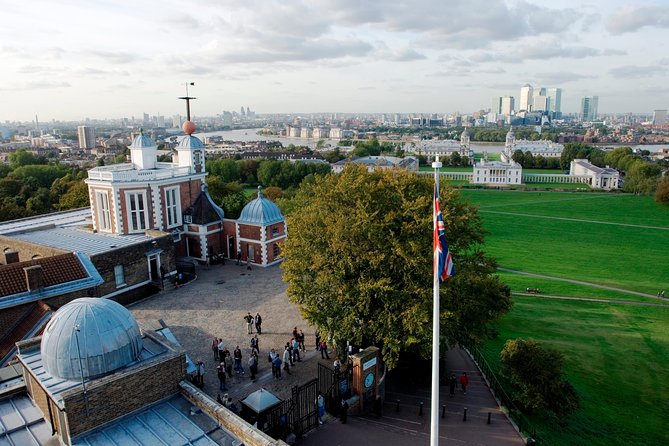
Your visit is set up around an audio guided tour that you can access as a free download, with additional language options available on site. That means you can skip the pressure of matching a group’s pace and instead focus on what you care about: clocks, telescopes, or the big story of time.
Plan to start at the beginning and let the audio guide lead you through the key rooms in order:
- You begin in the Meridian Courtyard
- Then you move through Flamsteed House and related displays
- You pass major clock-related stops
- You reach iconic astronomy spaces like the octagon-style interiors and the telescope dome
The time you spend matters because this site moves from outdoors-in views, to indoor rooms, to big exhibit spaces. If you try to sprint, you’ll miss what makes each stop click. If you take it calmly, two hours is usually plenty—but if you love astronomy explanations, you may want more.
Practical tip: download the audio guide before you arrive so you’re not hunting for reception at the top of the hill. And once you’re inside, don’t feel you need to listen to every minute word-for-word. Use the audio as a guide, then pause for photos or to look closely at the clock and telescope exhibits when something grabs you.
Meridian Courtyard: One Foot East, One Foot West
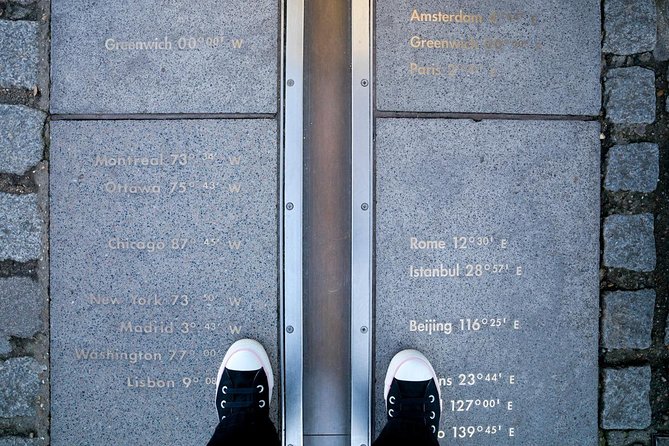
The Meridian Courtyard is the emotional center of the visit. This is where you get the iconic photo opportunity—standing across the line that defines longitude and underpins timekeeping in a very practical way.
This spot also frames the rest of the tour. After you’re standing there, the audio makes more sense. You stop thinking about longitude as a map concept and start thinking about it as a measurement that people built through careful observation—then improved into public systems.
If you’re the type who likes to understand what you’re photographing, this is a great stop. The audio guide helps connect the physical line under your feet to the story of Greenwich Mean Time and how it became a global reference.
Flamsteed House: Walk the Footsteps of the Astronomers Royal
From the courtyard, you head into Flamsteed House. This is where the visit starts feeling like a real scientific timeline instead of just a museum route.
Flamsteed House is presented as a place where astronomers worked, and the tour helps you walk in the footsteps of the Astronomers Royal. That detail is more than decoration. It changes how you read the exhibits. Instead of asking, What is this artifact? you’re more likely to ask, Why did they need it here?
One standout you’ll want to time your visit for: the bright red Time Ball on top of Flamsteed House. It’s one of the world’s earliest public time signals, first used in 1833, and it still operates today. Even if you don’t catch it in action at the exact moment you arrive, it’s a strong visual marker that timekeeping wasn’t just for scientists—it was for everyone with a boat to catch or schedules to keep.
Harrison’s Clocks and the Longitude Breakthrough

If clocks are your thing, don’t speed past the timekeeping displays. The Royal Observatory is especially famous for Harrison’s clocks—tools that helped solve the problem of measuring longitude, which in turn transformed navigation.
The audio guide walks you through why accurate time was revolutionary. You’ll also see references to other scientists and inventors linked to the observatory, including Newton and Halley, and later figures associated with Greenwich such as Airy and Einstein. The way these names are woven into the route gives you a feeling for how scientific progress isn’t one single flash—it’s layers built over time.
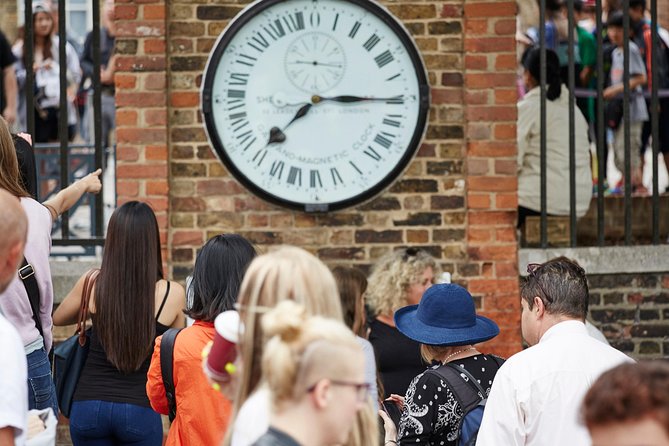
There’s also a clock you’ll notice outside the building: the Shepherd Gate Clock, mounted outside as the first clock to show Greenwich Mean Time to the public. It’s the kind of detail that makes the whole place feel grounded. Time wasn’t only a formal system for scholars; it became something people could check in daily life.





Octagon Room and Wren Interiors: A Room You’ll Want to Look Up
The tour includes the Octagon Room, designed by Sir Christopher Wren and described as one of the best preserved Wren interiors in London. Even if you’re not chasing architecture, this is a nice change of pace from instruments and clocks.
The room is a good reminder that scientific history lives inside real buildings, with real craftsmanship. It’s also a good moment to slow down. Instead of moving quickly between exhibits, you can pause and actually take in the space around you, which makes the science story feel more tangible.
The Great Equatorial Telescope: The Onion Dome Moment

Next up is the Great Equatorial Telescope, located in the huge, iconic onion dome. This is the stop where the visit tilts strongly toward astronomy.
The telescope represents the kind of shift that happens when better instruments make new views possible. Over 100 years ago, it gave astronomers fresh ways to look at the universe—and the audio guide ties it back to the larger mission of the observatory: measuring the sky well enough that you can trust what you see.
This is also a strong photo stop, especially if you like architecture or industrial-style shapes. The dome looks dramatic even before you fully understand the instruments inside. Then the audio fills in the why.
Don’t Miss the UNESCO Maritime Greenwich Setting
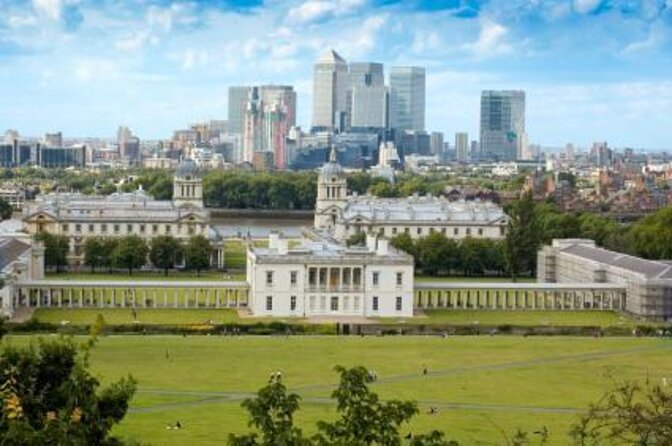
The observatory is part of UNESCO Maritime Greenwich, which matters because it turns your visit into more than one building. The area is about London’s relationship to navigation, ships, and time—three things that go together whether you’re thinking about empires or just basic seamanship.
And you get a bonus: the National Maritime Museum and the Queen’s House are within a short walking distance and are free to visit. That means your ticket isn’t just a two-hour entry. It can be the start of a longer Greenwich day without adding extra ticket costs.
If you have the energy, this is a smart pairing. After the observatory explains how time and measurement work, the nearby maritime sites help you see how those ideas mattered in real-world travel and trade.
Nearby Add-Ons You Can Pair in One Walk: Maritime Museum and Queen’s House
After your observatory time, don’t leave Greenwich right away. You can walk to:
- National Maritime Museum (free)
- Queen’s House (free)
Both are a short walk from the observatory, which makes them easy to add without changing your plans or dealing with complicated logistics. It’s the sort of pairing that makes a visit feel complete: one area for the measurement and science story, and another for the larger maritime context.
Also worth considering is Cutty Sark, now an award-winning museum experience and a must-see when visiting Greenwich. That’s not included in your observatory ticket, but it’s close enough to build into your day if you want more than clocks and telescopes.
One caution: if you add these nearby stops, don’t assume your two hours is enough. The observatory is short and focused, but the area can easily turn into a half-day or full-day plan.
Price and Value: Is $33.90 Worth It?
At $33.90 per person, this ticket costs about what you’d expect for a major London attraction—but what makes it feel like decent value is what’s included.
You get:
- Admission to the Royal Observatory Greenwich
- A free audio guide download
- All fees and taxes
Then, even better: the nearby National Maritime Museum and Queen’s House are free. So you’re paying to get into the Prime Meridian experience and the observatory exhibits, and you’re also unlocking extra options nearby without buying more tickets.
The other value angle is timing. This is an always-popular attraction, and it’s commonly booked about 35 days in advance. If you wait until the last minute, your preferred time slot could be the first thing to disappear. Booking ahead helps you avoid turning Greenwich day into a guessing game.
Getting There Smoothly: The Hill Is Real
The observatory sits on a hill, and several parts of the experience depend on you being comfortable with walking uphill. The views make the climb worth it, but rainy weather can make the walk less pleasant, since there’s a lot of outdoor walking involved before you’re fully inside.
If you want to reduce the stress of the approach, consider ways to reach Greenwich that reduce time spent trudging uphill with a bag. One useful hint from people who’ve been there: the Thames ferry can help you arrive while skipping some of the worst of the slog. Even if you don’t take the ferry, it’s smart to plan your route so you’re not surprised by steep grades.
Also, build in buffer time. If you arrive late, you’ll feel it immediately because you’ll rush your way through the audio stops to catch your rhythm.
Timing Tips: Photos, Crowds, and How to Spend the Route
A practical way to enjoy this place is to handle the Prime Meridian photo early. The site can get crowded quickly, so if you want that classic standing-across-the-line shot, do it near the start of your entry while you can still find space.
After the photo, follow the audio guide in order. The big instruments and interiors make more sense once you’ve heard the story that connects them:
- Public time signals (like the Time Ball)
- Clockmaking breakthroughs (like Harrison’s work)
- Astronomy instruments (like the Great Equatorial Telescope)
If you’re also considering the planetarium, factor that into your schedule. It’s mentioned as a worthwhile add-on, and you’ll likely want at least 1.5 to 2 hours even if you keep your main focus on the core observatory route.
For the best experience, treat the visit as a sequence, not a checklist.
Who This Works For (and Who Might Want a Different Plan)
This ticket is a strong fit if you want:
- A hands-on, meaningful photo moment at the Prime Meridian
- A structured learning route without needing a live guide
- Astronomy and timekeeping history that explains why these ideas matter
It’s also good for families, since the audio guide format helps kids (and adults) stay engaged at their own pace, and the displays are spread in a logical way.
But you should think twice if mobility is a major concern. The site is not fully accessible in all areas, and there’s a steep hill plus stairs. There’s mention of limited lift options, but the overall layout isn’t described as easy for wheelchair users or for anyone who struggles with stairs.
If you love views, you’ll appreciate the walk up. If your body doesn’t love hills, your experience may be more stressful than it needs to be.
One more practical note: because this experience uses a mobile ticket and on-site ticket checks, I recommend downloading your ticket ahead of time and keeping a backup screenshot. Even if everything works fine, it prevents last-minute frustration.
Should You Book This Prime Meridian Ticket?
I think you should book this if you want a memorable London experience that mixes real measurement history with iconic sights. The Prime Meridian photo spot plus the clock-and-telescope story is a rare combo: it’s educational, but it doesn’t feel academic for the sake of it. And at $33.90, you’re not just buying entry—you’re starting a Greenwich day with easy nearby free museums.
Skip it only if the hill and stairs would seriously strain your ability to enjoy the route. If that’s your situation, it may be better to plan a lighter Greenwich day around the free nearby sites instead.
In the right conditions, this is one of those places where you walk away feeling like you’ve stood at a real global reference point, not just seen another landmark.
FAQ
How long does the Royal Observatory Greenwich visit take?
Plan for about 2 hours on average.
Do I need a printed ticket?
No. The ticket is provided as a mobile ticket, and you’ll receive confirmation at booking time.
Is the audio guide included, and in how many languages?
Yes, a free audio guide is included and available to download in multiple languages (the details list up to 10 languages).
What other attractions near the observatory are free?
The National Maritime Museum and the Queen’s House are free to visit and are within a short walking distance from the Royal Observatory.
Is the Royal Observatory fully accessible for wheelchairs?
Certain parts of the attraction are not fully accessible. It’s best to contact the attraction if you need assistance planning your visit.
Can I cancel and get a full refund?
Yes. You can cancel up to 24 hours in advance for a full refund.