London has a talent for hidden corners.
This half-day outdoor scavenger hunt turns South Kensington and West London into a puzzle trail you solve at your own speed, with clues delivered to your phone. I like that it’s self-guided, so you can linger in pubs and cafés without feeling rushed, and I also like how the puzzles stay challenging but fair, pushing you to look closely at places you might otherwise skip. One thing to think about: it runs outdoors and you’ll be walking for 3–4 hours, so weather (wind and cold have shown up!) can make or break the experience.
You start near South Kensington, then work your way through side streets with a story-style “quest” vibe. You’ll play as a team (typically 2–6), follow phone prompts, and hit a few built-in breaks along the route for food and drinks, which is great if you need a moment to reset. If you don’t have the right phone number set up for the experience, you may not be able to participate, so double-check that requirement before you go.
In This Review
- Key things to know before you start
- Why This Phone-Guided Kensington Hunt Feels Like London, on Your Terms
- Route Basics: From Pelham St (South Kensington) to Kensington High Street
- How the Clues Work (and How That Changes Your Walking Plan)
- Kensington Side Streets: What You’ll Actually Do Along the Way
- Built-In Break Points: Eating and Drinking Without Losing the Thread
- Puzzle Difficulty: Tricky, Fair, and Solvable
- Team Strategy: Best Group Size, Competition, and Communication
- Price and Value: Is $40.98 Worth It?
- Comfort and Timing: Shoes, Weather, and Staying Sane
- Who Should Book This (and Who Might Skip It)
- Should You Book The Enchanted Mirror in Kensington?
- FAQ
- How long is The Enchanted Mirror?
- Where do you start and where do you end?
- Do I need a phone for the scavenger hunt?
- What group size does it work for?
- Is it self-guided or do I get a guide?
- Is the ticket mobile?
- Can I bring a service animal?
- Is it private for my group?
- What is the cancellation policy?
Key things to know before you start

- Phone-delivered clues guide you through Kensington and West London, turning everyday streets into a puzzle map.
- Teams of 2–6 keep it social, and bigger groups can split into multiple teams to compete.
- Built-in break points give you an easy excuse to grab a bite without derailing the hunt.
- Tricky but fair riddles reward close observation, not just speed.
- Outdoor walking for 3–4 hours means comfortable shoes and weather gear matter.
Why This Phone-Guided Kensington Hunt Feels Like London, on Your Terms

The Enchanted Mirror by HiddenCity is built around one simple idea: London is more fun when you’re actively looking. Instead of following a set tour script, you follow a chain of clues on your phone. The city becomes the game board—streets, signage, storefronts, and little details you might walk past.
What I like most is the you-drive-the-pace structure. If you want to sprint through the questions and finish fast, you can. If you prefer to slow down, stop for a snack, and chat while you solve, that works too. It’s a nice middle ground between “guided tour” and “totally free roaming.”
It also scores points for giving you a reason to explore South Kensington and West London in a way that doesn’t feel like checklist tourism. Kensington can be famous, sure—but this route nudges you into lesser-visited corners, so you get variety instead of repeating the same main streets.
You can also read our reviews of more tours and experiences in London.



Route Basics: From Pelham St (South Kensington) to Kensington High Street

Your start point is Pelham St in South Kensington (SW7 2NB). The walk ends around Kensington High Street, so you get a loop-like feeling without needing to figure out a complicated transport plan mid-game.
The time window is also pretty workable: you’re looking at about 3 to 4 hours total, and the experience runs on Mondays and Tuesdays during the stated hours (11:30 AM to 4:30 PM) within the long operating range listed. Since it’s self-guided, you’re not locked into a minute-by-minute schedule like some tours are.
One practical advantage: the meeting area is near public transportation. That matters because you don’t want a “great activity” to become a logistics headache. You should be able to arrive, start, and begin walking with minimal fuss.
How the Clues Work (and How That Changes Your Walking Plan)
The core mechanism is straightforward: you receive trail clues on your phone and solve puzzles to move to the next spot. This turns normal walking into something with momentum. Every time you answer, you’re basically unlocking the next layer of the story.
Teams matter here. You’ll generally play in groups of 2 to 6 players, and larger groups can split into several teams to race against each other. That’s a fun setup because you naturally divide roles: one person spots details, another focuses on the riddle text, and someone else keeps an eye on the next location prompt.
It’s also worth knowing you’ll need a UK, US, or CA mobile phone number to take part. That requirement isn’t just “nice to have.” It can affect whether the clues can be delivered as expected. If you’re traveling internationally with a roaming SIM, plan ahead so you’re not stuck at the starting point with a dead phone or the wrong number format.
A small but real mindset shift helps too: these puzzles reward noticing. When the answer clicks, it often feels obvious in hindsight. That’s exactly what you want from a city game—mental workout without turning into pure frustration.
Kensington Side Streets: What You’ll Actually Do Along the Way
This is an outdoor treasure-hunt style route across South Kensington and West London. You’re not touring one big landmark. You’re piecing together a path through smaller locations, with each clue pointing you to a place that matters to the story.
The best part is that you’ll likely end up in areas of Kensington you haven’t visited before. That’s one of the most consistent themes behind this kind of HiddenCity game: it makes you look beyond the obvious streets and into the neighborhood textures—shop fronts, local hangouts, and tucked-away corners.
The clues can be occasional head-scratchers, including spots where the question is harder than you expect at first. But when you figure out what the riddle is pointing at, you get that satisfying moment of recognition—like you finally see the sign, phrase, or detail the puzzle is talking about.
There’s also a social bonus to running into other teams. When you cross paths with another group following their own clue path, you can compare strategies and trade laughs—without needing to interact constantly. It keeps the day feeling lively, even though you’re self-guided.
Built-In Break Points: Eating and Drinking Without Losing the Thread
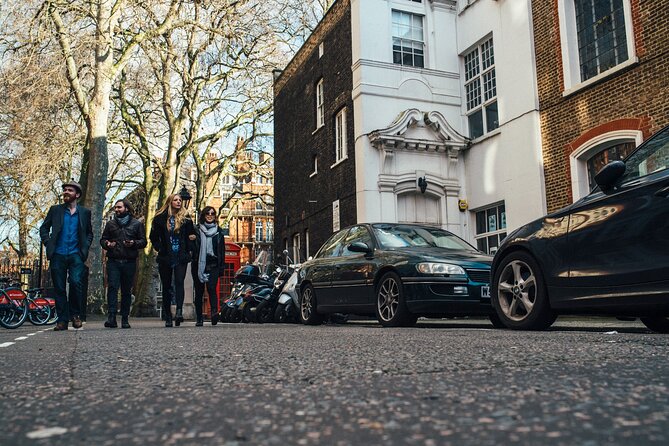
One of the smartest design choices here is the inclusion of built-in breaks. Instead of hoping you’ll find time for food, the route gives you natural stopping points so you can get a bite without derailing the game.
In practice, that means you can treat the hunt like a half-day outing: solve for a while, then take a quick pause to warm up, grab a drink, and reset your brain. Some people use these breaks for casual café stops; others take the opportunity for a longer sit-down meal if the timing works for their team.
The key detail: the breaks are opportunities to buy food and drinks, not a guaranteed included meal. So if you’re thinking about value, factor in that you’ll likely spend something along the way—but you’re spending because it’s planned into your day, not because you got hungry by accident.
If you’re traveling with friends or family, this is a big win. It keeps energy stable, and it reduces the classic problem of “fun activity, but everyone’s starving.”



Puzzle Difficulty: Tricky, Fair, and Solvable
The puzzles are designed to be challenging without being impossible. The vibe is closer to wordplay and observation than to obscure trivia. That’s important because it means the game doesn’t demand deep subject knowledge—you’re figuring out what you’re seeing.
When people struggle, it’s usually because they’re rushing or missing the detail the clue is asking you to notice. Once you slow down, the riddle can feel obvious, which makes the game satisfying rather than punishing.
If something really goes sideways, HiddenCity support has been described as helpful. One example from a customer issue: a customer reported a hiccup with an answer being marked wrong and a shop closure related to timing, and they specifically noted customer service support from Ellise. That gives you some confidence that problems don’t just get ignored.
Team Strategy: Best Group Size, Competition, and Communication
This experience works best when people can talk. Solving riddles on the move is easier when you’re comparing ideas out loud. If you’re traveling as a couple, it can be a great shared challenge—two brains, one decision loop.
If you’re a small group of friends, the 2–6 player range is ideal. It’s enough people to brainstorm, but not so many that it becomes chaotic. For bigger parties, you’ll likely split into multiple teams, which adds a light competition element. That’s a fun way to keep energy high and avoid “everyone waits while one person solves.”
A practical tip: assign roles early. Even something simple like spot-tryers versus riddle-readers makes the walk smoother. And because it’s self-guided, you don’t need to keep stopping to check with a leader—your phone prompts and your team solve cycle do the work.
Price and Value: Is $40.98 Worth It?

At about $40.98 per person, you’re paying for a self-guided activity that combines walking, puzzles, and a planned outing structure. That can be good value if you enjoy games, like thinking on your feet, or want an activity that doesn’t require booking a timed entry at a specific attraction.
The value angle comes from what you get for the day:
- A clear route framework across a fun part of London
- Phone-based clue delivery (you’re basically using your phone as the guide)
- Built-in breaks so the half-day feels complete
- Team play so it’s not only you vs the city
Also, the “admission ticket free” note suggests you’re not paying extra museum-style entry fees as part of the experience. You’re paying for the game itself, not for multiple attractions.
If you’re in London for a short stay and want one “active” activity that isn’t a standard tour, this price can make sense. If your group hates walking or dislikes puzzle-solving, it may feel like too much effort for the cost.
Comfort and Timing: Shoes, Weather, and Staying Sane
Because this is an outdoor walking adventure, comfort matters. Bring good walking shoes and a layer for wind. One participant noted they were dealing with freezing temperatures and wind chill, which is exactly the kind of weather reality London can throw at you.
Also, plan your energy. It’s easy to burn out if you treat every riddle like an emergency. If you’re stuck, take a minute, step back, and look at what’s physically in front of you. The game tends to reward that kind of reset.
Timing helps too. You’ve got a stated daily operating window (Monday and Tuesday, 11:30 AM to 4:30 PM). If you start near the middle of that range, you’re less likely to feel rushed.
Who Should Book This (and Who Might Skip It)
I’d point you toward The Enchanted Mirror if you:
- Like puzzles and trivia-style clue solving
- Want to explore Kensington and West London beyond the main lanes
- Prefer a self-guided activity that still feels structured
- Enjoy a team outing with a bit of friendly competition
You might skip it if you:
- Don’t want to walk for 3–4 hours outdoors
- Get frustrated quickly by riddles
- Don’t have reliable phone access (since a UK/US/CA mobile number is required)
It’s also described as suitable for most travelers, and service animals are allowed. If that’s important to your group planning, it’s a good thing to see explicitly.
Should You Book The Enchanted Mirror in Kensington?
Book it if your idea of a great London day includes smart clues, side-street wandering, and planned stops to grab food. It’s a rare kind of activity where you get both movement and a brain workout, and you can still stop for a chat in cafés along the way.
Skip it if your group wants a classic sit-and-see tour with guaranteed warm-up time or if puzzles stress you out. In that case, the walking and clue-solving may feel like work instead of fun.
If you decide to go, do one thing that makes everything smoother: make sure your phone setup and required mobile number are ready before you start. Then wear shoes you trust, bring layers for London weather, and enjoy the satisfaction when the clue finally makes sense.
FAQ
How long is The Enchanted Mirror?
It lasts about 3 to 4 hours.
Where do you start and where do you end?
You start at Pelham St, South Kensington, London SW7 2NB. You end at Kensington High Street, London.
Do I need a phone for the scavenger hunt?
Yes. The experience uses a trail of clues sent to your phone, and a UK, US, or CA mobile phone number is required to take part.
What group size does it work for?
It is played in teams of 2 to 6 players.
Is it self-guided or do I get a guide?
It is self-guided. You follow the clues and solve puzzles at your own pace.
Is the ticket mobile?
Yes, you receive a mobile ticket.
Can I bring a service animal?
Yes. Service animals are allowed.
Is it private for my group?
Yes. Only your group will participate.
What is the cancellation policy?
Free cancellation is available if you cancel up to 24 hours in advance for a full refund. If you cancel less than 24 hours before the start time, you won’t get a refund.