REVIEW · LONDON
Black Taxi Tour Of London
Book on Viator →Operated by London Sightseeing Tours · Bookable on Viator
London makes sense in four hours. This private black cab tour lets you shape the day with requested stops, while the glazed roof and big windows make sightseeing easy from the seat. You get a driver-guide who handles the turns and the timing, so you spend less energy on navigation and more on catching the details.
I especially like the custom feel of the route. Guides such as Morris and Bryan are repeatedly praised for listening first, then matching the plan to what you care about, whether that is royal London, architecture, or stories you did not get in school. Second, I like the comfort for real touring: the taxis are spacious, and they are built for good viewing, with the kind of windows that help you get photos without standing around.
One consideration: at $603.08 per group (up to 6), it is best value when you have enough people to split the fare. If it is just you or a couple, you may feel the cost more than you would with a group bus tour.
In This Review
- Key things I would plan around
- Why a black cab route feels better than a bus day
- Price and value: $603.08 for up to 6 people
- Getting to the meeting point and keeping your schedule intact
- The 4-hour plan: how this route keeps the big landmarks grouped
- Apsley House and Wellington Arch: the power behind the posture
- Westminster Hall and Parliament: the centuries stacked in one view
- Big Ben (Elizabeth Tower): one landmark, two names, a lot of meaning
- Downing Street: the Prime Minister’s address from the outside
- Westminster Abbey and the long road of coronations
- Bridges and river views: London Bridge, Tower Bridge, Albert Bridge
- Victoria Embankment and St Paul’s: the walkable ending that feels earned
- What makes the guides matter: customization in real language
- Tips to get more out of the day
- Should you book this London black cab tour?
Key things I would plan around
- Private, custom route: you request stops or let the guide steer
- Black cab comfort and viewing: large windows plus a glazed roof
- 4 hours is a sweet spot: enough time for big sights without turning the day into chaos
- Royal and political London in one loop: Wellington, Parliament, Downing Street, Westminster
- Bridge hop with river context: London Bridge, Tower Bridge, Albert Bridge
- St Paul’s as the “finish line”: the dome and its place in the city’s story
Why a black cab route feels better than a bus day
London is a place where the best views are often at angles. A black cab helps with that. You sit high enough to see across the street, and the big windows mean you can keep an eye on buildings as you pass, not just when the cab stops. The glazed roof is a small detail that changes the whole experience when clouds roll in or when you want a cleaner look for photos.
Also, you do not have to share your time with strangers loading and unloading at different speeds. You keep your rhythm. That matters when you are traveling with kids, or when your group includes someone who cannot walk long distances. In multiple trips, guides have been described as adjusting on the fly—walking a portion, then retrieving the cab to keep the pace comfortable.
This is not a “drive-by parade” either. You get spoken context at the places you actually care about, from what stood here before, to why it matters now. Even if you are not a history person, the city’s layout starts to click.
You can also read our reviews of more tours and experiences in London.


Price and value: $603.08 for up to 6 people
The headline number is $603.08 per group for about 4 hours. That is for up to six people, which is the key to making it feel fair.
- For a full cab (6 people), you are roughly around $100 per person.
- For 3 people, it is about $200 per person.
- For 2 people, it can feel closer to a “special treat” price.
If you are traveling as a family or a small group, this is where the math gets friendly fast. You also get something buses usually cannot offer: stop selection. You can decide whether you want more time at Westminster or a stronger emphasis on bridges and river walks, rather than being locked into a fixed order.
One more value angle: you are paying for transportation and a guide-driver who knows how London flows. That turns into less time wasted on wrong turns and less time losing your place when you want photos or quick questions.
Getting to the meeting point and keeping your schedule intact
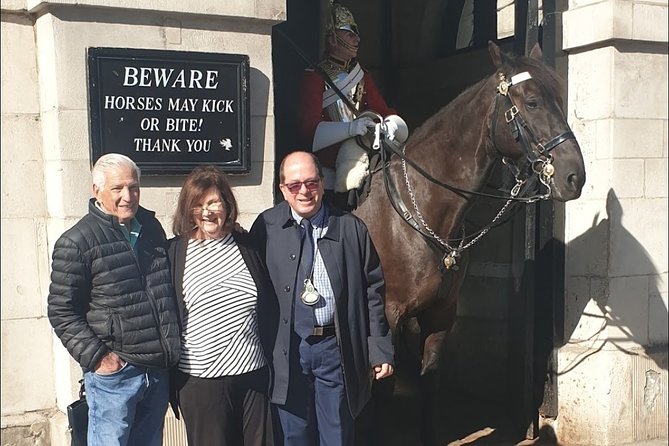
Tours start and end near the Thames at Embankment Place (London WC2N). The tour offers pickup within 5 miles of Trafalgar Square for free, and pickup from your hotel or Airbnb is included as well. The general starting time is 10:00 a.m., but you can request another time by contacting the provider.
If you are arriving by airport or port, pickup may be available subject to availability, but parking and surcharges can apply depending on where you are coming from. The one practical move here is to plan the day so you do not run the tour too tight against another booking. A taxi tour works best when you can enjoy each stop rather than treating it like a race.
The good news: the tour ends back at the meeting point, so you have an easy handoff back to your day.
The 4-hour plan: how this route keeps the big landmarks grouped
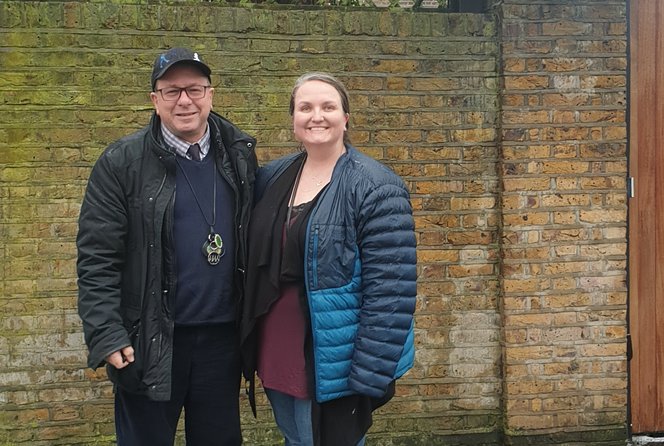
This tour is built as a loop around the central parts of London, focusing on high-impact sights that sit close enough together to do in one morning or afternoon. You start in the Westminster orbit, then work your way through Parliament, royal sites, bridges, the riverfront, and finally St Paul’s.
Because it is private, you can often fine-tune where the “attention” goes. If your group loves architecture, you can ask for more time on building details. If your group prefers people and politics, you can steer the conversation toward the people connected with each location. You can request stops, or let the guide choose based on what you tell them.
Here is what you can expect as the route unfolds.
Apsley House and Wellington Arch: the power behind the posture
Your first stop is Apsley House, the home of the Duke of Wellington dating to 1825. This is not just another grand building. It sits in a key spot, right across from Wellington Arch. The guide often uses this area to connect the dots between military fame, royal symbolism, and the way London reshapes monuments over time.
Wellington Arch originally had a different relationship to the street plans around it. After Wellington’s death, a huge statue was taken down and moved to Aldershot Barracks. A smaller statue remains where the arch originally faced. Then in 1912, the current quadriga statue was placed on top: Nike the Goddess of Victory riding the chariot. It is one of the large equestrian sculptures in Europe, and the story behind it makes the landmark feel less like a random photo stop and more like a message in stone.
What I like here: it gives you a “why this place looks the way it does” start before the route turns into the political heart of London.
A drawback to plan for: you may spend a few minutes here more for angles and narration than for long walking. If you prefer lots of time on foot, you should say so early and request brief stop-and-walk moments.



Westminster Hall and Parliament: the centuries stacked in one view

From Apsley House, the tour turns toward the Westminster area, where the layers of London show up fast. The big story is that this site has been rebuilt, burned, and reworked multiple times.
The earliest record of a palace here goes back to the 11th century, when it was the monarch’s palace under William the Conqueror. That palace burned in 1512 and had to be rebuilt. Later, in 1834, it was destroyed again, but parts survived—the crypt, the Jewel Tower, and Westminster Hall, which dates to 1097 under King William Rufus.
Then comes the Parliament rebuild. The Houses of Parliament were rebuilt from 1834 to 1870 by architects Augustus Pugin and Charles Barry. The result today is what you recognize as the House of Commons and House of Lords, sitting on the north bank of the Thames.
This is a place where the guide’s pacing matters. You get just enough context to understand why the buildings look the way they do. You also get the benefit of doing it from a taxi seat first—seeing the massing and the layout before you try to read details.
If you are photo-driven, ask for a few moments to get clear sightlines before the cab moves again. The river view helps, and the taxi’s windows keep the viewing comfortable.
Big Ben (Elizabeth Tower): one landmark, two names, a lot of meaning
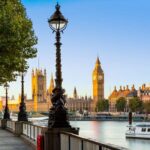
Next up is the clock icon people call Big Ben, though the official name is The Clock Tower. In 2012, it was renamed The Elizabeth Tower to commemorate Queen Elizabeth II’s Diamond Jubilee.
Designed by Augustus Pugin, the tower opened in 1859. It is one of the most iconic buildings in London, and the guide can help you understand what makes it so hard to “unsee” once you have it in your mind.
What I like: this is a stop where even short time works, because you get the visual impact plus the timeline—when it opened and why the name changed.
Plan note: tower areas can be busy. Sitting in a taxi means you do not spend as much time threading through crowds.
Downing Street: the Prime Minister’s address from the outside
You then pass Downing Street, the official residence of the Prime Minister at Number 10 and the Chancellor of the Exchequer at Number 11. The street was built in 1680 by Sir George Downing and sits between Whitehall and Trafalgar Square.
You mostly experience Downing Street from the street view—what matters is the symbolism and the location. This stop is useful because it anchors what you have been seeing in a real seat of power, not just architecture.
If your group loves politics, you will likely enjoy the fact that the tour can connect the street to the surrounding governmental buildings without needing a museum ticket. If your group wants more time walking, you may need to request it, since the route prioritizes moving between major points.
Westminster Abbey and the long road of coronations
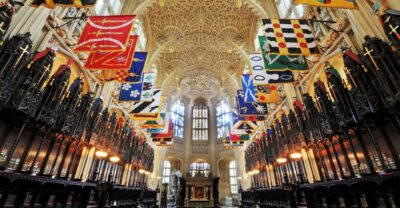
Next is Westminster Abbey, formally the Collegiate Church of Saint Peter. It is mainly Gothic in design, and it is famous for one big reason: it has hosted every Coronation since William the Conqueror.
It has also hosted sixteen royal weddings and serves as a burial site for many English and later British monarchs. The abbey is a Grade One listed building and a World Heritage Site, and the site itself dates back to 960 AD.
The guide’s angle here often helps you see the building as a timeline. Under King Henry III in the 13th century, the abbey saw alterations, earning Henry the nickname Henry the builder. Further rebuilding happened in 1517 during King Henry VIII’s reign. In the 18th century, the two towers you notice today were added by Nicholas Hawksmoor, who was a pupil/understudy of Christopher Wren.
One caution: Westminster Abbey is a major destination, so if the tour time feels tight for entry and longer inside viewing, keep your expectations realistic. This tour is designed to get you strong exterior context and the “why” behind what you are looking at.
For people who enjoy portraits, monuments, and the story behind national ceremonies, this is a high-payoff stop.
Bridges and river views: London Bridge, Tower Bridge, Albert Bridge
After Westminster, the route shifts toward the Thames. This is where the taxi becomes a moving viewpoint.
First you pass the history of London Bridge. The old bridge built between 1176 and 1209 was the first stone bridge across the Thames and lasted for centuries as an almost town-within-a-bridge setup, with shops, houses, restaurants, and a chapel. At nearly 906 feet, it was the longest inhabited bridge in Europe. Todays London Bridge is the third (stone) London Bridge.
Then you hit Tower Bridge, built 1886 to 1894. It is a combined bascule and suspension bridge. The word bascule refers to a see-saw balance, and today many people treat Tower Bridge like London’s signature “wonder bridge.” If your group likes engineering, this stop provides enough detail to make it feel more than a postcard.
Finally, the tour can include Albert Bridge, connecting Chelsea to Battersea. Its lighting is described as a spectacular River Thames sight and it has appeared in films. There is also a quirky piece of military lore: when it was unstable, troops were posted with a sign at the north side telling them to break step. It is still known as the Trembling Lady.
This segment works well because you get variety. You are not repeating “big building, big building” for the whole 4 hours. You get movement, water, and different architectural styles without needing to hop on a train.
Victoria Embankment and St Paul’s: the walkable ending that feels earned
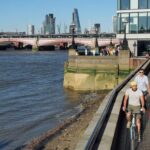
Between the bridges and St Paul’s, you can pass along the Victoria Embankment, which runs along the north bank from the Palace of Westminster to Blackfriars Bridge. It is known for memorials such as The Battle of Britain, permanently retired vessels including H.M.S President, and public gardens at the Victoria Embankment Gardens. Construction ran between 1865 and 1870 under Joseph Bazalgette, and his work narrowed the Thames significantly.
You might find this part calming. It provides a breather between stops, and it helps your brain map the city’s shape around the river. Even if you do not get off for long, the narration makes the riverfront feel purposeful.
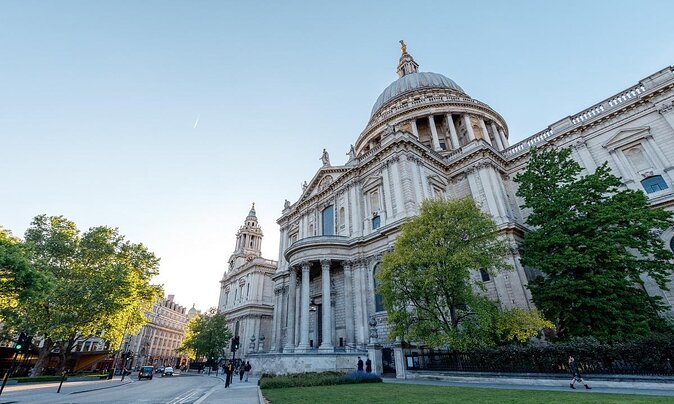
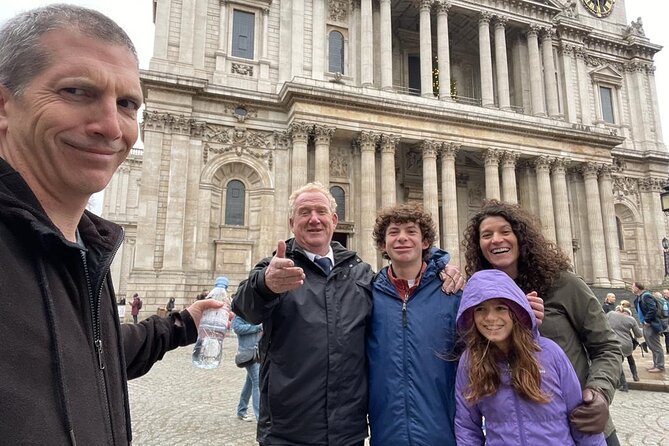
Then you finish with St Paul’s Cathedral. The tour points out that you are on a long-standing sacred site. The first record goes back to 604 AD under Bishop Mellitus, and there have been four cathedrals on this site. The current St Paul’s Cathedral was built between 1675 and 1710, and you see the work of Christopher Wren, who is also buried under the dome.
It is also a scale story. The earlier St Paul’s (built 1087 to 1314) was the largest building in the UK until 1666, when it was lost in the Great Fire of London. The current cathedral’s dome reaches 365 feet and weighs 65,000 tons.
This ending is smart because once you have the dome in your mind, you start noticing London’s “horizon markers.” It also gives a satisfying sense of closure after Westminster and the river.
What makes the guides matter: customization in real language
A key strength of this tour is how the guide role goes beyond facts. In multiple experiences tied to the company, guides including Morris and Bryan have been praised for adjusting to personal interests and keeping the day comfortable and efficient.
You may get that in small ways:
- stop order changes based on what the group actually wants
- extra picture time if there is a good view
- quick answers when someone asks a question mid-drive
- pacing adjustments for kids or limited mobility
If you want an easy win before the tour starts, tell the guide your top three priorities. For example: Westminster and coronations, bridges and engineering, or architecture and city planning. You do not need to write a book. Just be direct.
Tips to get more out of the day
Here is how you can make the 4-hour time feel like it is giving extra value, not just “passing through”:
- Pick your priorities before you meet. Decide what you want most: royal/political stories, architecture, bridges, or the river.
- Ask for the stop sequence that reduces backtracking. A taxi loop works best when it stays efficient.
- Use the taxi for photo angles. If the view looks good from the seat, take the picture then, not later.
- For mobility needs, plan to communicate that early. The tour has been described as working well for wheelchair and mobility scooter setups, including easy cab entry.
One more practical point: London weather changes fast. The taxi’s viewing setup helps, but you may still want a light layer.
Should you book this London black cab tour?
I think you should book it if you want a strong overview of central London without the stress of crowds, stations, or figuring out routes. It is especially worth it when you have a group of up to six—this is where the pricing starts to feel fair, and where the custom stop flexibility becomes more than a perk.
I would skip it, or at least compare options, if you are traveling solo and price sensitivity is high. In that case, you might prefer a lower-cost group tour and spend the money you save on other experiences.
If your goal is to get your bearings fast and leave with real context for what you saw—Wellington’s arch story, the layered Westminster rebuilds, the meaning behind Elizabeth Tower, the engineering of Tower Bridge, and the dome story at St Paul’s—this private cab route is a very workable way to do it.