REVIEW · LONDON
Jack the Ripper Walking Tour with Expert Ripperologist
Book on Viator →Operated by Jack the Ripper Walks · Bookable on Viator
Jack the Ripper gets real when you walk it. This 2.5-hour trail through Whitechapel focuses on the 1888 setting and the timeline, helped along by a 14-inch backlit tablet with photos of sites and victims. It’s the kind of tour where the story sticks, because you’re standing in the exact streets tied to it.
I like the way the guide keeps you moving without map-wrangling, and I also like the tone: serious, respectful, and fixed on the people rather than cheap shock. The one real catch is the practical side: you’ll be on your feet and standing for 2+ hours, and toilets are very limited along the route.
In This Review
- Key highlights at a glance
- Why this Jack the Ripper walk feels different
- Starting at Aldgate Station: where the story begins fast
- St Botolph’s Aldgate: the Prostitutes Church opener
- Aldgate Square: Whitechapel in 1888 and the pressure of poverty
- Mitre Street and the double event: Long Liz and Catherine Eddowes
- Petticoat Lane to Goulston Street: boundaries and the police trail
- Gunthorpe Street: Martha Tabram and the possible first victim
- Thrawl Street and the Frying Pan Pub: Mary Ann Nichols’ last drink
- Hanbury Street: Annie Chapman in the back yard at 29 Hanbury St
- Wilkes Street and Puma Court: the Dear Boss letter
- The Ten Bells and Christchurch Graveyard: Mary Kelly and Itchy Park
- Old Spitalfields Market and the London Fruit & Wool Exchange letters
- End point at the London Fruit Exchange: Mary Kelly and your next transit
- The visuals and costumed style: how the tour keeps you engaged
- Walking time, toilets, and what to wear
- Who this Jack the Ripper tour is best for
- Should you book this Jack the Ripper tour?
- FAQ
- How long is the Jack the Ripper walking tour?
- How much does the tour cost?
- Where does the tour start and end?
- What language is the tour offered in?
- What’s included in the ticket?
- Are there toilets during the tour?
- Is the tour okay for kids or teens?
- Can I get a full refund if I cancel?
Key highlights at a glance

- A street-by-street Whitechapel timeline tied to the double event and the final days of the case
- Costumed guide touches that add theater without turning it into a joke
- 14-inch backlit tablet visuals so you can clearly see photos of sites and victims
- No-map navigation style, with the guide moving you from turn to turn
- City of London vs Metropolitan policing explained right where the boundary mattered
- Maximum group size of 30, with a small-scale feel for a big topic
Why this Jack the Ripper walk feels different
Hollywood gives you fog, knives, and instant villains. This walk gives you streets, distance, and daily life in Whitechapel in 1888. The guide doesn’t treat the murders like a movie montage. Instead, you get a paced walk that links geography with timing and with the reality of poverty and overcrowding.
You’ll also see how the tour uses visuals to help you keep up. On a big 14-inch backlit tablet, you’re shown photos of the murder sites and victims, plus the area before and after. That matters because London’s streets have changed, but the locations still matter. The guide makes the “how did that happen here?” question easier to answer.
One more thing I appreciate: the vibe stays respectful. More than once, the guide’s approach centers the women affected by the violence, not just the mystery of Jack. If you want dark history with a careful tone, this is a strong fit.
You can also read our reviews of more walking tours in London



Starting at Aldgate Station: where the story begins fast
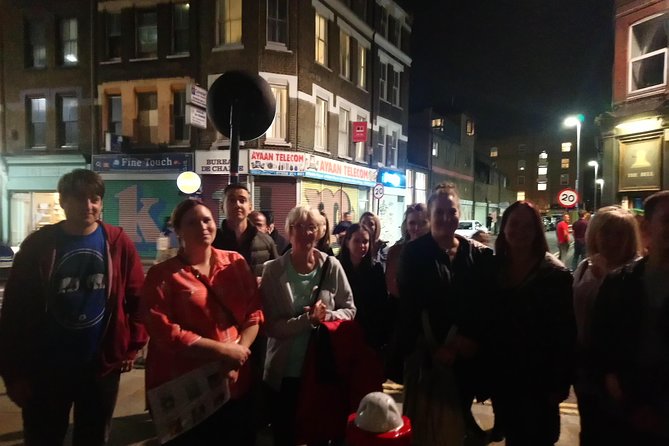
The tour begins at Aldgate Station, on Aldgate High St (EC3N 1AH). From the start, you’re not just dropped into a lecture. You’re set up outside St Botolph’s Aldgate, and the introduction gives you a theme right away.
This opening is tied to the church’s nickname: it’s known as the Prostitutes Church, because girls used to solicit on the island where it stood. That detail isn’t filler. It quickly frames the kind of marginal, exploited street life that shaped the area and how people experienced it.
This is also a smart start for logistics. Aldgate is a familiar anchor point with public transport nearby, so you’re not trying to find your bearings on the first minute.
St Botolph’s Aldgate: the Prostitutes Church opener
At Stop 1, you get a short, focused introduction outside St Botolph’s Church. The point here is atmosphere tied to history. The guide uses it to explain how the area’s social conditions fed into the vulnerability of people living there.
You’ll also notice the tour is paced to keep you interested even if you’re new to the case. It’s only about a 5-minute stop, so you’re not stuck at one location while the story catches its breath.
Practical note: church exteriors can be busy with foot traffic. Stay close to your guide and keep your attention on the cues for the next turn.
Aldgate Square: Whitechapel in 1888 and the pressure of poverty
Next comes Aldgate Square, around 10 minutes, where the talk shifts from one specific location to what daily life felt like in 1888 Whitechapel. This is where the tour earns its “expert ripperologist” label in a useful way: it explains conditions like overcrowding, squalor, and living on the breadline.
That matters because the case can get reduced to a hunt for a name. But the “why here” part makes the whole story clearer. When you understand how survival worked, you understand how quickly someone could vanish, and why witnesses and authorities were under pressure.
This stop also helps you connect later locations. You’ll start to see how each street fits into a map of fear, routine, and limited protection.
Mitre Street and the double event: Long Liz and Catherine Eddowes
At Mitre Street (near Mitre Sq/St, just inside the City boundary), the guide zeroes in on the double event timeline. You’ll hear about Elizabeth Stride, sometimes called Long Liz, described as the first victim killed on that night, and then the tour moves to the death of Catherine Eddowes, said to have happened only about 45 minutes later at this spot.
This is one of the most “street-logic” parts of the tour. It’s easy to think of the murders as separate stories. Here, you get the sense that everything unfolded fast, and the geography is part of the pacing.
The pacing is also respectful. You’re not lingering in gore; you’re connecting events to place and time, which is exactly what makes a walking tour worth doing instead of just reading.




Petticoat Lane to Goulston Street: boundaries and the police trail
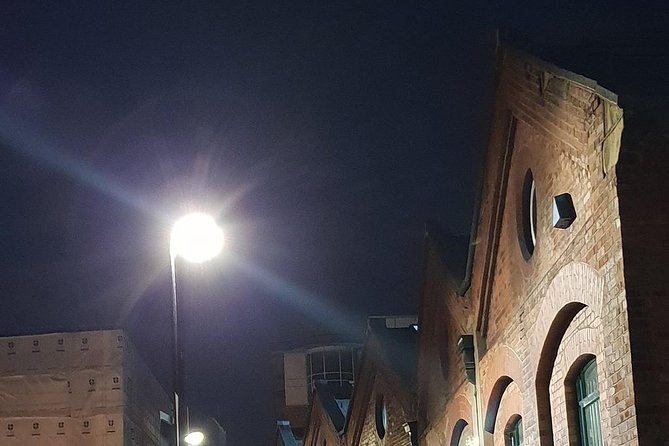
Then the tour moves to Petticoat Lane Market, now known as Middlesex St. The guide uses it to explain a key detail: this is a boundary between the City of London and the Metropolitan area, and those areas had separate police forces.
It’s a practical history lesson dressed as a street stop. When people say “follow the clues,” they often ignore how institutions differed nearby. Here, you get the sense that jurisdiction wasn’t a neat line. It affected response, records, and pursuit.
From there you head to Goulston Street, where the guide points out the doorway where the only clue was found along the route the police took that night. That’s a strong “wait, we’re looking at it right now” moment—because the tour doesn’t just tell you something happened. It shows you where the investigation turned.
Gunthorpe Street: Martha Tabram and the possible first victim
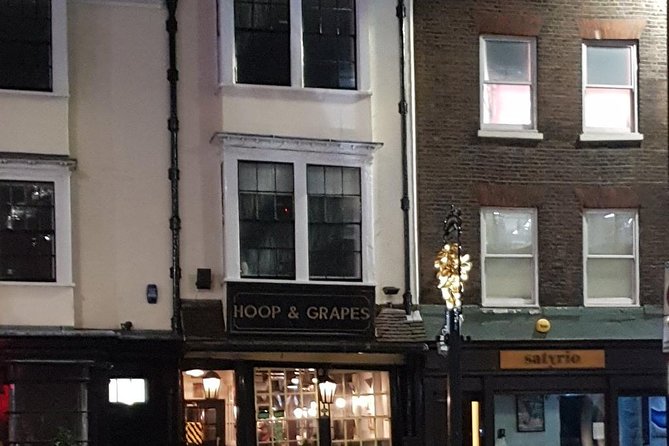
Next is Gunthorpe Street, viewed from Wentworth St looking toward the area tied to George Yard Buildings. The guide connects this location to Martha Tabram, murdered on 7 Aug 1888, and notes she’s now thought to be the most likely first victim in the Jack the Ripper story.
This stop is especially useful if you’ve only ever heard a simplified version of the case. It gives you a wider lens without pretending the debate is settled.
Timing-wise, it stays compact (about 10 minutes), but it adds real texture. You walk away with the feeling that the case isn’t one flat legend. It’s tied to earlier violence and changing assumptions.
Thrawl Street and the Frying Pan Pub: Mary Ann Nichols’ last drink
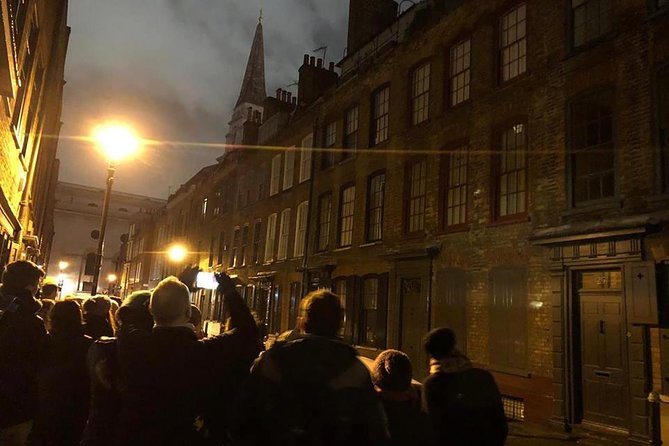
At Thrawl Street, you stop opposite the Frying Pan Pub on the corner of Thrawl St. Here the guide talks about Mary Ann Nichols, including the idea that this was her last drink before she staggered down Whitechapel Road to be murdered in Bucks Row, behind Whitechapel Station.
This stop is effective because it uses a familiar “real-world” landmark (a pub) to anchor a story. Even if you don’t know the case well, you can picture a person taking one last moment for something ordinary before life turns brutal.
It’s also a good example of how the tour handles modern London. You’re standing in a street scene that looks different now, yet the story still lines up when the guide gives you the right way to look.
Hanbury Street: Annie Chapman in the back yard at 29 Hanbury St
The tour continues up Brick Lane, turns into Hanbury Street, and focuses on 29 Hanbury St, where Annie Chapman was murdered in the back yard.
This stop is longer (about 12 minutes), which makes sense. A back yard is harder to imagine from the street, so you’ll likely want the guide’s framing and visuals here. The value is in turning a name into a place, and then into a clear mental picture.
Wilkes Street and Puma Court: the Dear Boss letter
Next comes Wilkes Street, described as untouched by time since the 1800s, and then a walk toward Puma Court. This is where the tour shifts from physical violence to the paper trail and public fascination, covering the Dear Boss letter.
If you think of the case as only a police matter, this is where you realize it also became public theater—literally. Letters, rumors, and attention changed how people interpreted what was happening.
The stop here stays short (about 5 minutes), but it hits a key reason the legend lasted: it wasn’t just what happened. It was how the story traveled.
The Ten Bells and Christchurch Graveyard: Mary Kelly and Itchy Park
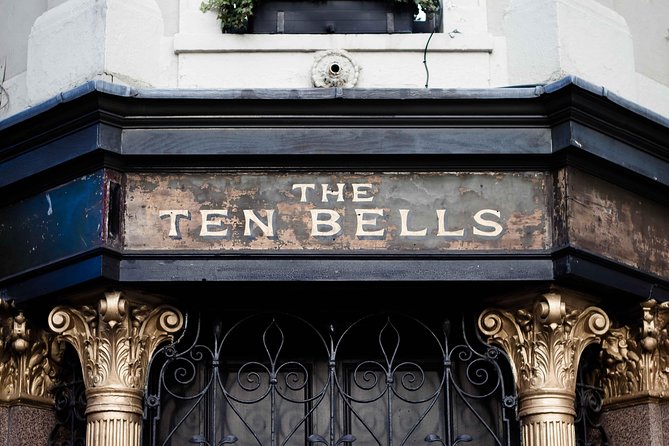
Opposite the Ten Bells pub, the guide talks about Mary Kelly, described as a favorite pub spot for her. Then you’ll also view Christchurch Graveyard, nicknamed Itchy Park, where homeless people would sleep in the daytime.
This is another stop where the tour feels human. You get both the famous pub landmark tied to the case and the wider reality of who had nowhere safe to go.
The stop is brief (about 5 minutes), but the concept sticks. It turns the “mystery” into a story about survival at the edges of society.
Old Spitalfields Market and the London Fruit & Wool Exchange letters
At Old Spitalfields Market, you stop opposite the market, at the London Fruit & Wool Exchange. The guide stops in the entrance to discuss a letter sent to George Lusk, head of the Whitechapel Vigilance Group.
This part is a reminder that investigations weren’t only police work. Community groups played roles too, and letters helped shape urgency and public action.
Time-wise, this is about 8 minutes. It’s a clean transition into the final stop, which ties the story to the last known victim.
End point at the London Fruit Exchange: Mary Kelly and your next transit
The tour ends in the square behind the London Fruit & Wool Exchange. This final section focuses on the murder of Mary Kelly, described as Jack’s last victim, killed on 9 Nov 1888.
From here, it’s about a 5-minute walk to Liverpool Street Station, giving you an easy exit with multiple tube lines.
This ending works well. You’re not left stranded in a back alley. You finish with a practical transport option, and the story lands on one of the most referenced endings.
The visuals and costumed style: how the tour keeps you engaged
You’ll likely notice two design choices built into the experience.
First: visuals on a 14-inch backlit tablet. The images are used to show sites and victims clearly, and that helps when streets have changed over 130+ years. It also keeps the tour moving, since you’re not only listening—you’re also looking at what the guide is referencing.
Second: the guide may wear a costume as a nod to the period. It adds a hint of theater, but the focus stays on explanation, context, and the people involved. It can make the experience feel more memorable if you’re the type who learns by seeing.
Group size matters too. The maximum is 30 travelers, which helps keep it from feeling chaotic. Still, if the group is near capacity, expect some crowding at tighter corners.
Walking time, toilets, and what to wear
This tour runs about 2 hours 30 minutes. The route includes frequent standing and a good chunk of walking on uneven or crowded sidewalks in central London.
Two practical notes are worth taking seriously:
- Toilets are very limited on the route, so plan ahead.
- It’s not recommended if you can’t walk and stand for 2+ hours.
What to wear: comfortable shoes. If you’re sensitive to crowds, go early and keep your pace steady. A tour like this works best when you can keep up without rushing.
Who this Jack the Ripper tour is best for
This is ideal if you want:
- Dark history that stays grounded in place and time
- A guide who uses photos and street-level storytelling so names turn into real locations
- A Whitechapel walk that spends time on the social conditions behind the case
It’s also a strong fit for first-timers who only know the Hollywood version. The tour explains context, boundaries between police jurisdictions, and why “clues” weren’t always straightforward.
Not for everyone: if you want light sightseeing or if you don’t want to hear about murder and exploitation, you may find the tone heavy. Also, there are limits on kids: no one under 15 is allowed, and 16–17 must be accompanied by an adult.
Should you book this Jack the Ripper tour?
Yes, I’d book it if you’re excited by London’s street history and you want a clear, timed route that connects the case to the exact neighborhoods. For $23.61, the value is strong because you’re getting more than a walk: you’re getting big-screen visuals, a focused narrative, and a finish with easy access to Liverpool Street.
I’d hesitate only if:
- You need lots of bathroom stops (there aren’t many).
- You struggle with standing and walking for 2+ hours.
- You’d rather have a smaller group for easier listening at every corner.
One more practical tip: since this topic draws demand, and there has been at least one reported issue where a tour didn’t run as expected, keep your confirmation details handy and arrive a bit early so you can meet your guide without stress.
If that sounds like your kind of evening—or afternoon—this is one of the better ways to see Whitechapel without getting lost in the legend.
FAQ
How long is the Jack the Ripper walking tour?
It’s about 2 hours 30 minutes.
How much does the tour cost?
The price is $23.61 per person.
Where does the tour start and end?
It starts at Aldgate Station, Aldgate High St, London EC3N 1AH and ends at 66–68 Bell Ln, London E1 7LA, with a short walk to Liverpool Street Station.
What language is the tour offered in?
The tour is offered in English.
What’s included in the ticket?
The tour includes photos of murder victims and sites/area, shown on a 14-inch backlit tablet.
Are there toilets during the tour?
There are very limited toilets available on the route.
Is the tour okay for kids or teens?
No children under 15 are allowed. Ages 16–17 must be accompanied by an adult.
Can I get a full refund if I cancel?
Yes. It offers free cancellation with a full refund if you cancel at least 24 hours before the experience’s start time.