REVIEW · LONDON
London: James Bond and Spies Walking Tour
Book on GetYourGuide →Operated by Where Now Tours · Bookable on GetYourGuide
Bond fans, slow down and look around. This walking tour turns Central London into a lived-in spy map, built around James Bond and the real-life setting that helped shape him. I love the way the guide matches what you see on the street with short film moments, so the city feels less like a backdrop and more like a set that’s still standing.
Two things I especially liked: first, the film-location comparisons using movie clips on a tablet as you stand in the same spots. Second, the guide’s focus on Ian Fleming as a man shaped by combat and intelligence work, not just a name attached to 007. It’s also where you’ll hear connections to other espionage legends like George Smiley and Jason Bourne, plus real-world spy history woven into the walk.
One possible drawback: this is Bond-franchise-led. If you’re hoping for a heavy, standalone deep dive into MI6 tradecraft and the most detailed real espionage operations, you may want more time spent in that lane.
In This Review
- Key points worth circling
- Bond Fans, This Is London as a Spy Dossier
- Meeting at the London Eye (Orange Umbrella Moment)
- Ian Fleming’s Combat Background: The Person Behind the Fiction
- Westminster Bridge and Parliament: Where Power Looks Straight at You
- The Mall and Pall Mall: Fancy Streets With Serious Energy
- Trafalgar Square to the River: Crossroads of Attention
- Somerset House and the Strand: Where Stories Start to Feel Real
- The Best Trick: Film Clips at the Exact Spot
- Ending at Rules: The Spy-Dinner Mood Closes the Loop
- Price and Time: What You’re Getting for $18
- Who Should Book This Tour (and Who Might Skip It)
- Should You Book James Bond and Spies in London?
- FAQ
- Where do I meet for the tour?
- How long is the walking tour?
- What does the tour cost?
- Is the tour in English?
- What should I bring with me?
- Is the tour suitable for minors?
- Where does the tour end?
- Is food included?
Key points worth circling
- London Eye start, Rules finish: a satisfying end-point that keeps the spy-story pacing all the way through.
- Short movie clips at real street locations: you watch, then you look up, then it clicks.
- Ian Fleming’s personal route into espionage: the why behind the stories, not just the plot.
- Westminster and Whitehall focus: big-government landmarks that actually make sense for spies.
- Trivia and guided storytelling: expect questions and quick interactive moments, not a lecture.
Bond Fans, This Is London as a Spy Dossier
The tour has a simple charm: you’re walking through London while someone connects it to the world of spies in a way that’s easy to follow. You don’t need to be a film scholar or a history expert. You just need curiosity and comfortable shoes.
I liked the tone because it stays upbeat and practical. The guide doesn’t try to make you memorize dates. Instead, you get street-level context: why that building matters, what that neighborhood signals, and how Bond-style fiction borrows from the way London looks and works.
And the city helps. You’re moving through Westminster and the surrounding core, where government, media, and major riverside crossings are close together. That concentration makes the story feel plausible in a way you don’t get when espionage only lives in books or on screens.
You can also read our reviews of more walking tours in London



Meeting at the London Eye (Orange Umbrella Moment)
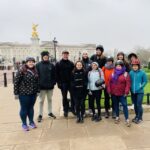
You meet in front of the London Eye. Your guide will be holding an orange umbrella, which makes the first five minutes easy. This matters because you start the tour right away, with a quick setup and then straight into the action.
From there, you’ll be doing a mix of photo stops and guided looks at key sights. So even if you’re someone who likes to take pictures, you’ll get enough little pauses to frame shots without dragging the pace. A camera helps, especially because the guide uses it as part of the matching process—stand here, look there, then compare with the film clip.
Duration is about 150 minutes, which is long enough to get stories into the bones, but short enough that you won’t feel like you’ve surrendered half a day to a single theme. It’s a walk you can reasonably enjoy even if you’re also touring other parts of London.
Ian Fleming’s Combat Background: The Person Behind the Fiction
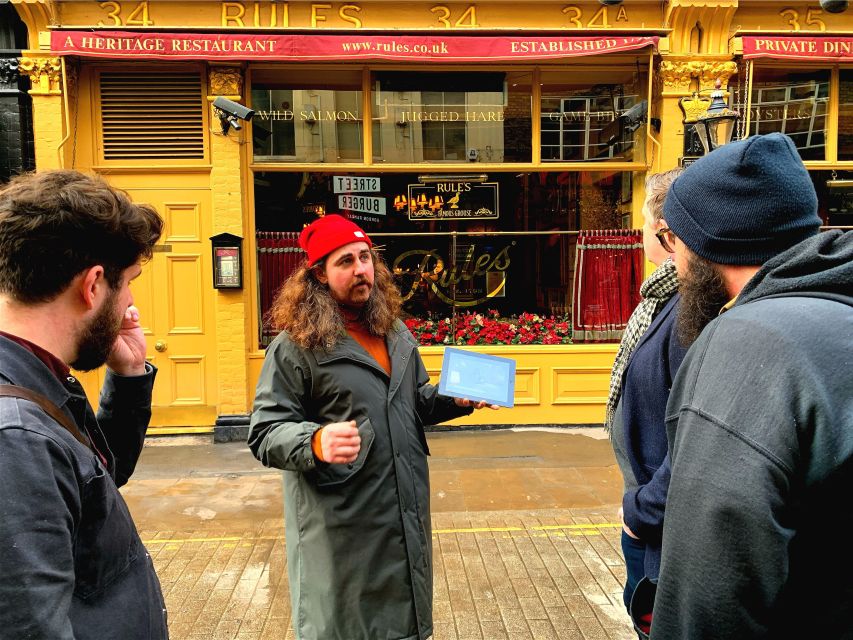
A big reason this tour works is the anchor: Ian Fleming. You don’t just get the legend. You get the man-shaped context—his experiences and how they influenced the kind of spy stories he wrote.
What I found useful is that it gives you a lens for everything else you see. When the tour talks about spies moving through London’s power corridors, you understand it as a story built from real instincts: tension, secrecy, and the way institutions shape behavior.
You also hear about other spies and spy-style fiction—George Smiley from John le Carré and Jason Bourne from Robert Ludlum. Even when those references are fictional, they help you compare styles: the cool command-and-control vibe of the Bond world versus other espionage approaches that feel darker or more psychologically grounded.
If you’ve only watched Bond films before, this section can be a helpful course correction. If you already know the basics, it still adds depth because it explains how the fiction’s attitude relates to the setting in which it was imagined.
Westminster Bridge and Parliament: Where Power Looks Straight at You
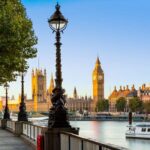
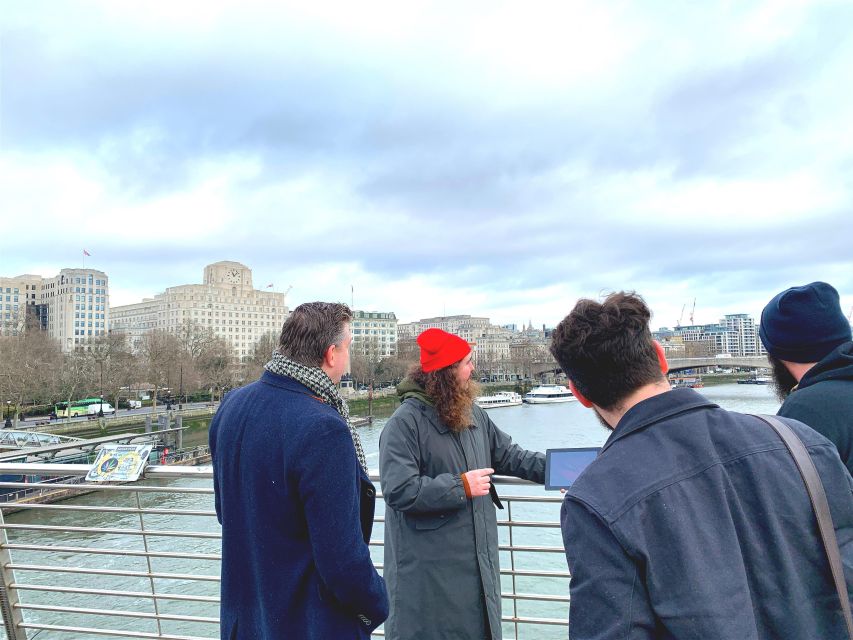
The walk begins pulling you into the Westminster atmosphere fast. First stop after the start is Westminster Bridge, where you’ll have time for a photo stop and guided tour.
Then it’s on to the Houses of Parliament. This is where the tour becomes more than a movie-location stroll. You get to stand near the symbol-heavy buildings that sit at the heart of British governance. From a spy perspective, that matters because espionage needs proximity—access, information, and the ability to move near major decision-making spaces without raising alarms.
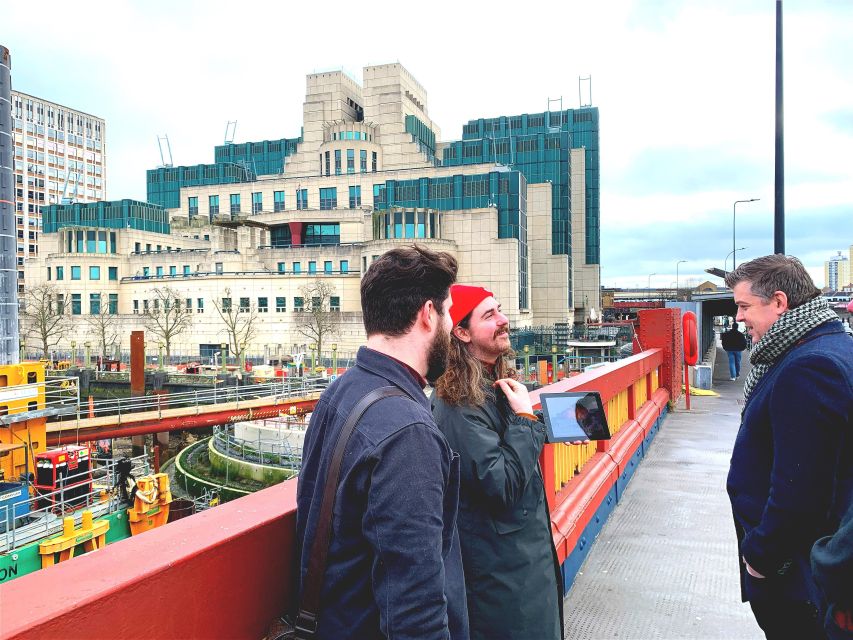
Next comes Whitehall, another core corridor for government activity. The tour points out the MI5 building, which is one of the most concrete ways this experience connects fiction to fact. Even if you’re not sure what MI5 does day-to-day, you’ll leave with a clearer sense of why the area fits spy stories: it’s administrative power made visible.
Practical note: these are busy areas. You’ll want to keep your eyes up and be aware of foot traffic while listening, especially during photo stops. Bring your camera, but keep one hand free for balance.
The Mall and Pall Mall: Fancy Streets With Serious Energy
After Parliament and Whitehall, the route shifts into the formal-grandeur zone: The Mall and then Pall Mall.
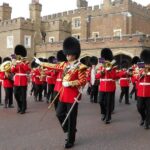
This part is fun because it shows how spy stories don’t just happen in dim alleys. They also happen on streets that look polished and official. If you’ve ever wondered how Bond can move through luxury while staying plausible, this is the kind of environment the stories imagine: guards, offices, ceremonies, and the sense that everyone is where they’re supposed to be.
The guide also adds Bond-style texture here. One of the tour’s stated goals is that you’ll learn about where spies go to dine, and it leans into the famous martini vibe—shaken, not stirred. You don’t need to be a superfan to enjoy this. It’s a story hook that keeps the walk flowing between serious institutional talk and the more cinematic, lifestyle side of 007.
Expect photo stops plus guided explanation. You’ll likely spot the kind of architectural cues that make the streets feel instantly familiar, even if you’ve never walked here before.


Trafalgar Square to the River: Crossroads of Attention
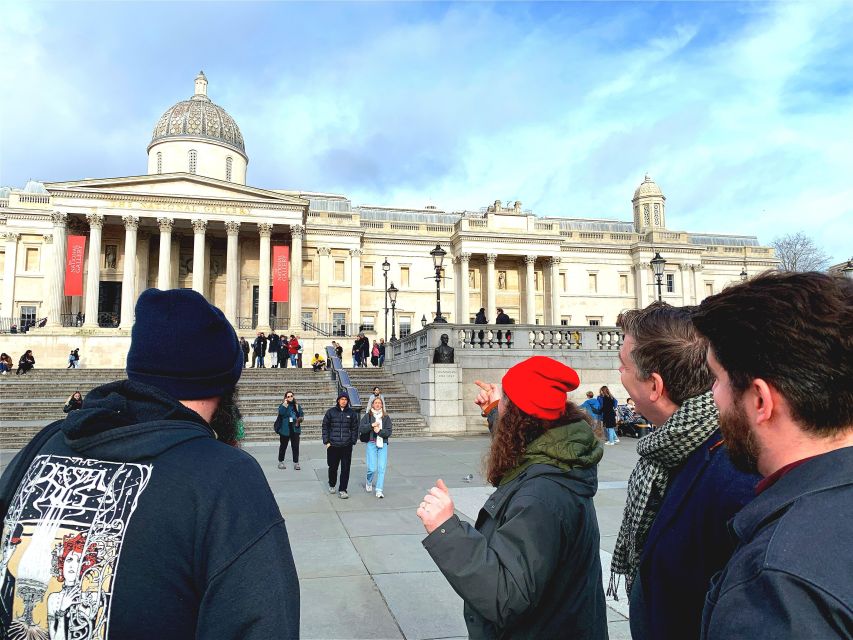
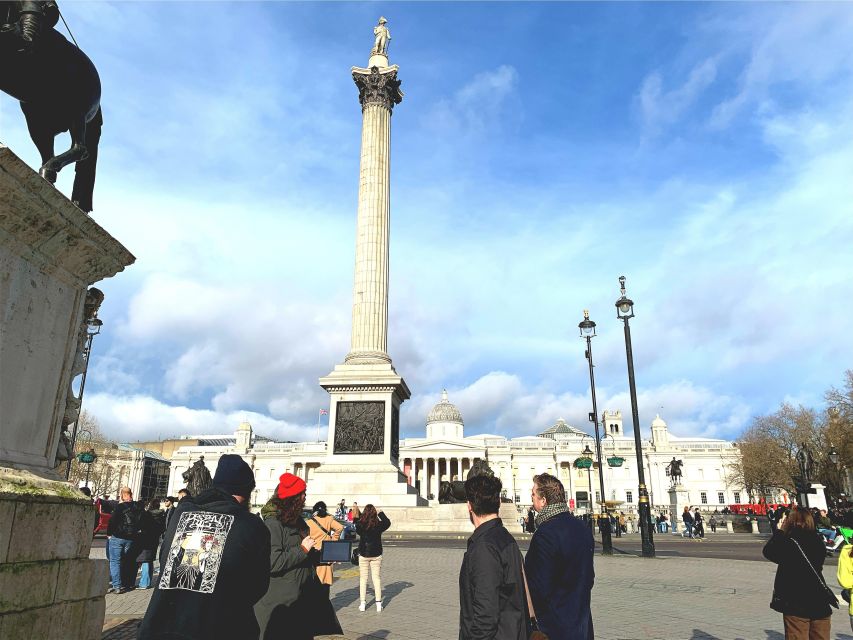
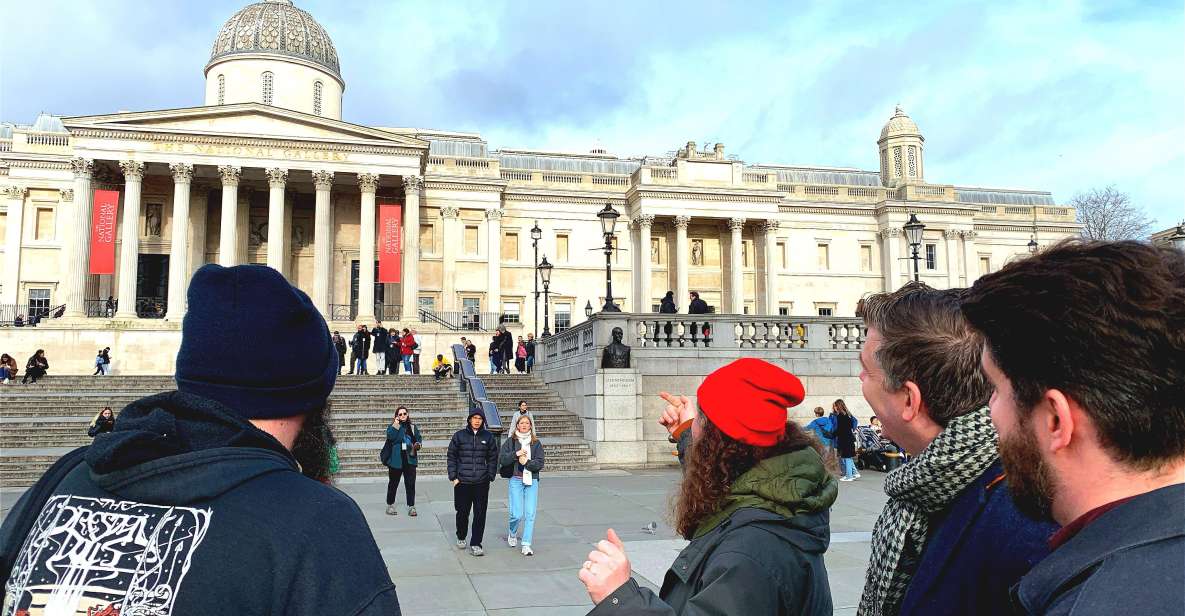
Then you’re at Trafalgar Square. This stop is a good breather in the route because it gives you a wide-open view and a different feel than the narrow corridors around Parliament.
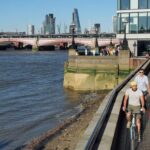
From there, the walk continues toward Embankment Pier. This is the pivot into riverside London, and it’s more than scenic. In spy-fiction logic, waterfronts are where you get movement: arrivals, departures, and quick routes that let people disappear into the city’s rhythm.
Next is Waterloo Bridge, which continues the river-crossing theme. You’re moving through a part of London shaped by travel, commuting, and constant foot traffic—conditions where a cover story or a sudden change of plan would feel believable.
This is a section where I’d tell you to slow down for a minute, watch the flow of pedestrians, and notice how many sightlines open up. The guide uses those sightlines as part of the storytelling, especially when connecting back to filming locations.
Somerset House and the Strand: Where Stories Start to Feel Real
After the bridges, you hit Somerset House and then the Strand. These are the kind of central London areas where you can easily imagine people meeting, passing messages, and blending in.
Somerset House brings you into a layered part of the city—one that feels both historic and actively used. And then the Strand keeps it moving with that old-london busy energy: offices, theaters, publishing history nearby, and the sense that London runs on paperwork and deadlines.
This is also where the tour’s pacing pays off. By now you’ve heard enough about Fleming and spy styles that the streets start to feel like they’re working with the story instead of just serving it.
One thing I liked from the way the tour is described and how it’s delivered in the field: the guide’s storytelling is built to match your attention span. You’ll get film references, then you’ll get the explanation of what you’re seeing in real life, then you’ll be back on the move.
If you like interactive moments, some guides also include quick trivia checks during the walk. That can be a fun way to keep the group engaged without turning it into a classroom.
The Best Trick: Film Clips at the Exact Spot
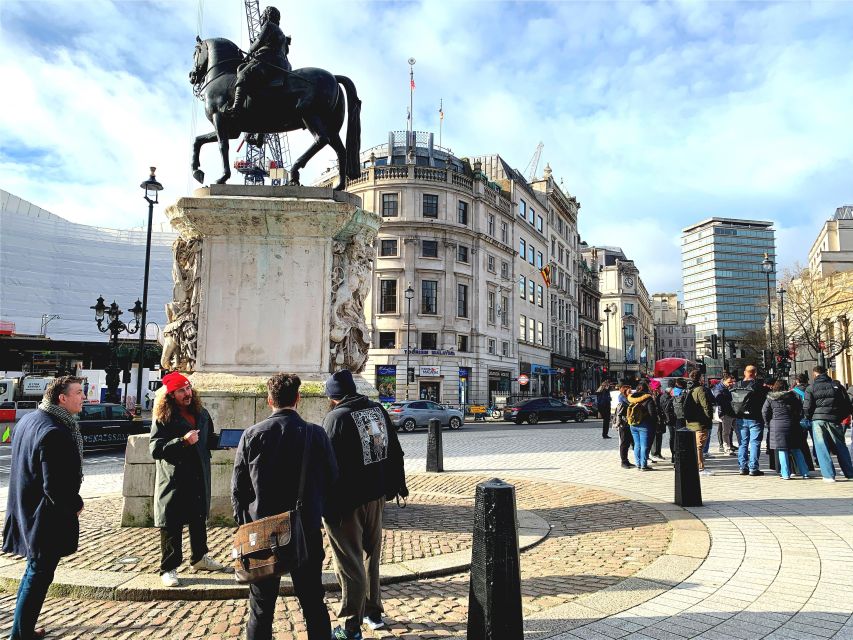
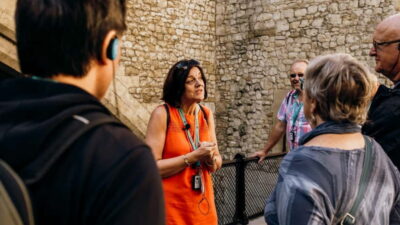
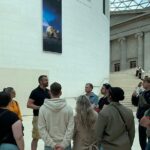
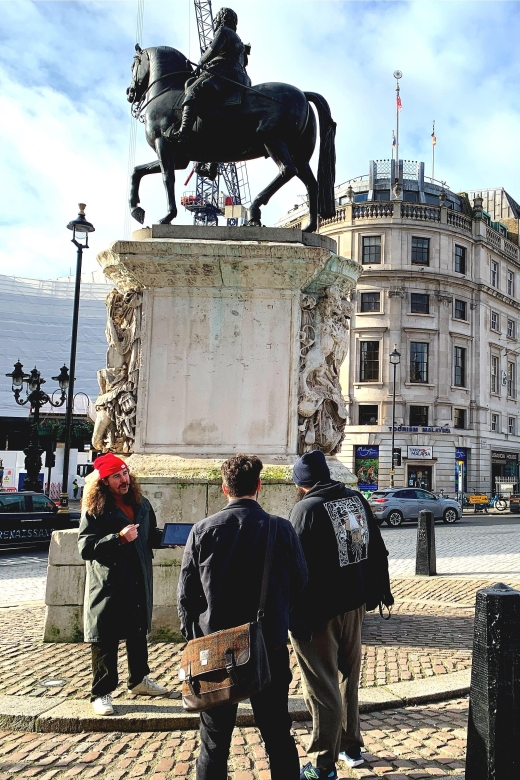
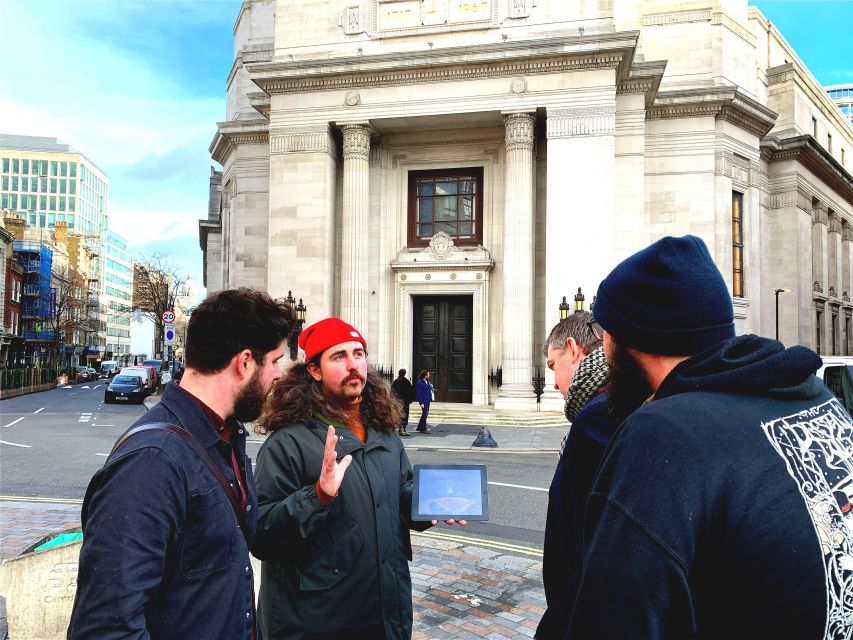
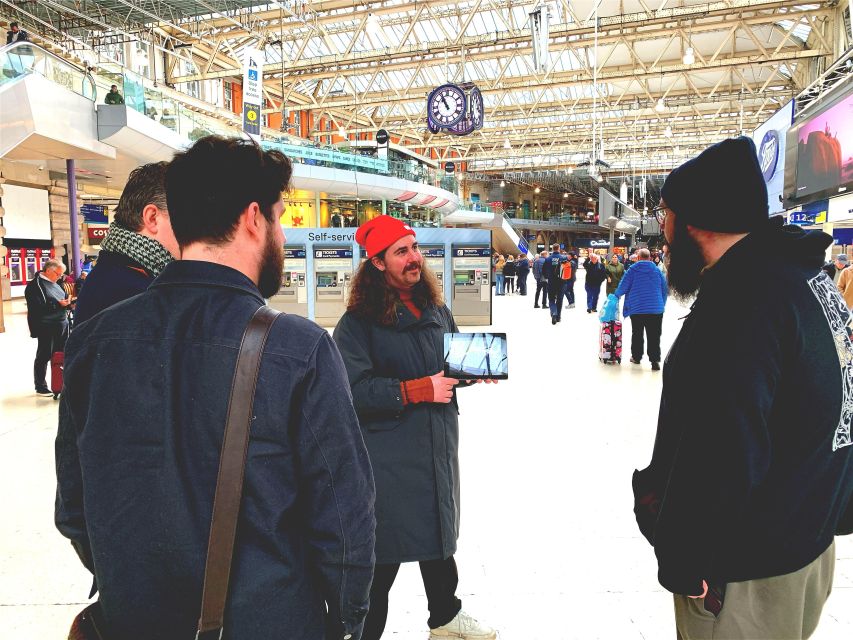
The tour’s signature move is the way it uses movie clips right where scenes were filmed. Multiple guides are described as showing short clips on a tablet (or similar screen) while you’re standing at the location.
That approach changes the experience. You’re not just hearing about a scene. You’re testing the scene against reality. It helps you understand why certain camera angles look the way they do, and why London’s layout makes those scenes work.
I also liked the way guides handle questions. In several accounts, the guides were described as answering follow-ups in a way that didn’t make the group feel rushed. On quieter days, you might even get more tailoring—good if you want extra time on older films or want to focus more on London than on 007 trivia.
The flip side: if you hate screens or want only outdoor sightseeing, this is still a walking tour with video components. It’s short clips, but it is still part of the format.
Ending at Rules: The Spy-Dinner Mood Closes the Loop
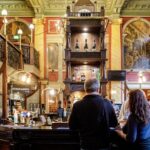
The tour finishes at Rules. That matters for the mood. The story doesn’t end with a random landmark or a transit stop. It ends with a dining landmark vibe that fits the whole theme of spies slipping into restaurants, getting comfortable, and letting conversations do the work.
Earlier, the tour sets this up by talking about where Bond-like spies dine and the martini image people associate with him. Ending at a real, established dining place gives the idea somewhere to land.
By the time you reach the finish, you’ll have walked through a chunk of central London that connects power, secrecy, and cinematic style. It leaves you in a good position to continue exploring nearby on your own, or even to pick a nearby place for a drink and do your own shaken-or-stirred debate.
Price and Time: What You’re Getting for $18
At about $18 per person for roughly 150 minutes, this tour is priced like a value activity rather than a premium, all-day production. And the value comes from two places.
First, you’re not paying for access to a museum entry. You’re paying for guided interpretation of outdoor locations, with the added payoff of film clips paired to street views.
Second, you’re paying for a guide who can connect three threads: Ian Fleming, Bond franchise references, and the broader espionage feel of London’s key areas. That mix is hard to recreate on your own unless you’re willing to research heavily in advance.
So if your budget is tight and you want one themed experience that still feels grounded in real city geography, this is a strong candidate.
Who Should Book This Tour (and Who Might Skip It)
Book this if:
- You’re a Bond fan who wants London context, not just a list of movie stops.
- You like history that’s explained at street level, with a story you can picture.
- You enjoy light audience interaction (trivia moments and lots of Q&A).
- You’d like help comparing film scenes to real architecture.
You might think twice if:
- You want mostly deep, fact-heavy real espionage operations and tradecraft detail without the Bond franchise framework.
- You’re expecting a mostly seated, minimal-walking experience. This is a walking tour, built for time outdoors.
Also note: unaccompanied minors aren’t allowed. If you’re planning a family trip, you’ll need to plan around that rule.
Should You Book James Bond and Spies in London?
If you want a fun couple of hours where London turns into a spy story you can actually walk through, I’d book it. The movie-clip at-the-location technique is the kind of small-format magic that makes the experience feel smarter than a typical theme walk. Add in the Fleming focus and the Westminster/Whitehall sights, and you get both cinematic nostalgia and real geography.
If your priority is strict MI6-only history or hardcore intelligence casework, you may find the Bond franchise angle takes up more space than you want. But for most people—especially film fans—this tour hits the sweet spot: easy to follow, visually satisfying, and genuinely enjoyable in the middle of a London itinerary.
FAQ
Where do I meet for the tour?
Meet in front of the London Eye. The guide will be holding an orange umbrella.
How long is the walking tour?
The tour duration is 150 minutes.
What does the tour cost?
The price is listed as $18 per person.
Is the tour in English?
Yes, it’s a live tour guide in English.
What should I bring with me?
Bring comfortable shoes and a camera.
Is the tour suitable for minors?
Unaccompanied minors are not allowed.
Where does the tour end?
The tour finishes at Rules.
Is food included?
No, food and drink are not included.