REVIEW · LONDON
London: Natural History Museum Entry Ticket and Guided Tour
Book on GetYourGuide →Operated by UTG EXPERIENCE · Bookable on GetYourGuide
One hour here beats a day wandering. This guided visit hits major moments fast, with Hintze Hall’s 25-meter blue whale and the Diplodocus in the Central Hall as obvious crowd-stoppers, plus a guide who keeps things moving. The trade-off is simple: in just 60 minutes, you’ll see the best-of list, not every gallery.
I also like how this tour stays practical. Paul (your guide name shows up again and again) leads with clear explanations, answers lots of questions, and even works well with families, including kids who aren’t fully comfortable in English. If you want to linger, you’ll need a second pass on your own.
In This Review
- Why This Museum Tour Works: 60 Minutes, Real Momentum
- Finding Your Guide at South Kensington (and Not Wasting Time)
- Central Hall to Hintze Hall: Dinosaurs and the 25-Meter Blue Whale
- The Diplodocus in the Central Hall
- The 82-foot blue whale skeleton in Hintze Hall
- Volcanoes, Earthquakes, and How Earth’s Story Gets Explained
- A drawback to note
- Evolution Gallery, Minerals, Gems, and the Butterfly Collection
- Evolution gallery: diversity of life
- Minerals and gems: where beauty meets structure
- Butterfly collection: small details with big payoff
- Wildlife Garden: A Real Break From the Main Halls
- Headsets, Group Pacing, and How to Ask Better Questions
- Price Value: Is $76 Worth It for a One-Hour Tour?
- Who This Tour Suits (and Who Should Consider Going Solo)
- Should You Book This Natural History Museum Tour?
- FAQ
- How long is the Natural History Museum guided tour?
- What’s included in the ticket?
- Where do I meet the tour guide?
- What language is the tour in?
- Can I cancel, and how flexible is it to book?
- Is the tour wheelchair accessible?
Why This Museum Tour Works: 60 Minutes, Real Momentum
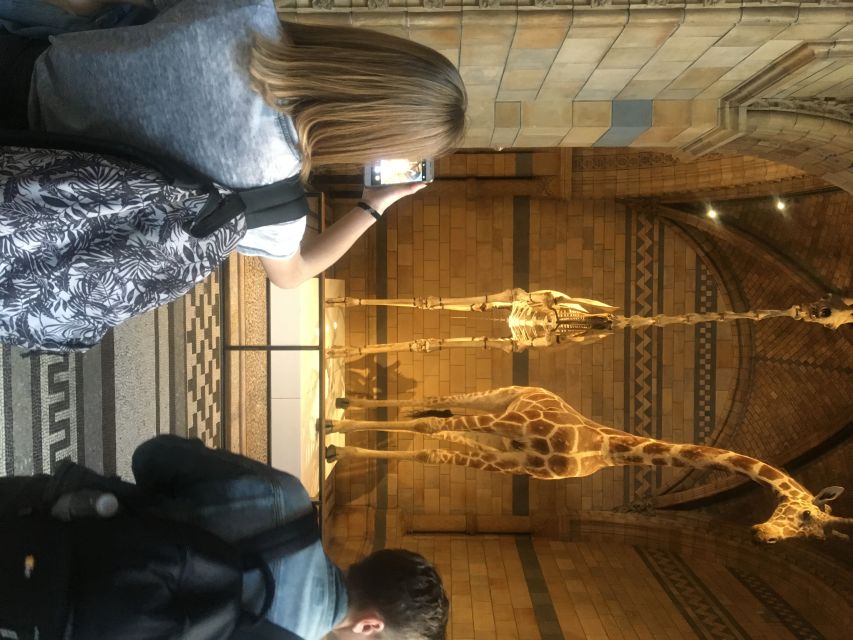
The Natural History Museum is big, famous, and easy to feel lost in. This tour is built to solve that problem. In an hour, you get guided structure—where to look, what matters, and what to remember—so you’re not just drifting from exhibit to exhibit hoping it all clicks.
You’ll start with the kinds of displays people photograph for a reason: towering dinosaurs, mammoth ocean life, and the museum’s signature science storytelling. Then the guide turns the lights on behind the scenes: how specimens are studied, how the museum’s scientists preserve them, and what evolution and Earth science mean in plain terms.
If you’re the type who gets overwhelmed by crowds, this format helps you keep your bearings. Several guides-led tours are either too fast or too vague; this one tends to feel like you’re being shown the key stops and the “why” behind them.
The best part for most people is what you leave with: a short list of exhibits you’ll want to return to when you have more time. That’s the real value, especially if your London schedule is tight.
Finding Your Guide at South Kensington (and Not Wasting Time)
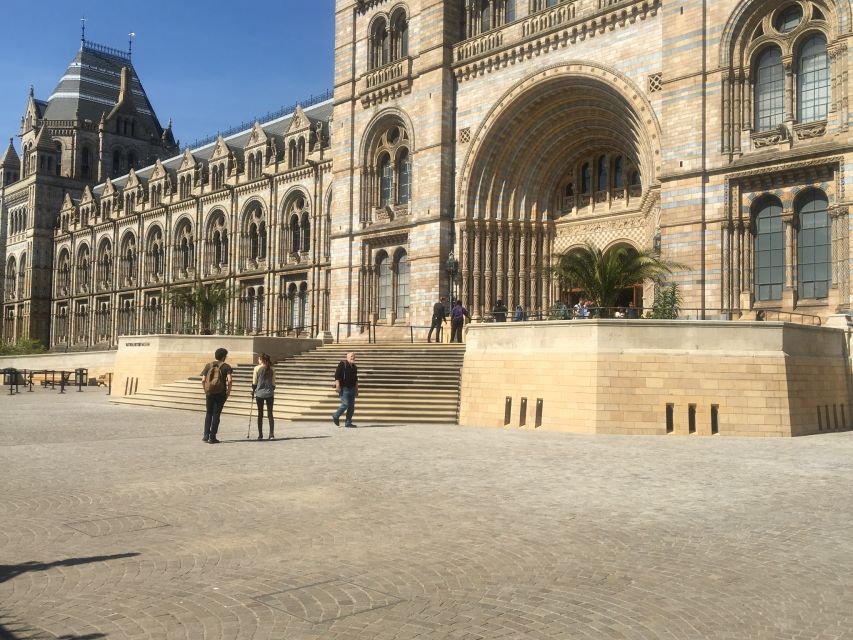
Your meeting point is at Metro South Kensington. Take the exit for the Natural History Museum Ismaili Centre, then meet your tour guide at the metal plate for The Royal Borough of Kensington and Chelsea on Exhibition Road SW7.
Here’s the practical way to handle this: arrive a few minutes early, not right on the dot. One detail that matters is the meeting-point wording—some people find it confusing—so give yourself a small buffer to locate the metal plate and match your guide’s presence before the group gathers.
The tour includes a reservation ticket plus express security access (skip the normal line through an express security check). That matters because the Natural History Museum sits in a high-traffic area. If you’re time-crunched, being able to get in efficiently is the difference between enjoying your hour and spending it near a checkpoint.
You can also read our reviews of more tours and experiences in London


Central Hall to Hintze Hall: Dinosaurs and the 25-Meter Blue Whale
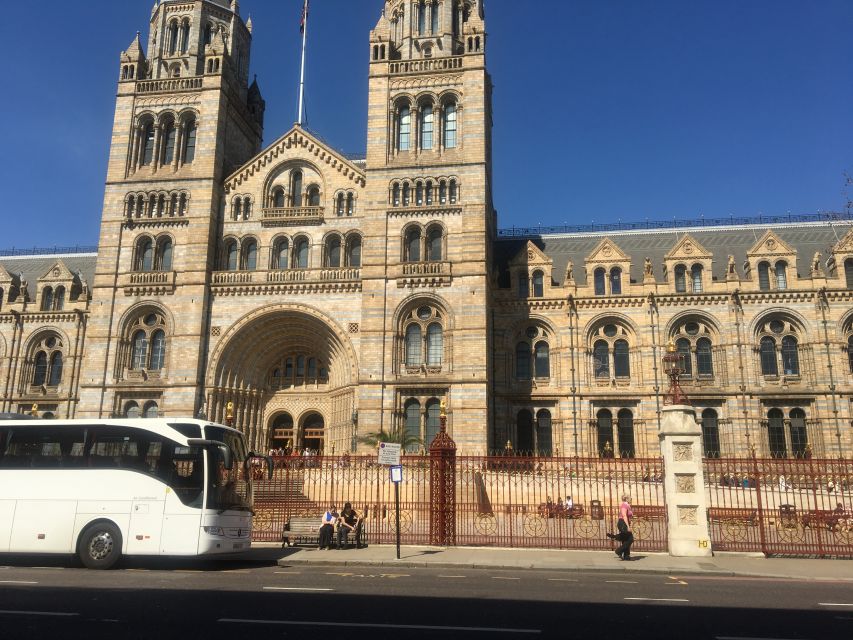
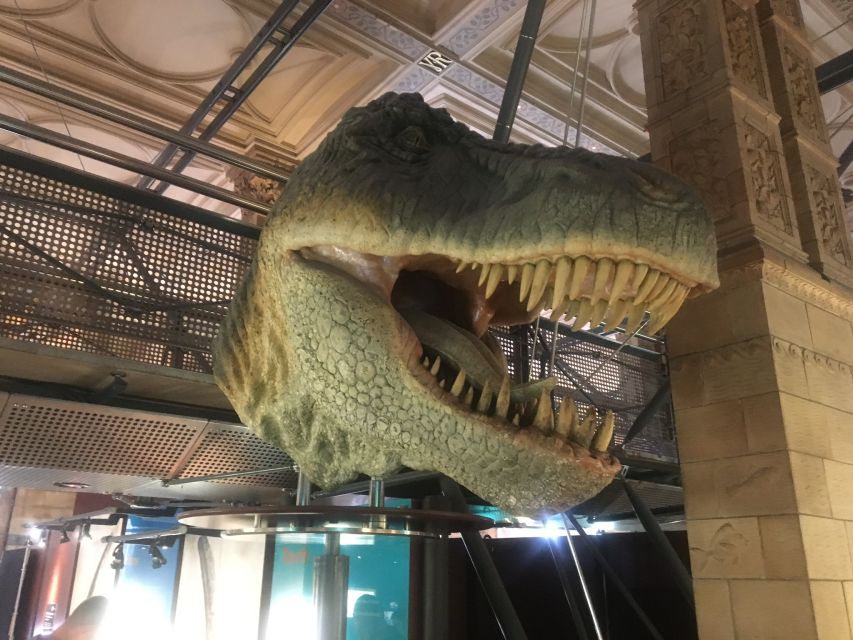
If you only care about the headliner exhibits, this tour still earns its keep. You’ll get taken through major galleries, and two of the biggest anchors are the Diplodocus skeleton and the whale in Hintze Hall.
The Diplodocus in the Central Hall
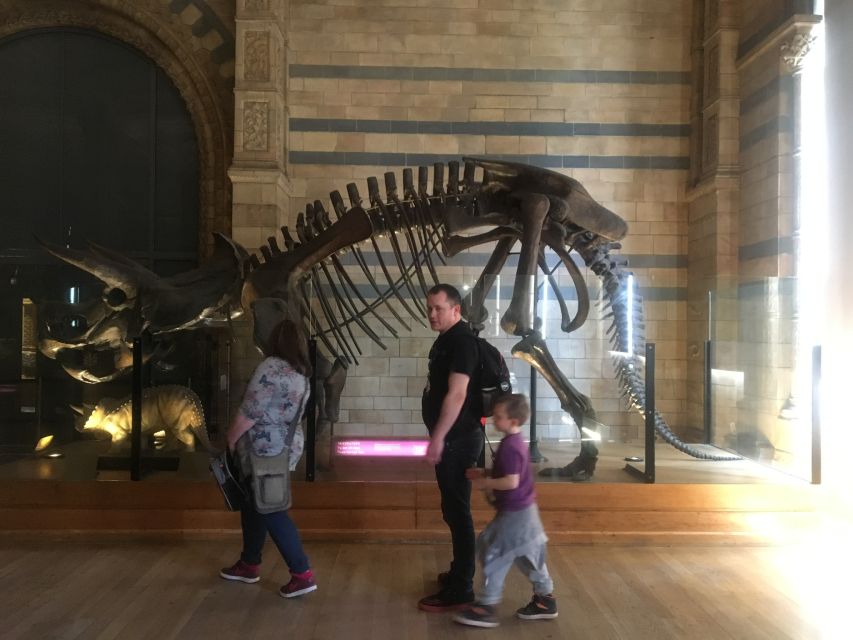
In Central Hall, the guide points you to the enormous Diplodocus skeleton—one of those fossils that feels less like a display and more like a building. You’ll get context for what you’re seeing and why it’s staged the way it is. Even if you’ve seen dinosaur bones on the internet, it lands differently in person: scale, placement, and the sheer fact that this is real preserved evidence.
A guided stop also helps you not miss the best angles. Instead of guessing where to stand for the best view, you’re led to positions that make the dinosaur’s size and structure click.
The 82-foot blue whale skeleton in Hintze Hall
Then comes the museum moment people talk about: the blue whale skeleton in Hintze Hall, listed at 82 feet (25 meters) long. It’s the kind of display that forces you to look up and then keep looking, because your brain takes a second to accept the scale.
The guide’s role here isn’t just pointing. It’s connecting what you see to how scientists interpret specimens—what the fossils show, what can be inferred, and how museums keep collections available for study. That makes the exhibit feel more like science you can understand than just something you walk past.
Volcanoes, Earthquakes, and How Earth’s Story Gets Explained
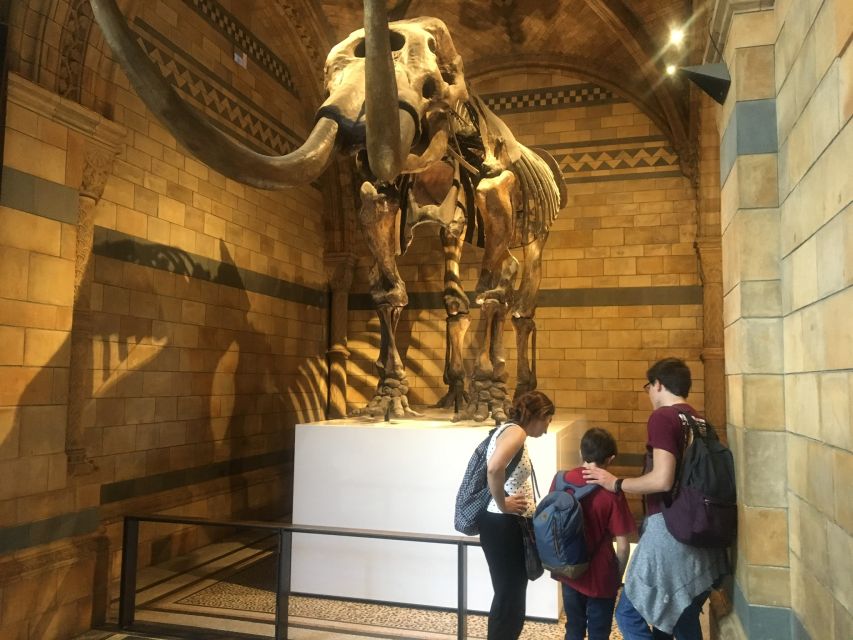
Next, you’ll move into the Volcanoes and Earthquakes Gallery. This is where the tour shifts from wow-factor to cause-and-effect.
The museum is known for making Earth science feel concrete, and you’ll likely experience that through the guide’s explanations of how the planet changes. Instead of treating volcanoes and quakes as random events, you get the larger story: how Earth’s formation ties into ongoing processes, and why those processes matter to life on the planet.
This part is especially useful if you’re the type who reads labels for a minute and then gives up. A guide helps you know which details are worth your time and which are there for reference. In a one-hour tour, that kind of focus is everything.
You can also read our reviews of more guided tours in London






A drawback to note
Because the tour is time-limited, you won’t get long, slow reading in every corner. If you’re the kind of visitor who likes to spend 15 minutes per display, you’ll have to choose between moving with the group and lingering on your favorites. The upside is that you leave knowing exactly what to revisit.
Evolution Gallery, Minerals, Gems, and the Butterfly Collection
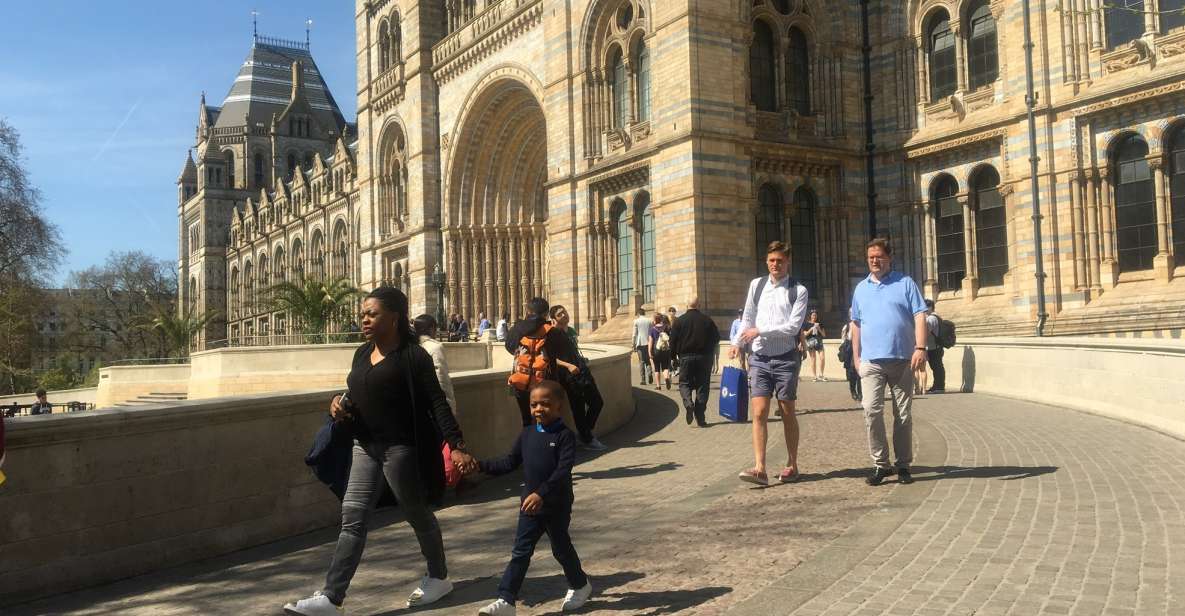
The tour also includes evolution-focused storytelling and some of the museum’s more intricate specimens.
Evolution gallery: diversity of life
In the Evolution gallery, you’ll explore how life changes over time and why evolution is the organizing idea behind the collection. The guide’s explanations are meant to make the concept feel understandable, not intimidating. If you’ve ever found evolution text overwhelming, a guided hour can help you get the basic framework fast.
Minerals and gems: where beauty meets structure
You’ll also see intricate designs of minerals and gems. These displays work well in a guided format because the guide can connect what looks like pure beauty to the underlying science: structure, formation, and what makes different materials unique.
Butterfly collection: small details with big payoff
The butterfly collection is another highlight mentioned as part of the tour path. This section is a good reminder that the museum isn’t only about massive skeletons. It’s also about precision—fine variation, patterns, and what specimens can tell scientists about diversity.
In a crowd, this kind of fine detail can be hard to notice. Having a guide point you toward key aspects helps you get something more than a quick look.
Wildlife Garden: A Real Break From the Main Halls
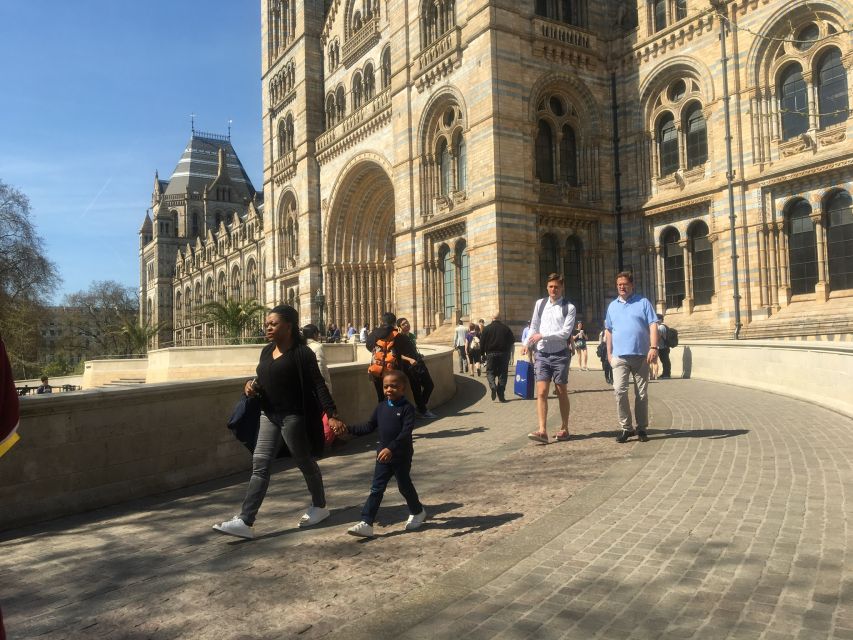
You’ll also get time in the Wildlife Garden, described as a haven for birds, bees, and other animals. This is the moment that changes the pace. Instead of another indoor gallery, you get fresh air and living activity.
For many people, this is what makes the tour feel balanced. The museum’s main halls are visually intense—huge fossils, high ceilings, and lots of people. The Wildlife Garden offers a contrast: a chance to watch the natural world doing what it does, right in the middle of the museum experience.
Also, it’s a good reset if you’re touring with kids. They often do fine for the dinosaurs, then get museum-fatigued. A garden break can bring energy back before the tour ends.
Headsets, Group Pacing, and How to Ask Better Questions
This experience includes headsets if needed, so you can hear the guide even in louder spaces. For a museum built for crowds, that’s not a small detail. It makes a guided tour work, especially when you’re standing near others or in areas where sound carries oddly.
The pacing is built around a 1-hour window. That typically means you’ll cover the essentials at a smart speed, with the guide stopping you at key exhibits and explaining what to notice.
One of the most praised parts from past guests is how well the guide handles questions. If you have curiosity—about dinosaurs, fossils, evolution, Earth science, or how specimens are studied—this tour is set up to answer in real time. That’s a better use of your hour than trying to hunt down answers alone while you’re figuring out where to stand.
If you want to maximize your value, come with 2–3 questions in mind. You’ll get more out of the guide when your questions are specific.
Price Value: Is $76 Worth It for a One-Hour Tour?
At $76 per person for a 1-hour guided experience, this is not a budget add-on. The value depends on what problem you want solved.
Here’s the practical way to decide:
- If your main issue is crowds and time, the express security skip and guided routing can make the hour feel “bought,” not “rushed.”
- If you’re comfortable wandering on your own, you may feel like you’re paying for convenience and context rather than new exhibits.
- If you love asking questions, the guide interaction can justify the cost. One recurring theme in the feedback is that the guide answers lots of questions and provides hints for what’s worth revisiting later.
You should think of the tour like a smart preview and orientation. You pay to get a guided top-to-bottom map of what matters most, then you spend the rest of your time on your personal favorites.
Who This Tour Suits (and Who Should Consider Going Solo)
This guided hour is a strong fit if you:
- Want the museum’s major highlights without sorting it out yourself.
- Like having clear explanations while you look at famous specimens.
- Travel with kids who can handle a short, structured visit. Feedback points to great results for families with children around early school age.
It may be less ideal if you:
- Want to linger in galleries and read every label for a long time. The group pace limits how much you can slow down.
- Are traveling with toddlers who need lots of freedom and constant stopping. One note in the feedback was that the format isn’t best for toddlers.
If you’re an independent museum lover, going solo is always possible. But if you’re short on time, a guided hour can be the difference between seeing a few famous things and leaving with a clear plan for what to return to.
Should You Book This Natural History Museum Tour?
I’d book it if you want a fast, high-impact hit of the museum with an expert guide and you’re okay treating it as a highlight tour. The Central Hall-to-Hintze Hall focus (Diplodocus plus the blue whale) is exactly the kind of museum payoff that’s hard to replicate without direction, especially during busy hours.
Don’t book it if your priority is slow museum immersion or if you know you’ll want to spend most of your time reading quietly at your own pace. In that case, buy museum entry and build your own route.
A good compromise: do this guided hour first, then return later to the exhibits that caught your eye. The tour is designed to help you figure out what those are.
FAQ
How long is the Natural History Museum guided tour?
The duration is 1 hour.
What’s included in the ticket?
Included are the guide, a reservation ticket, and headsets to hear the guide if necessary.
Where do I meet the tour guide?
Meet at Metro South Kensington. Take the exit for the Natural History Museum Ismaili Centre exit, then meet your guide at the metal plate for The Royal Borough of Kensington and Chelsea on Exhibition Road SW7.
What language is the tour in?
The live tour guide is English.
Can I cancel, and how flexible is it to book?
There is free cancellation up to 24 hours in advance for a full refund, and you can reserve now and pay later (the option says you pay nothing today).
Is the tour wheelchair accessible?
Yes, it is listed as wheelchair accessible.