REVIEW · LONDON
Sir Winston Churchill Private Walking Tour & War Rooms
Book on Viator →Operated by Ye Olde England Tours · Bookable on Viator
London’s Churchill story starts in the West End. This private walking tour links key WWII-era spots on the surface with Churchill War Rooms underground, and you can usually tailor what you focus on.
I really like the way the route blends famous landmarks with quick “wait, look at that” details, so you don’t just race through London. Two big wins: entry to the War Rooms is included, and guides such as Kevin and Marty bring Churchill’s life to the street level with stories that connect buildings, people, and events.
One consideration: several stops are more about the sight from the sidewalk, and a few shop experiences aren’t included in the price. Also, your War Rooms entry time generally lands in a set window (often around 12:45–1:45), so plan lunch with that in mind.
In This Review
- Key highlights worth your time
- Starting at Piccadilly: a fast way to get oriented (and clever)
- Savile Row to Mayfair arcades: the luxury London layer of Churchill’s world
- From St. James to Westminster: power, royals, and the speeches behind the streets
- Whitehall memorial walk: where London turns into wartime memory
- Parliament Square and the final climb into the War Rooms
- What your private guide actually changes (not just the route)
- Price and value: what you’re really paying for at $263.90
- Logistics that matter: timing, walking, and shop closures
- Should you book the Churchill Private Walking Tour & War Rooms?
- FAQ
- How long is the Sir Winston Churchill Private Walking Tour and War Rooms?
- Where does the tour start and end?
- Is hotel pickup included?
- Is entry to the Churchill War Rooms included?
- When will I enter the War Rooms?
- Is this a private tour?
- Are admission tickets included at all stops?
- What happens if I’m visiting on a Sunday?
- Can I cancel for a full refund?
Key highlights worth your time
- Private format with a guide who can tailor the pace from West End streets to Whitehall
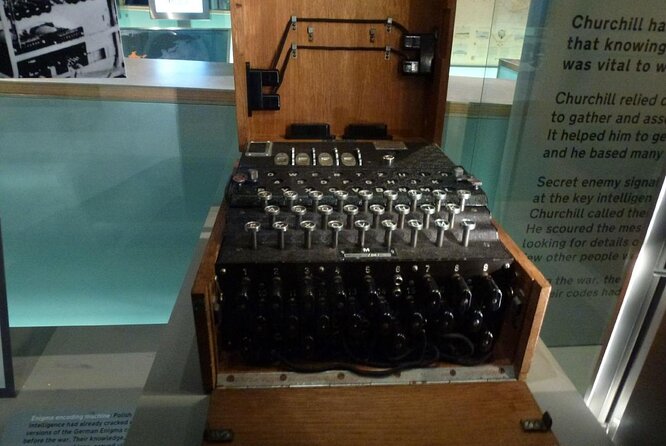
- Churchill War Rooms entry included with audio/video guidance and about an hour underground
- Savile Row tailoring stories plus WW2-linked details like Churchill’s wartime suit references
- One-of-a-kind memorial stops, including the “Nazi” memorial stories and the Women of WWII memorial
- Photo moments built into the walk, including the Churchill and Roosevelt Allies sculpture
- Finish close to the War Rooms so you don’t lose the best part of the day to transit
Starting at Piccadilly: a fast way to get oriented (and clever)
The tour begins at the Criterion Theatre area by Piccadilly Circus, a perfect launch pad for understanding modern London and its older political spine. You’ll start with the bright, tourist-loud West End, then the guide steers you into smaller, more meaningful details, so the walk feels like sightseeing with a purpose instead of a checklist.
Right away, you’ll glance at Piccadilly Circus and then focus on the Statue of Eros (also called Anteros), which the guide uses as a jumping-off point for how Londoners thought about war, celebrations, and national mood. From there, the route moves along Regent Street toward Mayfair’s “Mile of Style,” and you’ll get a sense of how this part of London became associated with status, power, and carefully made impressions.
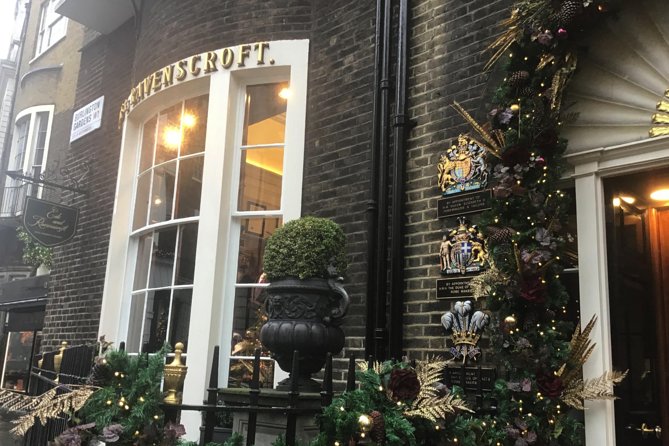
Then comes Savile Row, the tailoring street that even first-time visitors can recognize from photos but often don’t understand. You’ll see why it matters, hear how tailoring became linked to the people who needed to look command-ready, and you’ll get the kind of local context that makes later stops click into place. You’ll also make a short stop at Henry Poole & Co (a standout name on Savile Row) where the guide adds a Churchill-linked story, but entry to that shop isn’t included.
Practical tip: wear shoes you’d wear for a smart all-day walk. The best part here is looking at small details while still moving.
You can also read our reviews of more walking tours in London



Savile Row to Mayfair arcades: the luxury London layer of Churchill’s world
This tour doesn’t treat Churchill as only a bunker-and-battle figure. It also shows the London of suits, shops, and polished rooms where decisions, networking, and daily life happened.
You’ll see the Churchill and Roosevelt Allies sculpture and get a chance to pause for a photo between the wartime allies—quick and memorable, and it helps you anchor the rest of the WWII storyline before you move into more solemn memorials.
Next is Burlington Arcade, one of those classic London covered shopping passages that people often rush past. Here it’s used as a map back to Churchill’s preference for the finest of everything—so the arcade becomes more than pretty stone. It’s a window into how taste and power were performed.
You’ll also visit Turnbull & Asser, another major Savile Row name tied to tailoring history. The big hook is that you can see surviving Siren suits that Churchill wore during WW2, though this is very schedule-dependent. The shop is closed on Sundays and some public holidays, so if your dates include those days, you might want to double-check how much time the guide can spend on that particular stop.
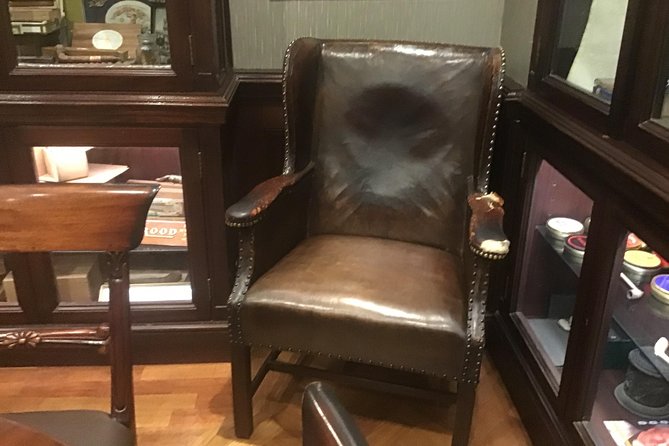
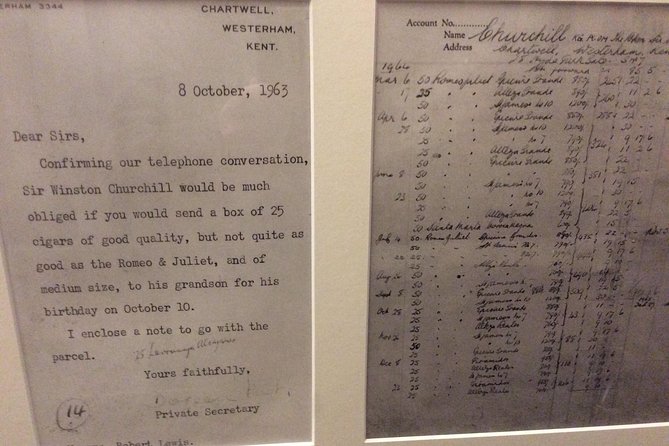
A few more stops keep the tone “London gentleman,” with places like Lock & Co. Hatters—one of London’s oldest hat shops—plus James J. Fox & Robert Lewis, where Churchill would buy cigars. If the room is open, you can sit on Churchill’s smoking chair and pick up a Churchill- or cigar-related souvenir. Again, shop hours matter: this store also closes on Sundays and some public holidays.
What I like about this approach: it keeps you moving through real neighborhoods, not just looking at plaques. And you’re getting context for what the “day-to-day” side of leadership looked like in London.
From St. James to Westminster: power, royals, and the speeches behind the streets
After Mayfair, the tour shifts from fashion to institutions. You’ll pass St. James’s Palace, described as a senior royal palace above even Buckingham Palace, and you’ll learn how the royal world sat next to political decision-making during Churchill’s era.
Then you’ll reach the King George VI & Queen Elizabeth Memorial, where the focus is on a bronze that tells a lot about London during WWII. That stop does two things at once: it slows your pace for a minute, and it gives you a grounding baseline for the later memorials that are tied to wartime loss and leadership.
You’ll also see the Charles De Gaulle statue, with the guide asking the interesting question of what Churchill thought about him and why that statue is placed here. It’s a reminder that wartime alliances had friction and opinions, not just teamwork.
As you walk, you’ll pass other elite institutions like the Reform Club (linked to Churchill’s time there) and then move into Carlton House Terrace. This is where the guide leans into the odd-but-important stories—specifically, the claim of what’s described as the only Nazi memorial in Britain, tied to wartime irony and a historical chain of events that the guide explains.
From there, the stop at the Sir Keith Park Memorial highlights a figure the guide credits heavily for the Battle of Britain. Another small pause later brings you to Giro, the German Ambassador’s dog—another memorial story presented as the only Nazi memorial in Britain, with the guide focusing on how and why it ended up in London.
Why these stops work: they’re short, but they push your brain past simple “good guys vs bad guys” storytelling. They show how London carried wartime memory in public space—sometimes in ways that feel surprising today.
Whitehall memorial walk: where London turns into wartime memory
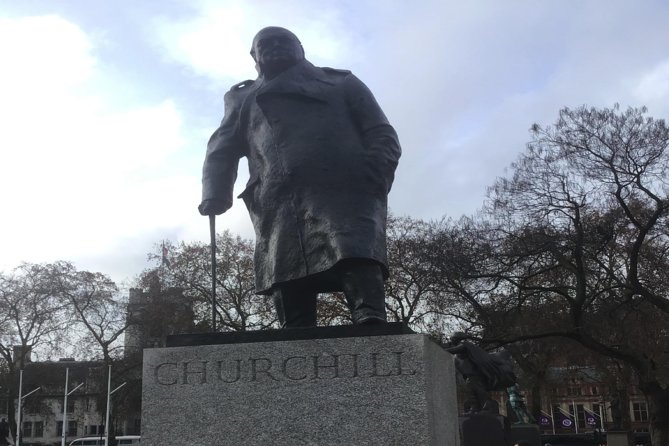
The stretch around Whitehall and the Mall is where the walk becomes heavier and more cinematic, but still very practical because the guide keeps explaining what you’re looking at.
You’ll see the Duke of York Column, described with its 10,000 men marching story, and then you’ll continue onto the Mall, London’s premier ceremonial road. The guide calls out a WW2 remnant there that many people pass without realizing it’s tied to a working military site today—exactly the kind of “how did I miss this?” moment that makes a guided walk worthwhile.
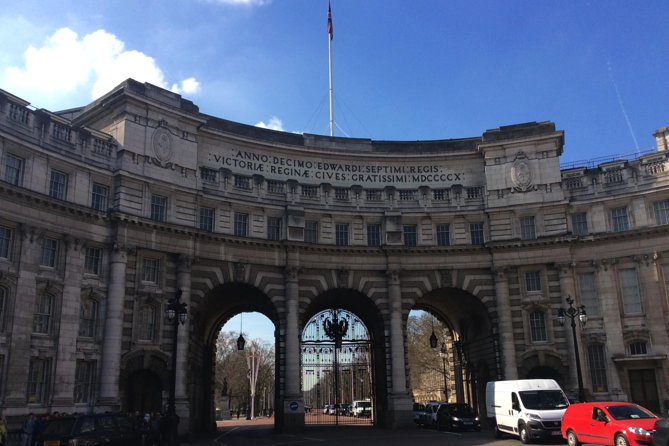
Next is Admiralty Arch, where you’ll get up close to offices where Churchill worked during WW1. That matters because it threads Churchill’s story backward, reminding you his wartime leadership didn’t start in 1940.
You’ll pass Trafalgar Square and then the Ministry of Defence area, including the old War Office and statues of WWII generals. The guide also explains the tense relation between Monty and Churchill, which helps you understand that even the best strategy and the best generals still have human friction.
Then the tour heads to Horse Guards Parade at Whitehall. You’ll learn why the guide says Churchill hated it and what it was for, plus you’ll see the WW2 citadel mentioned on the site. It’s one of those “you’re standing in a place with a job history” stops.
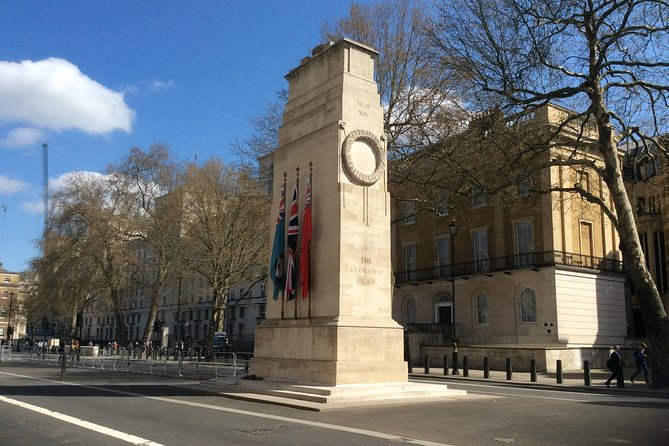
Finally, you’ll reach the Women of World War II Memorial and the Women’s Cenotaph theme. The guide talks through the meaning behind the carvings. From there, you’ll visit the Cenotaph, London’s main monument for remembering those who fell from the Great War onward, plus you’ll see Churchill’s statue and hear the story behind it.
You’ll also stand outside 10 Downing Street. Even without entering, the stop helps tie the route to the idea of leadership centered right here, from Churchill’s era into later prime ministers.
If you care about WW2: this section is the spine of the tour. It’s also where I’d suggest slowing down a bit and actually look—your brain needs the space.
Parliament Square and the final climb into the War Rooms
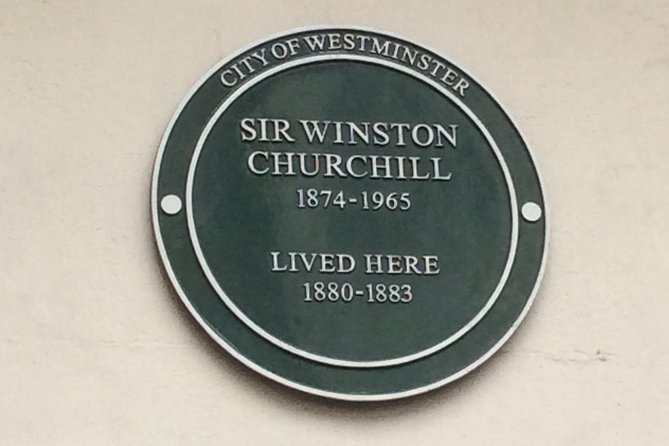
As the walk reaches Parliament Square, the guide frames it as a key piece of London’s democracy story—politics in plain sight. You’ll learn why Parliament Square matters and you’ll see St Margaret’s Church on Parliament Square, described as the church where Winston and Clemmie married.
Then you’ll pass Houses of Parliament (from the outside) and finish with Churchill War Rooms, the main event. This underground bunker is presented as the preserved command center from where Churchill ran the war while London above was being bombed. You’ll spend about an hour inside, and your visit uses audio/video guides rather than a live docent.
What to expect underground: the War Rooms are a time-capsule feel—designed to show you how wartime Britain ran day-to-day. It’s also one of the best places in central London to shift from “walking and seeing” into “learning and absorbing,” since you can’t skim your way through the bunker like you can with street views.
Heads-up: one review comment noted that the self-guided headset system can feel a bit clunky. If you’re someone who dislikes tech friction, bring patience and give yourself a minute to get oriented.
You can also read our reviews of more private tours in London





What your private guide actually changes (not just the route)
Because this is private, the guide can work at your tempo. That’s not just comfort—it affects how much you catch.
A good example from the guide style is the way they handle questions. Names like Stephen, Martin, Marty, and Kevin show up repeatedly in the guide stories, and the common thread is that they’ll answer questions and add extra context rather than reciting a script. You’ll also notice the pacing is built so the day doesn’t collapse into one long march. Short stops are frequent, which keeps the walk lively and prevents “history overload by hour two.”
The guide also controls what you emphasize. If you’re here for tailoring culture, you’ll spend more time on Savile Row and the related shop stories. If you’re here for the WWII memorial circuit, you’ll get more detail around the memorials and the war-era leadership themes.
Practical advice: pick one or two themes before you meet—tailoring and shops, or memorials and command decisions. Then ask your guide to prioritize those.
Price and value: what you’re really paying for at $263.90
At $263.90 per person for about four hours, this isn’t a budget walk. The value comes from the mix of three things you’d otherwise have to buy separately or stitch together yourself:
1) Private guiding across a long route. You’re paying for time, expertise, and the flexibility of a group that’s only your party.
2) Hotel pickup plus transport to the starting point using the Underground. That saves time and hassle in a city where transit can eat your morning.
3) Entry to the Churchill War Rooms included. That’s the anchor activity of the day, and it’s time-sensitive because your entry time generally lands around 12:45–1:45.
So the decision isn’t just cost vs free sightseeing. It’s: do you want someone to connect the surface clues to the underground bunker, with a route designed to hit both Churchill’s London life and the war memory trail?
For many people, the answer is yes—especially if you care about WWII history and you want a day that feels “put together” rather than improvised.
Logistics that matter: timing, walking, and shop closures
A few practical items can make or break your day.
- Tour length is listed at about four hours.
- Dress code is casual, but you’ll still be walking, so plan for real footwear.
- The War Rooms entry generally happens between 12:45 and 1:45, depending on hotel location and walking speed. If you’re hungry, think about eating early or using flexible lunch plans.
- Some shop stops are affected by closures. Turnbull & Asser and James J. Fox & Robert Lewis are noted as closed on Sundays and some public holidays, so on those days your guide may need to shift focus slightly.
Also, transportation to and from attractions by London Underground isn’t listed as included in the general sense. Pickup is offered, and you may travel by Underground to reach the start point, but once the walk begins, you’re mainly on foot.
Should you book the Churchill Private Walking Tour & War Rooms?
Book it if you want a WWII-focused London day that stays grounded in real neighborhoods and real buildings, not just a museum-only experience. It’s especially strong if you like Churchill stories that connect politics, conflict, and the everyday London world around him—tailors, shops, monuments, and institutions all in one arc.
Skip it (or at least set expectations) if you only want deep time in one place. The day is a walking itinerary with many quick sights and a single big “sit and absorb” finish in the War Rooms. Also, if shop closures would remove key stops on your dates, you might prefer a plan that’s less dependent on specific store hours.
FAQ
How long is the Sir Winston Churchill Private Walking Tour and War Rooms?
The tour is about 4 hours.
Where does the tour start and end?
It starts at the Criterion Theatre area at 218–223 Piccadilly, London W1J 9HR, and it ends just outside the Churchill War Rooms at King Charles St, London SW1A 2AQ.
Is hotel pickup included?
Yes. Hotel pickup is offered, and you can also meet at the Criterion Theatre start point.
Is entry to the Churchill War Rooms included?
Yes. Tickets for the Churchill War Rooms are included.
When will I enter the War Rooms?
Your entry is generally scheduled between 12:45 and 1:45, depending on hotel location and walking speed.
Is this a private tour?
Yes. It’s a private tour, and only your group participates.
Are admission tickets included at all stops?
No. Entry to the War Rooms is included, while other stops are sometimes listed as free or not included, and some shop visits may not include admission.
What happens if I’m visiting on a Sunday?
Some shop stops are noted as closed on Sundays and some public holidays, which can affect how much time you spend inside those shops.
Can I cancel for a full refund?
Yes. Free cancellation is allowed up to 24 hours in advance for a full refund.